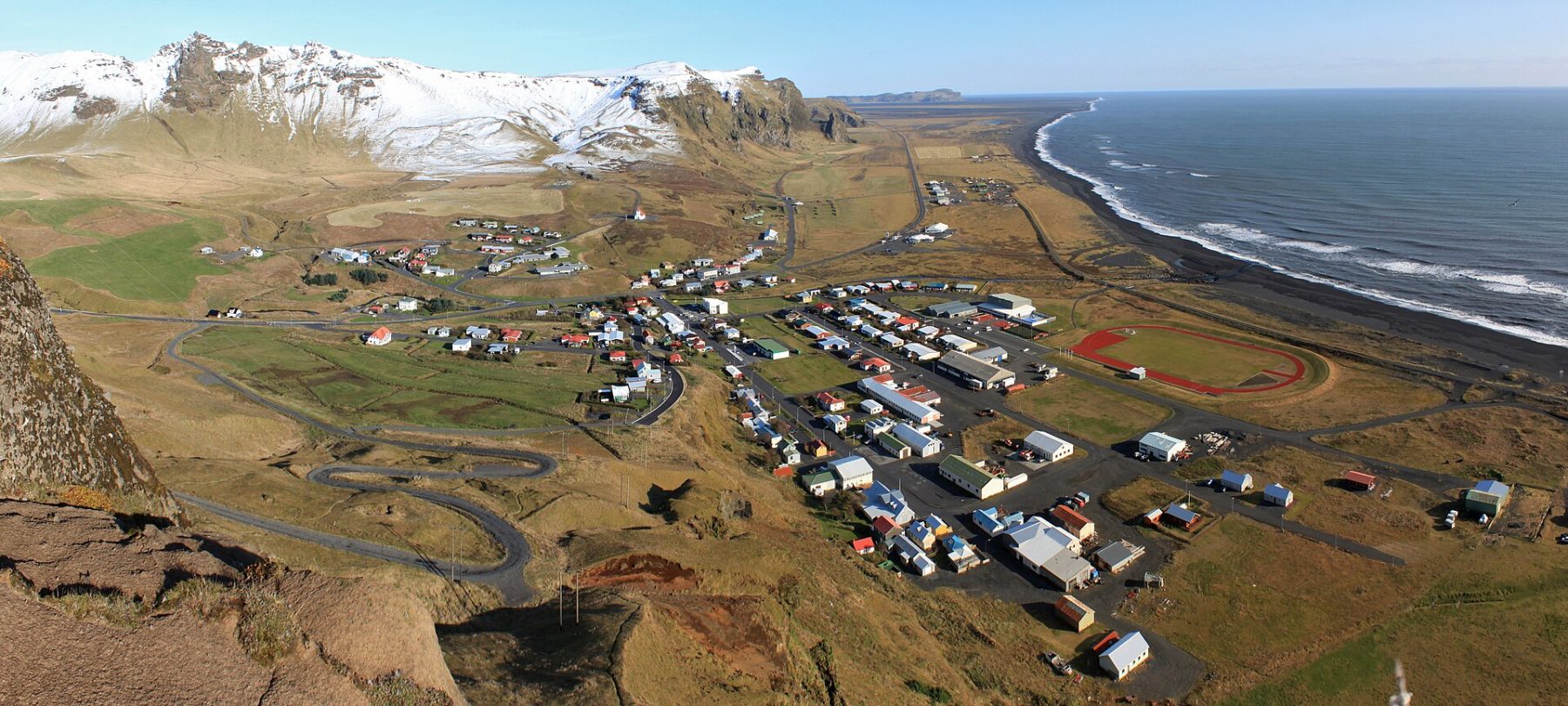
Vik
Iceland · 5 places
Photo: Progresschrome, CC BY 3.0
Vík sits on Iceland’s southern coast like a quiet challenge to the idea of what a place should be. There are no towering glaciers here, no steaming geysers, no dramatic waterfalls framed by rainbows. Instead, the landscape feels stripped down to its raw, unfiltered self—black sand beaches stretching into the horizon, cliffs that drop straight into the churning Atlantic, and a wind that never quite lets up, as if testing how long you’ll stand your ground. The village itself is little more than a cluster of houses, a church perched on a hill, and a handful of cafés where the coffee is strong and the conversations are sparse. It doesn’t try to charm you. It doesn’t have to.
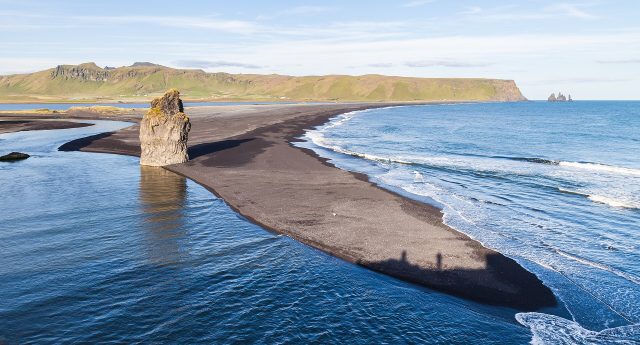
The real draw is Reynisfjara, the black sand beach that has a way of making visitors feel both awestruck and unsettled. The sand isn’t just dark—it’s the color of cooled lava, coarse and unyielding underfoot, while the waves crash against it with a force that seems almost deliberate. The basalt columns near the shore rise like the pipes of some ancient organ, their geometric precision at odds with the chaos of the ocean. On clear days, the water takes on a steely blue, but more often than not, fog rolls in, blurring the line between sea and sky. The locals will tell you not to turn your back on the waves—some have been swept away by sneaker tides, their power deceptive even to those who think they know the ocean. But that danger is part of the pull. You don’t come here to relax. You come to watch.
Beyond the beach, the landscape is steeped in stories that feel older than the rocks themselves. Nearby Dyrhólaey, a promontory with a natural arch carved by the sea, is said to be the haunt of trolls, though no one in Vík seems particularly concerned about running into one. The sea stacks just offshore, Reynisdrangar, are supposedly the petrified remains of a ship that didn’t make it to shore before dawn, a reminder that in Iceland, the line between myth and reality has always been thin. The village church, small and white against the green hillside, offers one of the few vantage points where you can take it all in—the endless ocean, the jagged coastline, the way the light shifts over the water like something alive. There are no grand museums here, no guided tours with scripted anecdotes. Just the wind, the waves, and the quiet certainty that this place has seen centuries come and go without caring much for the people passing through.
The rhythm of life in Vík is dictated by the weather, which is to say, it’s unpredictable. Summer brings nearly endless daylight, the sun dipping low enough to paint the sky in shades of peach and violet before climbing back up again. Winter, by contrast, is a time of long shadows and brief, watery light, when the aurora borealis streaks across the sky like a brushstroke of green fire. The locals don’t fuss over the cold or the rain—they’ve built their lives around it, fishing when the sea allows, tending to the few sheep that graze on the windswept hills, and closing up shop early when the storms roll in. There’s no luxury here, no grand hotels or fine dining. The only grocery store shuts its doors by evening, and the handful of guesthouses feel more like borrowed homes than tourist accommodations. It’s not the kind of place you visit for comfort. It’s the kind of place you visit to remember what it feels like to be small.
If you’re looking for nightlife or shopping, Vík will disappoint. But if you want to stand at the edge of something vast and untamed, where the ocean meets the land with no apology, then it delivers. There’s no grand spectacle here, no single attraction that defines it. Just the slow, relentless work of wind and water, the way the light changes from one minute to the next, and the quiet understanding that some places don’t need to be anything more than what they are. When you drive away, following the Ring Road toward the next stop on your itinerary, Vík lingers in a way that flashier destinations don’t. Not because it was extraordinary, but because it was real.
See & Do
5 places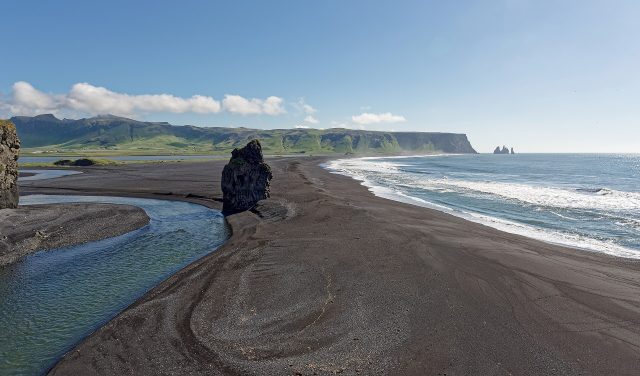
Places on the map
Marker colour follows the categoryClimate and weather
Detailed weather: Vik- Average temperature
- 6 °C
- Precipitation per year
- 490 mm
Average air temperature
°C
2
3
3
5
7
9
11
11
9
6
4
2
Jan
Feb
Mar
Apr
May
Jun
Jul
Aug
Sep
Oct
Nov
Dec


