Raufarhólshellir is one of those places in Iceland where time seems to stand still. Formed around five thousand years ago during an eruption of the Leitahraun volcano, this lava cave tells a story of fire and earth shaping the landscape in ways that still feel raw. As molten lava flowed through the valley, its outer layers cooled and hardened into a crust, while the liquid rock beneath continued to move, carving out hollow tunnels. What remains today is a winding underground passage nearly a kilometer and a half long, though only a portion is open to visitors to protect the delicate environment within.
Stepping inside Raufarhólshellir is like entering another world. The walls are adorned with intricate patterns of solidified lava, their textures resembling frozen waves or the jagged edges of a flame caught mid-motion. In places, the ceiling glistens with lava stalactites, fragile formations of volcanic glass that hang like nature’s chandeliers. The floor is uneven, scattered with loose rocks that crunch underfoot, while the air carries a cool dampness, tinged with the faint scent of minerals. The only sounds are the occasional drip of water from melting ice deep within the cave and the echo of footsteps in the quiet.
For most of its existence, Raufarhólshellir was known only to locals and geologists. It wasn’t until the early 2000s that organized tours began, turning this hidden wonder into a destination. Today, the cave is equipped with safe walkways and subtle lighting, though it hasn’t lost its sense of adventure. The passages narrow in places, the ceiling dips low, and the uneven terrain demands attention. Guides share insights into the cave’s formation and the forces that created it, but the experience remains deeply personal—less about spectacle, more about connection.
What makes Raufarhólshellir special is its living nature. The cave maintains its own microclimate, supporting rare mosses and lichens that cling to the walls. In the warmer months, bats sometimes venture inside at dusk, while in winter, snow drifts partially obscure the entrance. Outside, the surrounding tundra bursts into color with wildflowers in summer, contrasting with the stark, windswept landscape of the colder seasons. The cave shifts with the rhythms of the year, yet its mystery remains constant.
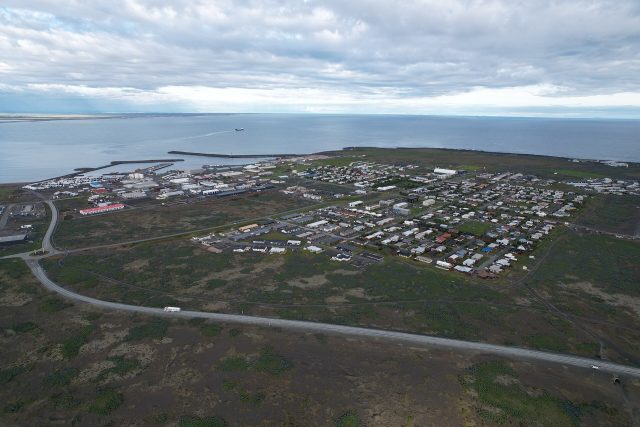
For travelers passing through Þorlákshöfn, Raufarhólshellir is an unexpected discovery. This small coastal town is best known as a fishing hub and a gateway to southern Iceland, not as a tourist hotspot. The cave lies just a short distance inland, far from the well-trodden paths leading to Iceland’s famous waterfalls and geysers. Because of this, it rarely feels crowded, offering a sense of solitude that’s increasingly rare in a country where tourism has reshaped so many landscapes.
Visiting Raufarhólshellir is a reminder of how young Iceland really is, geologically speaking. The island is still being shaped by volcanic activity, its land shifting and breathing in ways that feel almost alive. The cave is a testament to those forces—a quiet, unassuming witness to the power that created this land and continues to change it. There are no gift shops or cafes here, no signs urging you to hurry or spend money. Just the cave, the silence, and the feeling of stepping into a place where time moves differently.
The experience is simple but not effortless. Even in summer, temperatures inside hover around ten degrees Celsius, and the damp air makes it feel cooler. Proper footwear with good grip is essential, as is warm clothing. There’s no need for special equipment, but preparation makes the difference between a memorable visit and a chilly, uncomfortable one. The cave doesn’t demand much—just respect for its fragility and an openness to its quiet magic.
For Icelanders, places like Raufarhólshellir are woven into the fabric of their history. In the past, lava caves provided shelter from storms or served as temporary homes. Folklore often painted them as mystical, even otherworldly. Today, the cave stands as a bridge between past and present, a place where the raw power of nature meets human curiosity. It doesn’t need grand descriptions or exaggerated praise. You only have to step inside, listen to the silence, and let the cave speak for itself.