Leif Erikson stands quietly by the shore in Þorlákshöfn, a small coastal town where the North Atlantic meets Iceland’s rugged coastline. The bronze statue, installed in 1997, is unassuming at first glance—just a lone figure wrapped in a cloak, gazing toward the horizon as if scanning for distant lands. Yet this modest monument carries weight far beyond its size. It honors a man whose name is tied to one of history’s most overlooked voyages: the Norse discovery of North America, centuries before Columbus.
The sculpture itself is understated, avoiding grand gestures. Erikson is depicted not as a mythic hero, but as a man of his time—practical, determined, shaped by the harsh realities of life in the Viking Age. The bronze has weathered over the years, developing a patina that makes it feel older than it is, as if it has always belonged here. The surrounding park is simple, with a few benches where visitors can sit and watch the same ocean that once carried Viking longships. There’s no fanfare, just the wind, the waves, and the quiet presence of history.
Þorlákshöfn might seem an unlikely place for such a monument. The town is small, far from Iceland’s tourist hubs, and Erikson himself likely never set foot here. But its location makes sense in a broader context. This stretch of Iceland’s southern coast was once a key departure point for voyages to Greenland, where Erikson grew up after his father, Erik the Red, established Norse settlements there. From Greenland, Erikson sailed westward, reaching what the sagas call Vinland—now believed to be parts of Newfoundland and the northeastern coast of North America. The statue in Þorlákshöfn isn’t meant to mark a specific event in Erikson’s life, but rather to symbolize Iceland’s role as a launching point for these early explorations.
The choice of Þorlákshöfn reflects something deeper about Iceland’s relationship with its Viking past. The country’s history is inseparable from the sea, and nearly every coastal town could lay claim to some connection with the age of exploration. Here, the monument feels less like a historical marker and more like a quiet acknowledgment of a shared heritage. The sagas tell us that Erikson’s voyage to Vinland was just one of many, part of a larger pattern of Norse seafaring that stretched from the British Isles to the shores of North America. This statue is a reminder that Iceland wasn’t just a remote island in the North Atlantic—it was a crossroads, a place where people looked outward, driven by curiosity and necessity.
For Icelanders, the Viking era isn’t just ancient history; it’s a living part of national identity. The sagas, passed down through generations, shape how many view their country’s past, and monuments like this one serve as tangible links to those stories. Erikson’s journey to Vinland was nearly forgotten outside Scandinavia for centuries, overshadowed by later European explorations. But in Iceland, his name carries weight, a symbol of the country’s early connections to the wider world. The statue in Þorlákshöfn isn’t grand or imposing, but that only makes it feel more authentic—a small tribute to a man whose legacy was almost lost to time.
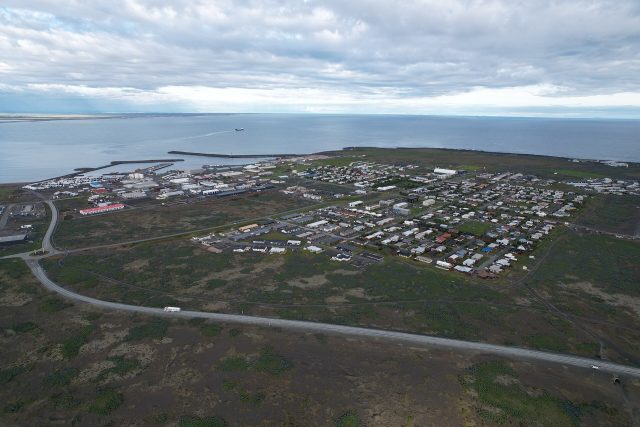
The town itself is the kind of place that tourists often overlook. There are no crowds, no souvenir shops, just a quiet fishing community where life moves at the pace of the tides. The monument fits naturally into this setting, as if it has always been here. Locals might walk past it on their way to the harbor or pause for a moment to look at the ocean, but it doesn’t demand attention. It simply exists, a silent witness to the past. That lack of pretension is part of what makes it special. There are no lengthy plaques or dramatic displays, just the statue, the wind, and the vast expanse of water stretching toward the horizon.
Visiting the monument doesn’t require any special planning. It’s easy to find—a short walk from the town center, near the water’s edge. The simplicity of the experience is part of its appeal. There’s no need for elaborate explanations; the statue speaks for itself. On clear days, the view of the ocean is striking, and it’s easy to imagine Erikson’s longship cutting through the waves. On foggy days, when the mist rolls in, the scene takes on a different mood, as if the past and present blur together. It’s a place that invites reflection, not just about Erikson’s voyage, but about the broader story of human exploration.
The sagas that recount Erikson’s journey were written long after his death, and historians still debate many details. Some question whether Vinland was truly North America, or if the Norse settlements there were as extensive as the sagas suggest. But the existence of this monument—and others like it—shows that the story still resonates. It’s a reminder that history isn’t just about facts and dates; it’s about the way people remember and reinterpret the past. For Icelanders, Erikson’s voyage is more than a footnote in a textbook. It’s a source of pride, a testament to their ancestors’ resilience and adventurous spirit.
In the end, the statue of Leif Erikson in Þorlákshöfn is more than just a tribute to one man. It’s a symbol of Iceland’s place in the world—a country that has always been defined by its relationship with the sea. The Vikings who left these shores weren’t just raiders or settlers; they were explorers, driven by the same curiosity that has shaped human history for millennia. Standing by the monument, looking out at the ocean, it’s easy to feel a connection to that past. The waves haven’t changed, and neither has the sense of possibility that comes from staring at the horizon. Þorlákshöfn may not be the most famous stop on an Icelandic itinerary, but it’s one of those places where history feels alive, where the past isn’t just remembered—it’s still present.