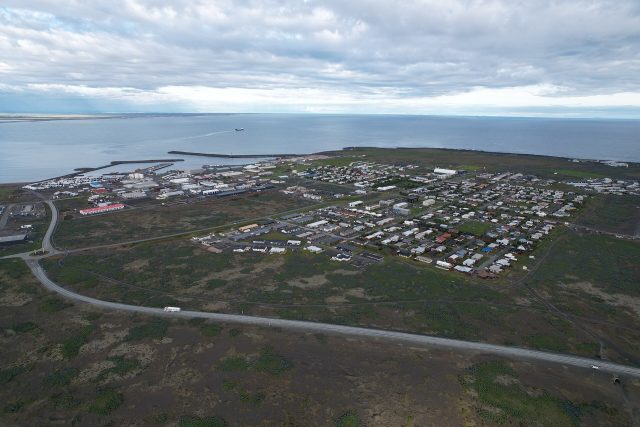
Thorlákshöfn’s small white church stands where the land meets the sea, in a quiet fishing village on Iceland’s southern coast. This isn’t a place that draws crowds—there are no souvenir shops or tour buses, just the steady rhythm of waves and the wind cutting across the black sand. The church, with its simple wooden frame and pale facade, seems almost weightless against the dark cliffs and endless ocean, yet it anchors the village in a way few buildings do.
The church’s history is tied to the rise of Thorlákshöfn as a fishing hub in the 19th century. Back then, the village thrived as boats returned with their catches, and the need for a proper place of worship grew. The first church here was built in 1842, but it soon became too small for the growing community. The current building went up in 1925, and since then, it has served not just as a house of prayer but as a gathering place for a town that has seen its share of hardship and change.
There’s nothing ornate about the church’s design. The wooden walls, steep roof, and modest steeple follow the practical style of Icelandic architecture, where durability matters more than decoration. Inside, the space is just as unassuming—plain wooden pews, a simple altar, and high windows that let in the shifting Nordic light. It’s the kind of place where you can sit quietly and feel the weight of time, undistracted by anything unnecessary.
For generations, the church has been more than a religious site. It’s where people came to mark births, marriages, and losses, but also where they shared news, settled disputes, and found warmth during the long, dark winters. Even now, when the village is quieter than it once was, the church remains a thread connecting the past to the present. On Sundays, families still gather here, children play on the grass outside, and elders sit on the benches, watching the sea as they’ve done for decades.
The land around the church is just as striking as the building itself. Behind it, moss-covered hills roll toward distant mountains, while the shore lies just a short walk away, where waves crash against jagged volcanic rock. The air smells of salt and damp earth, and the wind carries the sound of the ocean. It’s the kind of place where you can stand for a while, listening to the rhythm of the waves, and feel the quiet settle over you.
Thorlákshöfn’s church isn’t a tourist attraction in the usual sense. It doesn’t have grand art or dramatic history, but it tells a story about how people have lived in Iceland for centuries—close to the land, to each other, and to forces far bigger than themselves. The village isn’t as busy as it was a hundred years ago, but the church still stands, a quiet witness to all that has changed and all that has stayed the same.
In winter, the church looks almost fragile under its blanket of snow, the light from its windows casting a soft glow on the white ground. In summer, when the sun barely sets, it blends into the landscape, as much a part of the scenery as the cliffs and the sea. No matter the season, there’s something about sitting on one of the benches outside, listening to the waves, and realizing how much this small wooden building means to the people who call this place home. It doesn’t ask for admiration, but it lingers in the mind long after you’ve left.