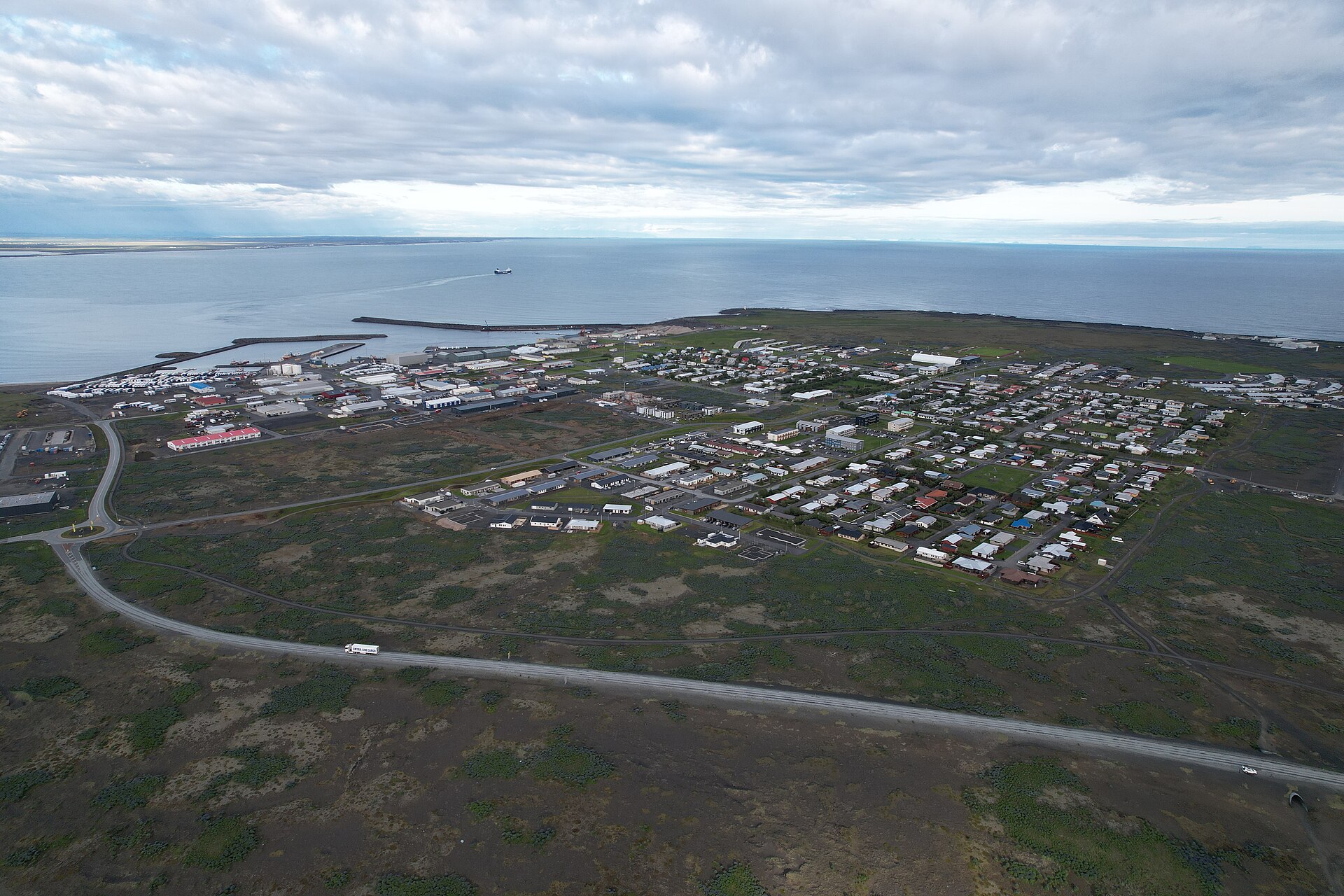
Thorlákshöfn’s harbor is one of those places in Iceland where time moves differently. There’s no rush here, no hum of a city—just the quiet rhythm of the sea and the endless stretch of the horizon, especially when the low northern sun casts long shadows across the docks. Unlike the tourist hubs of Reykjavík or Vík, this small port on Iceland’s southern coast lives by its own pace, shaped by the tides and the weather. For locals, it’s a workplace; for the rare traveler who wanders this way, it’s a glimpse into the everyday life of Iceland’s rural heart.
The harbor’s history is inseparable from fishing, the lifeblood of Iceland for centuries. Its location wasn’t chosen by chance—sheltered by a natural bay, it offered a safe haven for boats braving the Atlantic. In the past, wooden vessels set out from here in search of cod and herring, while today modern trawlers dock in the same waters, though the essence of the place remains unchanged. Fish still leave these shores for markets far beyond Iceland, and the harbor remains a meeting point between land and sea, labor and tradition.
The architecture here is simple and purposeful. Low warehouses of corrugated metal, docks lined with rusted bollards, cranes poised to lift the day’s catch—everything serves a single function. Even the church, set slightly apart, is unassuming, as if reluctant to draw attention from the sea. There are no grand buildings or tourist attractions, and that’s precisely what makes Thorlákshöfn feel authentically Icelandic. It’s a place where form follows necessity, not spectacle.
The atmosphere shifts with the weather. On clear days, when the sky is a sharp blue and the wind dies down, the harbor feels almost serene—seagulls wheel overhead, fishermen mend their nets, and the scent of salt mixes with woodsmoke from nearby homes. But when a storm rolls in, everything changes. Waves crash against the docks, wind tears at the tarps covering boats, and even the locals retreat indoors for coffee. This unpredictability is part of the place’s character, a reminder that here, nature sets the terms.
For travelers, Thorlákshöfn isn’t a destination so much as a pause along the way. Most pass through quickly, but those who linger for a few hours discover a different side of Iceland—one without crowds at waterfalls or lines at souvenir shops. Instead, there’s just the sea, the wind, and the people for whom fishing isn’t an adventure but a way of life. You can watch the unloading of the day’s catch, walk along the empty shoreline, or simply sit on the dock, staring at the horizon.
The harbor’s importance to Iceland is easy to overlook, but it plays a vital role in the region’s economy. While not the largest port in the country, it’s a key link in the chain that sends Icelandic fish to tables around the world. It also serves as a base for vessels working these waters, a modern echo of its past as a hub for fishermen. Even now, it remains a quiet but essential thread connecting the island to the wider world.
There are no museums or guided tours here, but history lingers in the details—the rusted chains on the docks, the old photographs in the local café, the stories passed down through generations. This is a place where the past isn’t confined to books; it lives on in the daily work of the harbor. Perhaps that’s why Thorlákshöfn doesn’t try to be a tourist attraction. It simply exists, as it always has, governed by the sea and the people who depend on it.
If you find yourself here, don’t rush past. Take a moment to walk along the docks, listen to the waves and the cries of gulls. You won’t find anything extraordinary, but that’s the point. In its quiet, unassuming way, Thorlákshöfn captures the essence of Iceland—a country where the sea matters more than the land, and life follows the rhythm of the elements rather than the clock. It’s not a place to check off a list, but one that stays with you long after you’ve left, a reminder of the beauty in simplicity.