Rani Pokhari is one of those rare places in Kathmandu where the city’s relentless energy seems to pause. Tucked within the old heart of Lalitpur, once a kingdom of its own, this artificial pond feels like a quiet secret preserved amid the capital’s modern bustle. For years, it was hidden behind locked gates, known mostly through stories and glimpses from the outside. Even now, after opening to the public in 2018, it retains an air of mystery, as if the water itself holds more than just reflections.
The pond was commissioned in the 17th century by King Pratap Malla, a ruler whose reign left a deep mark on Kathmandu’s cultural landscape. According to local lore, the king built Rani Pokhari in memory of his wife, who had passed away grieving the loss of their son. The water was meant to symbolize her tears, and the pond became a place of solace for the people of the city. Over time, it grew into more than just a memorial—it became a living part of Patan’s identity, a space where grief, faith, and everyday life intersected.
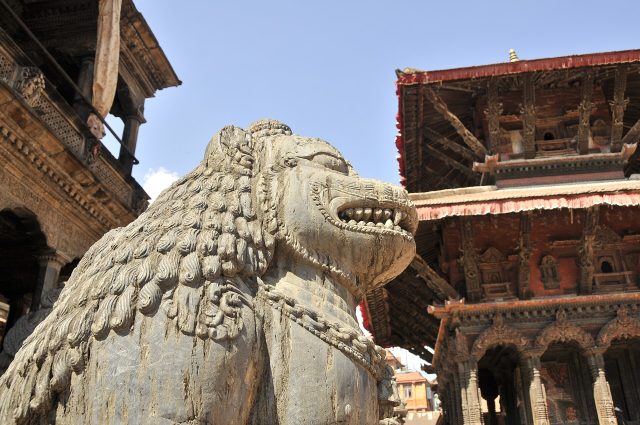
At the center of the pond stands the small temple of Balagubeshwar, dedicated to Shiva. A stone bridge leads to it, though the temple itself is only accessible once a year during the festival of Bisket Jatra, when devotees gather to offer prayers. The rest of the time, the temple remains closed, its presence adding to the pond’s quiet allure. The water is dark, almost black in certain lights, and on clear days, the bottom is visible, scattered with coins tossed in for luck. The stone walls surrounding the pond are adorned with carvings of elephants, lions, and mythical creatures, their details softened by time and weather.
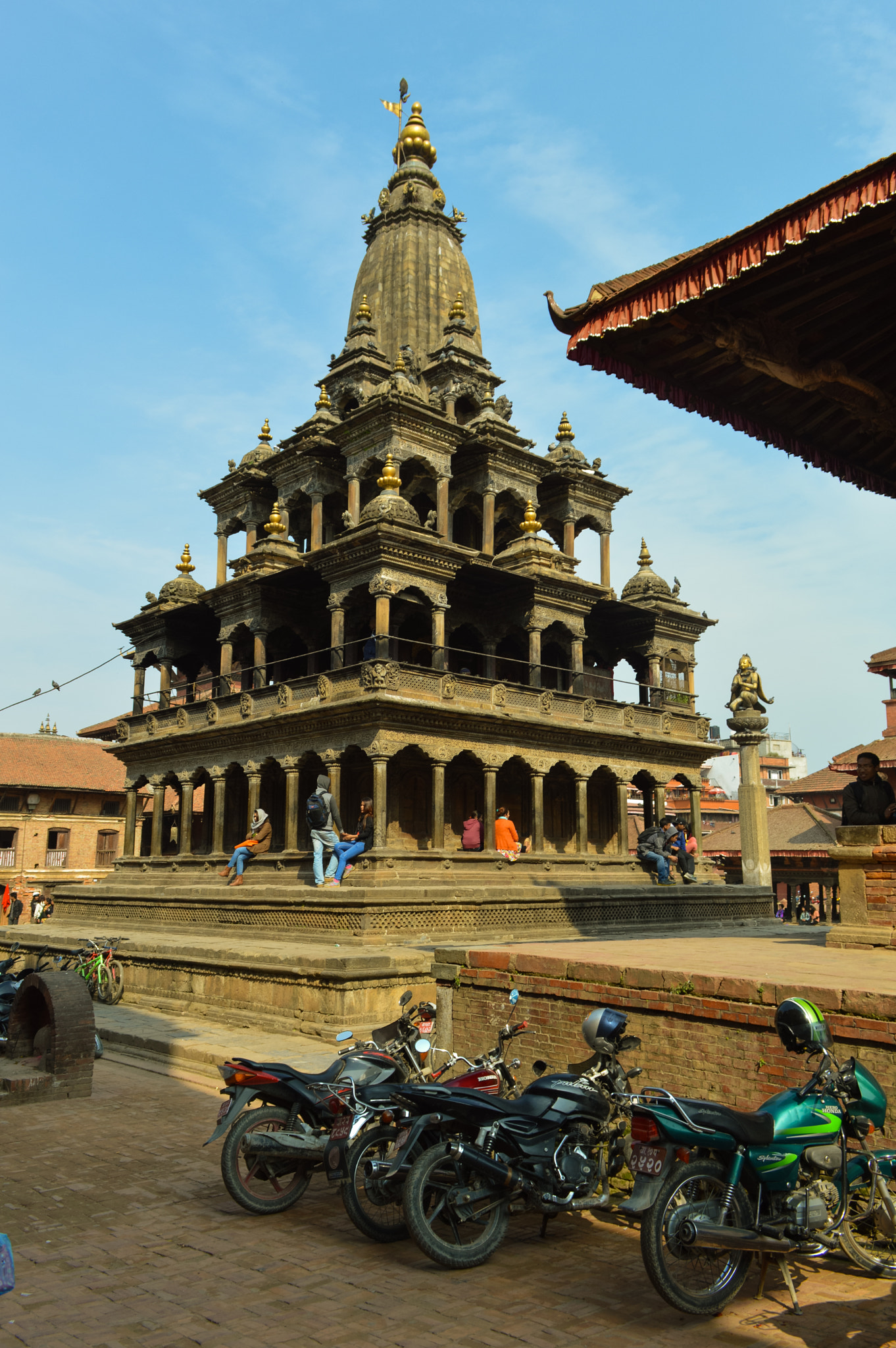
The architecture here is distinctly Newari, the style that defines much of Patan’s old city. The gates are intricately carved, with wooden shutters that hint at the craftsmanship of a bygone era. For decades, Rani Pokhari was off-limits to the public, its gates locked, its stories confined to those who had seen it in passing or heard tales from elders. When it finally opened, reactions were mixed. Some locals were glad to finally step inside a place they had only imagined, while others worried that the pond’s tranquility would be lost to crowds. So far, it has managed to keep its character—busier than before, perhaps, but still a place where the past lingers.
The area around Rani Pokhari is a reminder of what Patan once was. Narrow lanes wind past ancient temples and houses with elaborately carved windows, their facades telling silent stories of the city’s history. Nearby, Mangal Bazaar is a hub of daily life. In the mornings, vendors sell vegetables and spices from stalls that have stood for generations. By evening, the square quiets down, with locals gathering to chat or play cards under the shade of old trees. The contrast between the market’s lively energy and the pond’s stillness is striking, yet both feel like essential parts of the same place.
The best time to visit Rani Pokhari is at dusk, when the setting sun turns the water golden and the shadows stretch long across the stone walls. The crowds thin out, and the pond feels almost private. Children fly kites along the edges or feed the ducks that glide across the surface, while older visitors sit on the stone benches, watching the light fade. It’s a moment when the city’s noise recedes, and the pond’s quiet history takes over.
During festivals, Rani Pokhari transforms. The pond becomes the center of celebrations, with music filling the air and the scent of roasted corn and spices drifting from makeshift stalls. The temple at its heart, usually closed, opens its doors, and the space feels alive in a different way—less about solitude, more about shared joy. These moments are fleeting, but they reveal another layer of the pond’s significance, one that goes beyond its origins as a memorial.
What makes Rani Pokhari special is its ability to feel both timeless and immediate. Unlike the crowded temples and squares that draw most visitors to Kathmandu, this place doesn’t demand attention. It doesn’t have the grandeur of Durbar Square or the spiritual intensity of Pashupatinath, but it offers something just as valuable—a sense of connection. Here, the past isn’t just preserved in stone; it’s woven into the daily rhythms of the city. Locals come to pray at small shrines along the pond’s edge, elders play cards under the trees, and children learn to swim in its waters. There’s no sense of being a tourist here, just a quiet invitation to be part of something older and deeper.
For anyone trying to understand Nepal beyond its postcard images, Rani Pokhari is a good place to start. It’s not a monument to be admired from a distance, but a living space where history, myth, and everyday life coexist. The pond doesn’t reveal its secrets all at once—it takes time, patience, and perhaps a willingness to sit still long enough to notice the details. In a city that’s always moving, that’s a rare gift.