Standing in the heart of Patan Durbar Square, Krishna Mandir is more than just a temple—it’s a masterpiece of Newari architecture that has shaped the identity of the Kathmandu Valley for centuries. Built in the 17th century, it occupies a quiet corner of the square, surrounded by other historic structures, yet it commands attention with its graceful stone carvings and balanced proportions. Dedicated to Krishna, one of Hinduism’s most revered deities, the temple’s origins are tied to a local legend. King Siddhi Narasingha Malla is said to have dreamed of Krishna and his consort Radha, and upon waking, he commissioned the temple to immortalize that vision in stone.
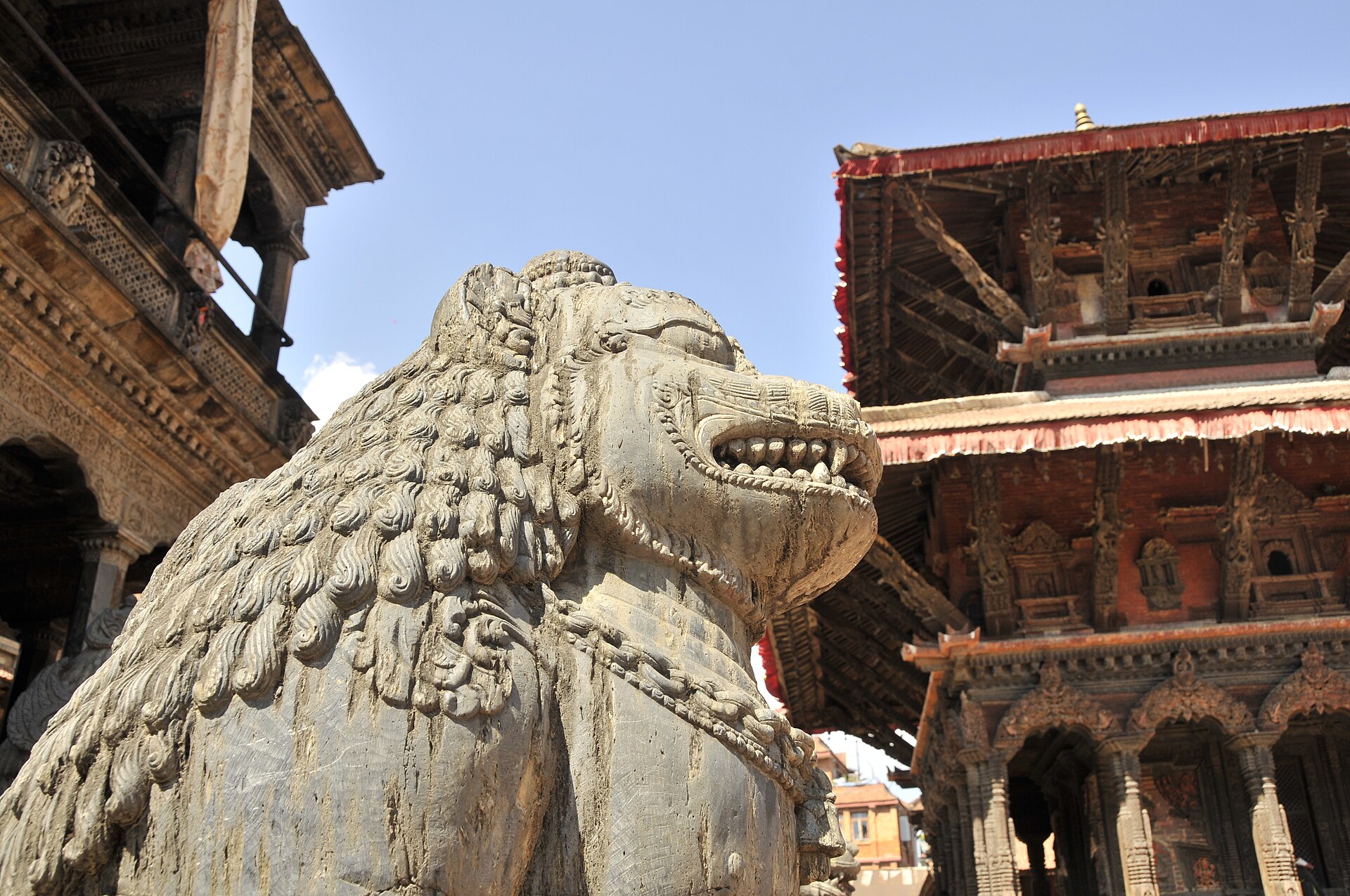
What makes Krishna Mandir architecturally remarkable is its construction—it’s one of the few temples in Nepal built entirely from stone, without a single brick or wooden beam. Three tiers of intricately carved spires rise above the square, each surface adorned with scenes from the Hindu epics, the Mahabharata and the Ramayana. The craftsmanship is astonishing; every panel tells a story, from divine figures and mythical creatures to everyday scenes of Newari life. The details are so precise that even the folds of a deity’s garment or the beads of a necklace appear lifelike, as if frozen in time.
Inside, the temple feels like a different world. The dim light, the scent of incense, and the murmur of prayers create a sense of quiet reverence. The main altar is dedicated to Krishna, but the space also honors other deities, including Shiva and Vishnu, reflecting the syncretic nature of Nepali Hinduism. Unlike many temples in Kathmandu, Krishna Mandir isn’t adorned with gold leaf or bright paint—its beauty lies in its restraint and the skill of its creators. Visitors often describe it as feeling alive, as though the statues themselves carry the spirit of the artisans who carved them.
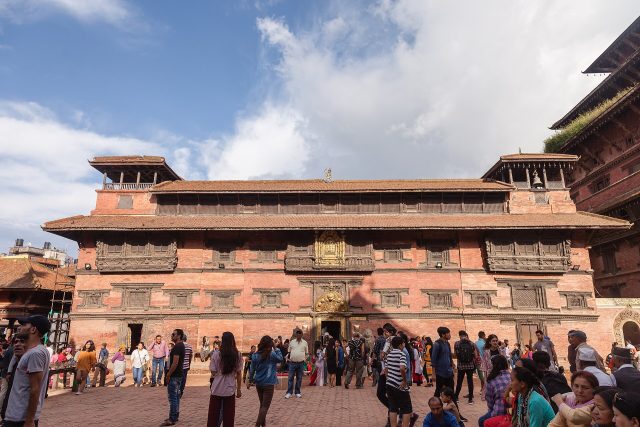
The square in front of the temple is a microcosm of Patan’s daily life, where the sacred and the ordinary intersect. Locals come to pray, tourists wander with cameras, and vendors sell marigolds for offerings and traditional sweets. The atmosphere shifts with the seasons, but it’s during festivals like Krishna Janmashtami—the celebration of Krishna’s birth—that the temple truly comes alive. The square fills with music, dance, and processions, turning Patan into an open-air stage where ancient rituals unfold alongside modern life.
Krishna Mandir isn’t just a religious site; it’s a symbol of Patan’s cultural heritage. The city, once one of the three kingdoms of the Kathmandu Valley, flourished during the golden age of Newari civilization, and its architecture reflects that legacy. The temple fits seamlessly into the ensemble of Patan Durbar Square, where every structure has its own story. Nearby landmarks like the Golden Temple and Mahabodhi Temple are equally impressive, but Krishna Mandir stands out for its harmony and completeness. It embodies the Newari ideal of beauty in simplicity, where every detail serves a purpose.
For those curious about history, the temple offers a glimpse into Patan’s past. Its walls have witnessed centuries of change, from the days when the city was an independent kingdom to the flourishing of art and craftsmanship under royal patronage. The stone carvers who built the temple were masters of their trade, and their work remains a testament to their skill. Interestingly, the temple’s design echoes elements of North Indian architecture, hinting at the cultural exchanges between Nepal and its neighbors. Yet, it remains distinctly Nepali—rooted in local traditions without a trace of foreign influence.
Today, Krishna Mandir continues to play a vital role in Patan’s life. It hasn’t become a relic of the past but remains a living place of worship, drawing people from all walks of life. Elders chant mantras, children play on the steps, and young couples seek blessings. The temple doesn’t shut out the world; it embraces it while maintaining its sacred atmosphere. That might be its greatest strength—it’s not just a monument but a bridge between generations, a place where the past and present coexist.
Visiting Krishna Mandir is an opportunity to experience the soul of Nepal. There’s no rush here, no tourist crowds jostling for space. You can spend hours studying the carvings, listening to locals share stories, or simply sitting on the steps, watching life unfold in the square. The temple asks for nothing but respect—you don’t need to be a believer to appreciate its beauty or significance. It’s open to anyone who wants to connect with the history and culture of this extraordinary country. In a world that often feels hurried, Krishna Mandir offers a moment of stillness, a chance to step back and reflect.