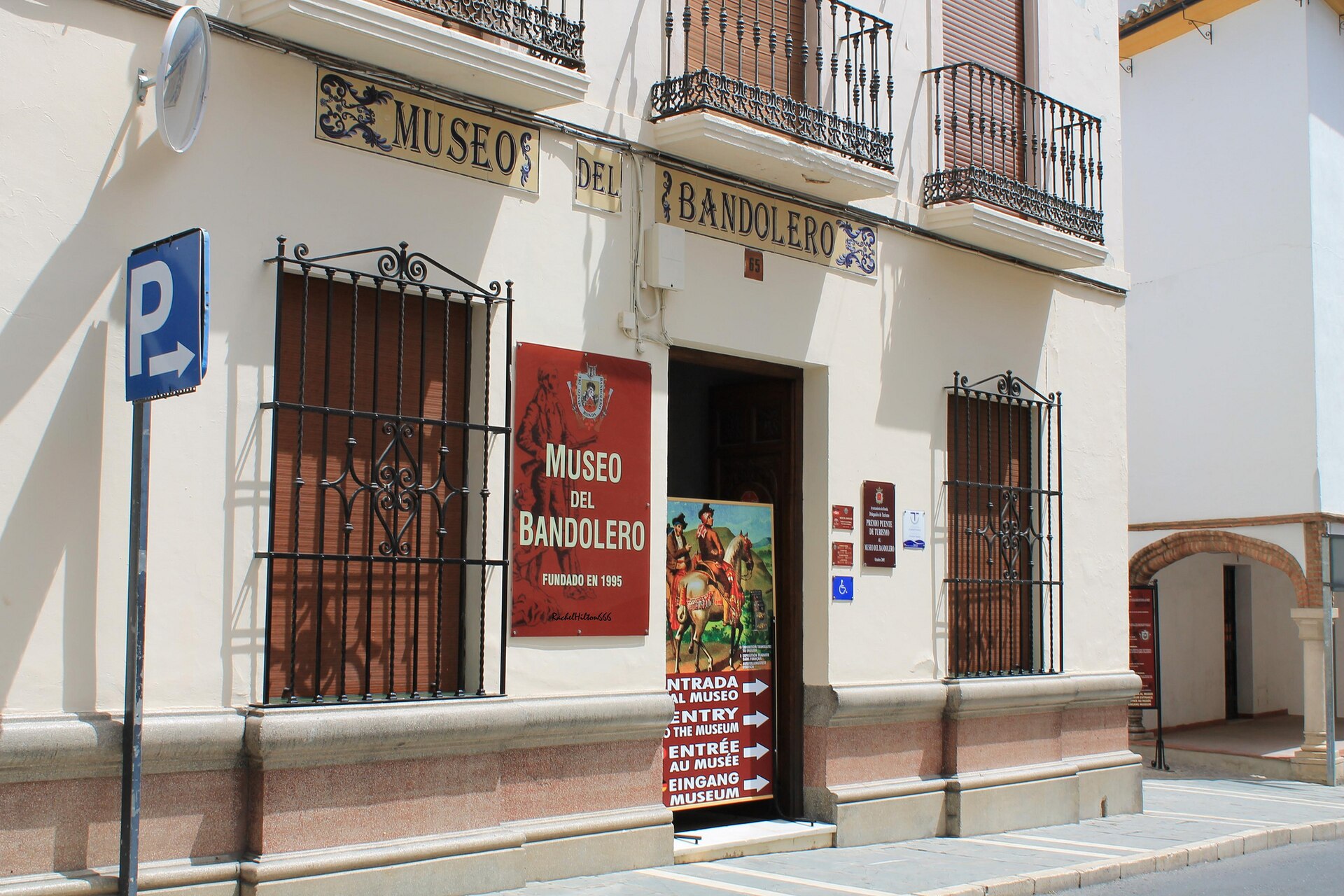
Ronda has long been a town where legend and history blur, especially when it comes to the outlaws who once roamed the mountains of Andalusia. The Banditry Museum is a doorway into a time when these hills were ruled by men who lived outside the law. Their names were whispered in taverns, their exploits passed down through generations. The museum presents them as they were: flawed, daring, part of the region’s fabric.
The building itself is part of the story. It’s an old Andalusian mansion that once welcomed travelers who didn’t know they were being watched by the men they feared. The thick oak doors, wrought-iron grilles, and stone arches still stand. The exhibits aren’t sterile displays but fragments of a world that still feels alive. Yellowed maps trace smugglers’ routes. Rusted pistols lie next to stolen coins. Personal belongings hint at lives that were unpredictable and short.
José María "El Tempranillo" is one of the most compelling figures here. He robbed the rich, helped the poor, and evaded capture for years. The museum has his portrait, painted from life, along with a wide-brimmed hat and a leather belt lined with bullets. Whether these relics are genuine doesn’t matter. What lingers is the myth of a man who became a folk hero, his name still in songs and stories.
Smuggling was another part of Ronda’s past. The routes through these mountains carried tobacco, silk, weapons, and jewels. Exhibits show worn saddle packs, forged documents, and mock-ups of caves where contraband was hidden. The collection of confiscated goods is striking: French pocket watches, peasant knives. Each item tells of risks and rewards.
Banditry wasn’t isolated. It was woven into daily life. Some feared the outlaws, others sheltered them. Exhibits include royal decrees, newspaper clippings, and court documents. They show how authorities tried—and failed—to stop the problem. Many bandits became legends, their exploits celebrated in ballads still sung today.
The building is a classic Andalusian house with a quiet patio. Fountains once splashed here. Orange trees grew. Now, the courtyard is still, but the past remains. The corridors lead through rooms with faded frescoes and plasterwork.
Visiting isn’t about observing history. It’s about stepping into it. There’s no grand narrative, no moralizing. Just raw, human stories of people who lived by their wits. You can spend hours over faded photographs, letters written by bandits, or smuggling trails.
The exhibits don’t just tell stories. They make you feel them. The past isn’t distant. It lingers in the air.
The Banditry Museum doesn’t judge. It presents ordinary people caught in extraordinary circumstances. Loyalty and betrayal, courage and fear—all part of the same world. The museum leaves it to you to decide who the heroes were. Who the villains. That ambiguity makes the place compelling. The past here isn’t a lesson. It’s an experience.