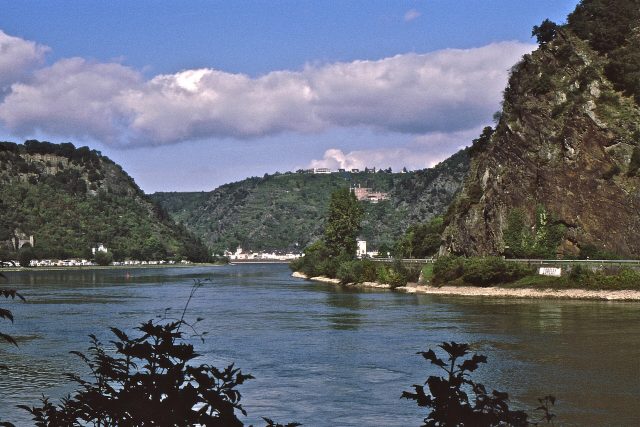
St. Goarshausen’s riverside landing is where the Rhine seems to pause before its most famous bend. Here, on the right bank beneath the Lorelei rock, the river runs darker and slower, as if reluctant to leave the shadow of the cliff that has drawn legends, ships, and travelers for centuries. The water carries history in its current, and the landing itself feels like a threshold—between the river traffic above and the quieter stretches downstream, between the myths of the past and the steady rhythm of life today.
The town is small, but its dock has always been a vital stop along the Rhine. In the Middle Ages, merchants unloaded wine, grain, and goods here, bound for northern cities. The river was Europe’s main trade route, and every landing had its purpose. Now, the quay hums with tourists boarding boats, vendors selling postcards, and fishermen casting lines. The air smells of diesel and river water, mingling with the faint sweetness of nearby vineyards.
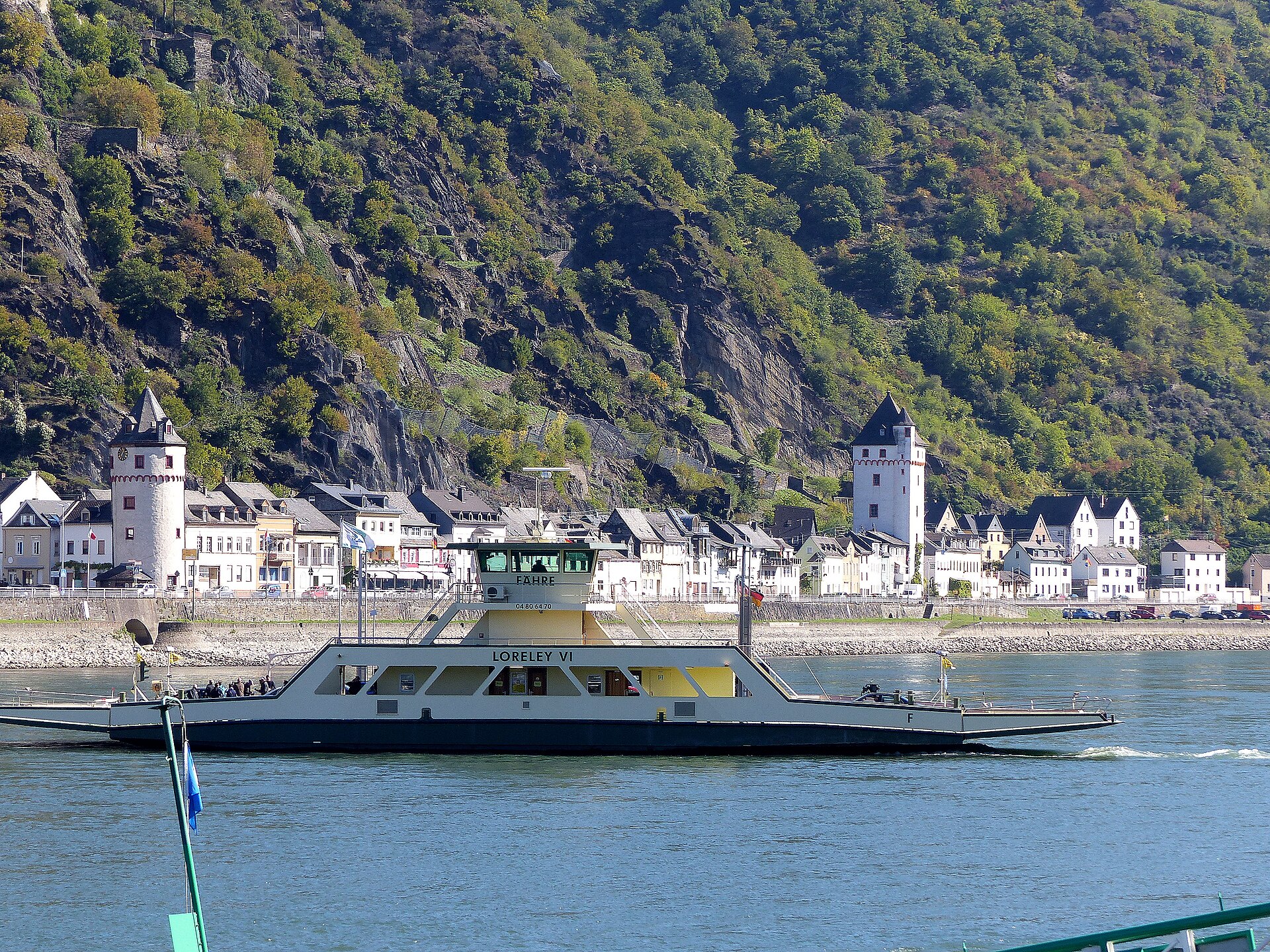
The landing isn’t grand—just a modest cluster of ticket booths, a few cafés, and wooden benches facing the water. Across the river lies St. Goar, the twin town connected by a ferry that runs from dawn till dusk. The ferry carries locals to work, cars, and bicycles. Watching it shuttle back and forth is mesmerizing, a reminder that the Rhine is a working river.
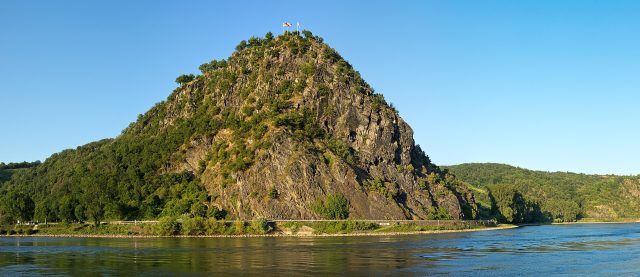
The real draw is the Lorelei. The rock rises nearly 120 meters above the water, its sheer face looming over the river. The legend of the siren who lured sailors to their doom with her song has given the place an aura. You can hike to the top or take the cable car, but many prefer to see it from the deck of a boat. On clear days, the cliff’s reflection shimmers in the water, making it seem as if the rock itself is floating. The river’s curve and the rock’s height might have played tricks on sailors’ minds.
Autumn is when the Rhine here is at its most beautiful. The vineyards on the hillsides turn gold, and the air carries the scent of ripe apples and fermenting grapes. Small family-run wineries open their doors for tastings, and many visitors combine a river cruise with a stop at one of these modest estates. The wine tastes of the land—earthy, a little wild, nothing like the polished bottles from larger producers.
Winter changes everything. The boats run less frequently, the crowds thin, and the town settles into a quiet rhythm. The river turns leaden under low skies, and the cliffs seem more imposing. The cafés stay open, but the pace slows. A cup of mulled wine by the window, watching barges glide past, feels like the only thing worth doing. The emptiness has a stark beauty, a sense that the river and the rocks have reclaimed the space.
This isn’t a place to linger for days. It’s a pause—a moment to step off a boat, stretch your legs, and take in the view before moving on. The river flows as it always has, the cliffs stand as they always have, and the ferry keeps making its crossing, day after day. The Rhine has shaped it, and that history is enough.