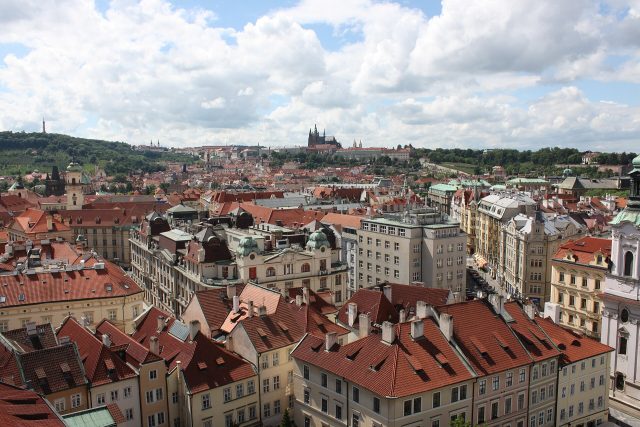
Prague Zoo sits on the rolling banks of the Vltava River in the quiet district of Troja, where the city’s edges blur into forest. Unlike many urban zoos, it doesn’t feel crowded or artificial. The paths wind through trees, bridges cross small ravines, and from certain spots, you can glimpse the river and the distant rooftops of Prague. There’s no rush here, no attempt to impress with sheer size or spectacle. Instead, it feels like stepping into a place where animals and visitors move at the same unhurried pace, as if the zoo itself has settled into the landscape over time.
The idea for Prague Zoo took shape in the 1930s, when the city set aside land that had once been a hunting ground. Professor Jiří Janda, a zoologist, envisioned a space where animals could live in conditions as close to their natural habitats as possible. The early years were difficult—funding was scarce, and World War II nearly forced its closure. But by the 1950s, the zoo began to recover, and today it houses around 1,500 animals from over 300 species. More than just a place to visit, it has become a research center, involved in conservation programs for endangered species.
The design of the enclosures is as thoughtful as the animals they house. Unlike modern zoos dominated by glass and concrete, Prague Zoo balances functionality with aesthetics. Some pavilions resemble old estates, others mountain lodges or tropical villages. The gorilla enclosure, for example, looks like a rocky grotto with waterfalls, while the panda habitat blends bamboo thickets with traditional Chinese motifs. Even the practical buildings—kitchens, veterinary clinics—are integrated into the landscape so they don’t stand out.
One of the zoo’s proudest achievements is its success in breeding rare animals. It was the first in the world to breed giant salamanders in captivity, and its program to save Przewalski’s horses is among the most successful in Europe. In the 2010s, the zoo became home to a pair of giant pandas, a gift from China that drew crowds of visitors. But the zoo isn’t just about exotic species. The insectarium houses butterflies, beetles, and spiders, while the nocturnal animal pavilion lets visitors observe lemurs and bats in dim light, as if peering into their natural world after dark.
A highlight of the zoo is the Africa exhibit, a vast open-air space where giraffes, zebras, antelopes, and ostriches share the same terrain. Visitors can walk along a suspended bridge for a bird’s-eye view or descend to ground level to stand among the animals. In summer, a petting zoo lets children feed goats and sheep, while in winter, an ice rink turns the space into a family-friendly attraction. A cable car connects the upper and lower parts of the zoo, offering not just convenience but a chance to see the surrounding area from above.
Walking through the zoo is like moving between different climates. The tropical bird pavilion is humid and warm, mimicking a jungle, while the penguin exhibit feels like the chilly coast of Antarctica. There’s a corner of medieval Europe, where owls and bats live in dimly lit halls, and an Asian section with tigers and red pandas. Each pavilion has its own atmosphere, shifting subtly from one to the next, as if the zoo itself is a collection of small worlds.
What makes Prague Zoo different is its attention to detail. There are no flashy signs or advertisements—just understated information boards that don’t distract from the animals. The cafes and gift shops sell more than just souvenirs; you’ll find books about wildlife, eco-friendly toys, and even seeds for rare plants. Children can visit an educational center with games and workshops, while adults can join behind-the-scenes tours to learn about the work of veterinarians and zoologists.
In recent years, the zoo has focused more on sustainability. Solar panels generate energy, rainwater is collected for reuse, and some waste is turned into compost. Enclosures are designed to let animals behave as naturally as possible, while still allowing visitors to observe them without intrusion. There are no animal shows or public feedings—just lectures, films, and conversations with staff who share stories about the zoo’s inhabitants.
Prague Zoo isn’t just a place to see animals. It’s where the city meets nature, where science becomes part of everyday life. There’s no tourist hustle here, just a quiet space to spend a day away from the noise, watching life unfold at its own pace. Maybe that’s its greatest value—not in the number of species or the size of the enclosures, but in the way it makes you feel connected to something larger.