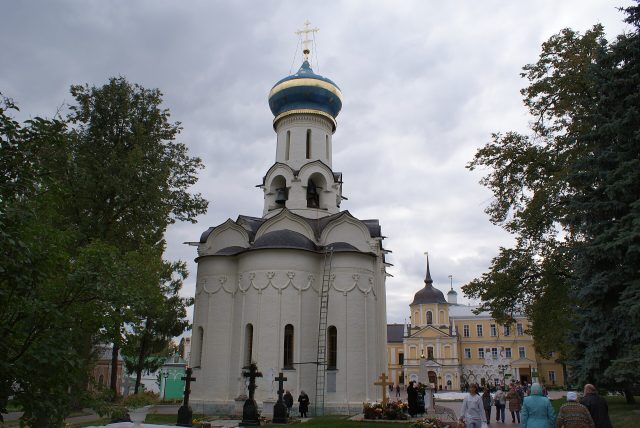
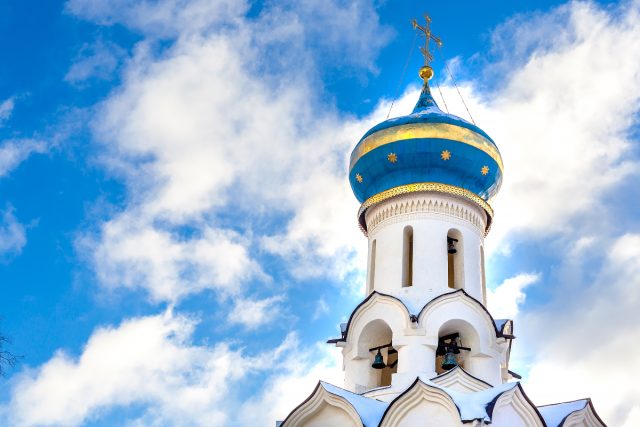
The Pokrovsky Cathedral in Sergiev Posad is one of those rare places where history isn’t just preserved in stone—it lingers, breathing and echoing through the centuries. Tucked within the walls of the Trinity Lavra of St. Sergius, it feels as though time moves differently here, slower and deeper, carrying whispers of the past. While not as ancient as the Lavra’s other cathedrals, its presence is far from accidental. It marks a pivotal moment in the life of the monastery and, by extension, all of Russia.
Construction began in the mid-16th century, when the monastery had already become the spiritual heart of the nation. The then-abbot, who would later become Metropolitan Macarius, envisioned a cathedral dedicated to the Protection of the Holy Virgin—a feast day deeply revered in Russia. Legend has it that on this very day in 1552, Ivan the Terrible received news of his victory over the Kazan Khanate, turning the feast into a symbol of divine intercession. The cathedral was meant to be more than a place of prayer; it was to stand as a monument to that victory, a reminder of how closely faith and state were intertwined in those times.
The architecture is unassuming yet striking in its simplicity, befitting a monastic church of the era. It doesn’t overwhelm with grandeur like the cathedrals of the Moscow Kremlin, but there’s a quiet harmony in its design. White-stone walls, narrow windows, and a tent-like bell tower are all hallmarks of 16th-century Russian architecture. Inside, the space is small but bright and intimate, with low vaults that create a sense of shelter. The iconostasis isn’t as ornate as those in the Lavra’s main churches, yet each icon is crafted with care, reflecting an era when art and faith were inseparable.
One of the cathedral’s most significant features is its crypt, where the remains of many notable figures from that time rest, including relatives of Ivan the Terrible. Among them is his first wife, Anastasia Romanovna, whom the tsar deeply loved and mourned after her early death. Some say her passing was a turning point, pushing Ivan toward the cruelty and paranoia that would later define his reign. The crypt isn’t open to visitors, but its very existence lends the cathedral a profound atmosphere, as if the echoes of those distant days still resonate within its walls.
The Pokrovsky Cathedral has endured its share of trials. During the Time of Troubles, it was looted by Polish forces, later damaged by fires, and subjected to less-than-careful restorations. Yet each time, it was restored, preserving its original appearance. Today, it looks much as it did four centuries ago, a rarity among churches that have often been rebuilt beyond recognition. This steadfastness gives it a special value—it remains humble, unassuming, yet enduring, much like the faith it represents.
The cathedral is still an active place of worship, where services are held and prayers are offered. While it doesn’t draw the same crowds as the Trinity Cathedral, those who do visit tend to linger. Perhaps it’s the absence of bustle, the quiet that’s so hard to find in the modern world. Here, you can stand by a wall, listening to the soft hum of oil lamps, or climb the bell tower for a view of the entire monastery—its towers, domes, and golden crosses glinting in the sunlight.
For many, the Pokrovsky Cathedral is a place where history feels tangible. There are no lavish frescoes or gilded decorations, and that’s precisely what makes it special. It doesn’t seek to impress; it simply exists, a silent witness to the ages, a keeper of memory. That’s why it resonates with those who come not for spectacle, but for something deeper—a sense of connection to something timeless.
Sergiev Posad itself is a town of quiet significance, and the Pokrovsky Cathedral is one of its hidden gems. It doesn’t demand attention or draw crowds, but those who find it often return. Maybe because there’s nothing superfluous here—no excess in architecture, no pretense in atmosphere. Just silence, light, and memory. If you ever visit the Lavra, don’t rush past it. Take a few moments to pause, and you might hear what has drawn people here for centuries.