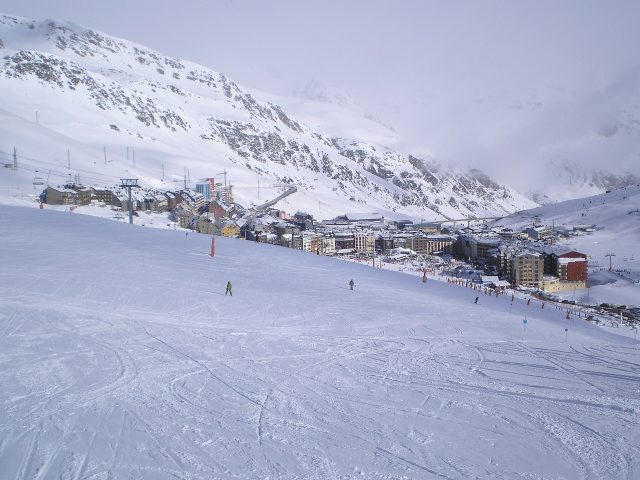
El Tarter lift isn’t just another cog in Andorra’s ski infrastructure—it’s where countless winter stories in the Pyrenees begin. Nestled in the Soldeu valley, it connects the resort’s base with the high-altitude slopes of Grandvalira, the largest ski domain in Southern Europe. There’s no frenzy here, no crowds jostling for position, just a dependable workhorse that’s been ferrying skiers and snowboarders for decades. The lift typically starts running in late November, when the first snows settle, and shuts down in spring as the mountains shed their winter coat and shift into summer mode.
The lift itself is a modern gondola, whisking riders up to around 2,500 meters with the kind of smooth efficiency you’d expect from a well-oiled European ski operation. Enclosed cabins glide silently along the cables, offering shelter from the elements, though most people barely glance at the scenery—even when the weather cooperates and the valley unfolds below in a postcard-perfect panorama. More often than not, the priority is reaching the snow, especially when fog or wind closes other routes. In those conditions, El Tarter becomes a lifeline, the one sure way to access the slopes when visibility drops or gusts howl through the passes.
Beyond the lift, a small but functional hub has grown up around the base station. Ticket offices, rental shops, a café or two, and a parking lot cater to the steady stream of visitors. There’s no grand luxury here—no five-star hotels or designer boutiques—but that’s part of the appeal. The accommodations are modest, often family-run apartments or small inns, favored by those who prefer a quieter pace over the buzz of larger resorts. In peak season, the area draws more than just skiers. Families come for sledding, hikers explore the snowy trails, and some simply arrive to breathe in the crisp mountain air, even if they never step onto a pair of skis.
The lift’s history mirrors the evolution of Andorra’s ski industry. In the mid-20th century, this tiny country wedged between France and Spain began tapping into its mountainous terrain, transforming itself from a quiet agricultural backwater into a winter sports destination. The first lifts appeared in the 1950s, rudimentary by today’s standards, but they laid the groundwork for what would become a sprawling network. El Tarter became part of Grandvalira in the 2000s, when several neighboring resorts merged into a single system. Now, it’s one of the key arteries feeding into over 200 kilometers of pistes, from gentle beginner runs to challenging black diamonds.
For beginners, El Tarter is the gateway to the mountains. The lift deposits riders at the top of wide, forgiving blue runs, where novices can find their footing without the intimidation of steeper terrain. Instructors often bring their classes here, using the gentle slopes to build confidence before venturing further. For more experienced skiers and snowboarders, the lift opens up opportunities for off-piste adventures, particularly after a fresh dump of snow. In recent years, the area has also gained traction with freestylers, thanks to terrain parks featuring jumps and rails set up near the lift. It’s not Whistler or Park City, but for those looking to hone their tricks without the crowds, it’s more than enough.
The vibe around El Tarter is unhurried but purposeful. There’s none of the tourist chaos you’d find in more hyped destinations, just a steady flow of people who’ve come for the skiing—or the snowboarding, or the simple joy of being in the mountains. Mornings see groups from ski schools gathering near the base, their instructors pointing out the day’s objectives. By midday, families with kids in tow filter in, some stopping for a quick bite at the café, others heading straight for the lift. As the afternoon wears on, the crowd thins, leaving the die-hards who linger to catch the last runs of the day, their shadows stretching long across the snow.
When summer arrives, the lift falls silent. The cabins sit idle, and the valley shifts into a different rhythm. The mountains around Soldeu become a playground for hikers, mountain bikers, and anyone looking to escape the heat of the lowlands. Wildflowers dot the slopes, and the air carries the scent of pine and damp earth. Yet for most visitors, El Tarter remains a winter place, a spot where the combination of snow, altitude, and quiet efficiency creates something special. It’s not about glamour or excess—just the reliable, unpretentious promise of a good day on the slopes.
Soldeu itself is a far cry from the glitzy Alpine resorts that dominate postcards. There are no nightclubs or high-end shopping arcades, just a handful of cozy restaurants serving hearty local dishes—think slow-cooked stews, crispy bread, and rich hot chocolate. The shops are small, selling practical gear and the occasional souvenir, more functional than fashionable. People come here for the mountains, not the après-ski scene. El Tarter embodies that ethos: it’s a place that doesn’t try to be anything more than it is. No frills, no fuss—just a straightforward way to get up the mountain and enjoy what matters.