Perched on a gentle hill above the village of Soldeu, the small church of Santa Ana feels like a quiet guardian of Andorra’s past. Its unassuming stone silhouette blends seamlessly into the mountainous landscape, a modest yet enduring presence that has watched over the valley for centuries. Built in the 17th century, it wasn’t designed to impress with grandeur but to serve—a place of refuge, reflection, and community for generations of locals. The church stands as a testament to the practical faith of mountain people, where every beam and stone carries the weight of time rather than ornamentation.
The architecture is simple, almost austere, reflecting the harsh climate and limited resources of the Pyrenees. Thick walls of local stone, rough-hewn but sturdy, were built to withstand winter winds and heavy snow. The roof, layered with traditional terracotta tiles, has weathered into warm, earthy hues over the years. The bell tower, though short, carries its chime far across the valley, marking the rhythm of daily life—whether calling the faithful to prayer or simply breaking the silence of a snowy afternoon. Inside, the space is equally unpretentious: wooden pews worn smooth by generations of worshippers, a plain altar with an image of Saint Anne, and a handful of faded icons. The light filters through small windows, casting a soft glow on the walls where traces of old frescoes still cling, hinting at a richer past.
Santa Ana has always been more than just a place of worship. In earlier times, it was a communal hub where villagers gathered not only for services but also to seek shelter from storms, share news, or make decisions that shaped their lives. Even now, as Soldeu has transformed into a bustling ski resort, the church remains a touchstone for both locals and visitors. Some come to light a candle, others to sit in quiet contemplation, and a few simply to step away from the modern world outside. It’s one of the few places in the village where the pace slows, where the noise of ski lifts and après-ski chatter fades into the background.
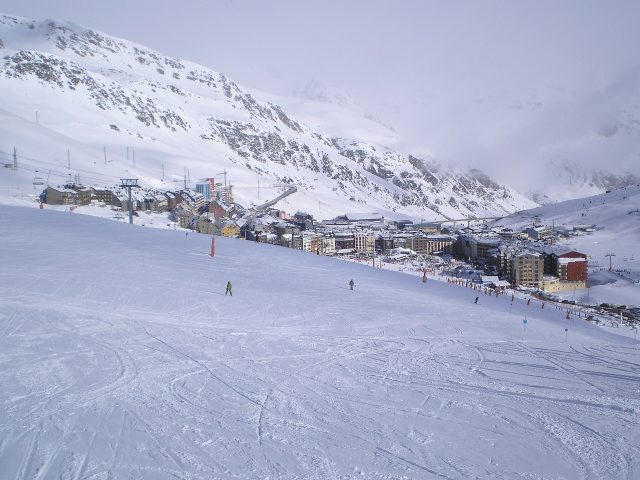
The church’s history is intertwined with Soldeu’s evolution from a remote mountain settlement to a winter sports destination. When the first skiers arrived in the mid-20th century, Santa Ana had already stood for centuries, an unchanging witness to the changes unfolding below. Today, it sits in the shadow of sleek hotels and towering chairlifts, yet it feels untouched by time. This contrast makes it a quiet symbol of the balance between tradition and progress—a reminder that even in a place defined by speed and adrenaline, there are still corners where the past lingers.
The view from the church’s hill is reason enough to visit. On clear days, the valley stretches out below, framed by jagged peaks dusted with snow. In summer, the slopes turn lush and green, dotted with wildflowers, while the air hums with the sound of crickets and distant cowbells. Winter transforms the scene into a postcard of white, with the church’s stone walls peeking through a blanket of snow. Whether you come for the history, the architecture, or simply the silence, the perspective from here offers a moment of stillness in a landscape that’s otherwise in constant motion.
What makes Santa Ana memorable isn’t its size or splendor but its authenticity. The stones beneath your feet have been worn smooth by centuries of footsteps, the air carries the scent of pine and woodsmoke, and the quiet inside feels earned, not staged. In an age where so much is designed to be consumed and discarded, places like this endure. They don’t demand attention but reward those who pause long enough to notice. For travelers passing through Soldeu, the church is a gentle invitation to step off the beaten path, if only for a little while, and remember what it means to simply be present.