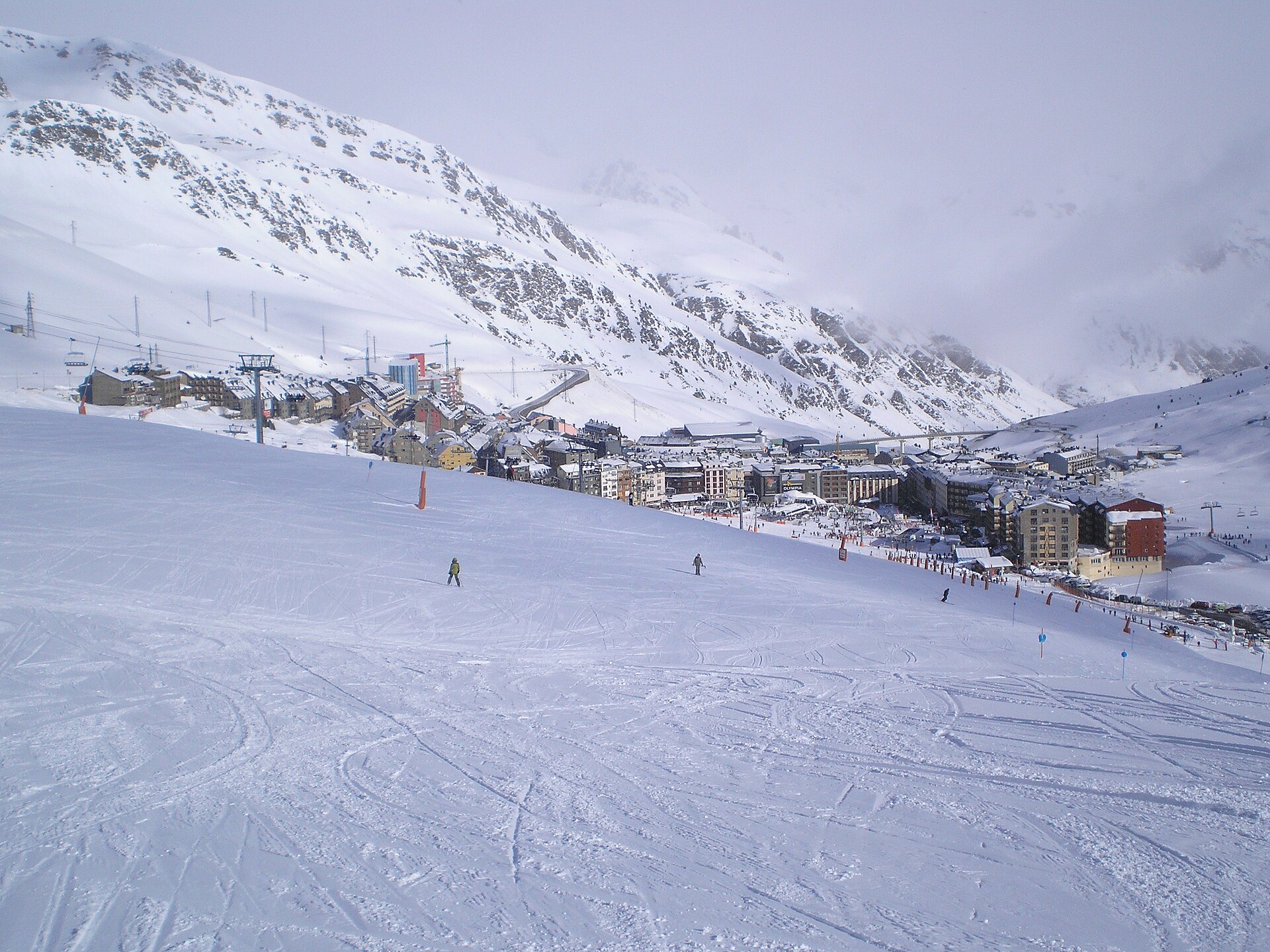
Grandvalira isn’t just a ski resort—it’s a vast network of valleys and slopes stretching across eastern Andorra, where the Pyrenees rise in quiet grandeur. Between elevations of 1,500 and 2,500 meters, winter transforms the landscape into a playground for skiers, snowboarders, and anyone who simply wants to wander through snow-dusted forests. Soldeu, one of the resort’s key villages, serves as a natural gateway to this world. It’s a small mountain settlement where wooden chalets line narrow streets, and the pace of life slows to match the rhythm of the season. Here, everything revolves around the snow—from the early-morning lift queues to the après-ski gatherings in cozy bars.
The resort’s history is relatively young, mirroring Andorra’s own journey into tourism. In the 1950s, when the country was still a quiet backwater known more for its tax-free status than its slopes, the first lifts were installed. Over the decades, Grandvalira expanded, absorbing neighboring valleys and linking them into a single system. Today, it’s the largest ski domain on the Iberian Peninsula, with six distinct areas connected by trails and lifts. Each zone has its own personality—some cater to families with gentle runs, others challenge experts with steep descents, and a few are best explored at a leisurely pace on snowshoes.
The terrain here is as varied as the skiers who visit. Beginners can stick to wide, groomed green runs, while intermediates will find plenty of red slopes—Grandvalira’s bread and butter—offering just the right mix of challenge and flow. For those who want something more demanding, black runs weave through rocky outcrops and tight turns. Snow cover is reliable, with the season typically running from late November to early May, and artificial snowmaking ensures good conditions even in milder winters. The lifts are efficient, with minimal wait times, so you can spend more time on the slopes and less time in line.
Beyond skiing, Grandvalira offers a quiet kind of winter magic. In Soldeu and nearby villages, you can rent a snowmobile for a high-speed tour of the backcountry or take a slower approach with a dog-sled ride. Ice skating rinks pop up in village squares, and thermal spas provide a warm retreat after a day in the cold. The local cuisine leans into hearty mountain dishes—think slow-cooked stews like escudella, rich with meat and root vegetables, or game prepared with herbs foraged from the surrounding hills. The food here is simple but satisfying, meant to fuel long days on the slopes.
The architecture of the resort blends seamlessly into the landscape. Most buildings in Soldeu and other villages are low-slung chalets made of wood and stone, their large windows framing views of the peaks. In the center of Soldeu, a 17th-century church stands as a reminder of the area’s pastoral past, its stone walls weathered by centuries of wind and snow. Nearby, modern hotels rise, but the village retains its quiet charm—no neon lights or crowded plazas, just the occasional chime of cowbells from a distant meadow.
Grandvalira isn’t just a winter destination. When the snow melts, the slopes become vast alpine meadows, dotted with wildflowers and humming with the sound of bees. Summer visitors can hike along old shepherds’ trails, mountain bike down forest paths, or simply sprawl on the grass with a book. Some lifts stay open for sightseers, offering panoramic views of the Pyrenees, but much of the resort’s infrastructure winds down. The pace slows even further, and the crowds thin out, leaving behind the kind of silence you can only find in the high mountains.
Andorra itself is a place of contrasts, and Grandvalira embodies that. It’s a resort that manages to feel both lively and laid-back, where you can spend the day carving turns down steep runs and the evening sipping wine by a fireplace. There are no sprawling resort towns here, no overpriced boutiques or rowdy nightclubs—just a handful of villages where life moves at the speed of the seasons. The infrastructure is solid: well-maintained trails, modern lifts, and hotels that meet European standards without the Alpine price tag.
This is a place for those who want skiing without the fuss. Families will find gentle slopes and ski schools, while experienced riders can test their skills on challenging runs. Après-ski is low-key—think mulled wine in a wood-paneled bar or a plate of local cheese in a sunlit café. There’s no pressure to keep up with anyone else’s idea of fun. You can spend the day racing down black runs or take a single leisurely lap before retiring to a spa. The choice is yours, and that’s the point.
At its heart, Grandvalira is about more than just skiing. It’s about the quiet moments—the first tracks in fresh snow, the steam rising from a cup of coffee on a cold morning, the way the light slants across the mountains at dusk. It’s a place where you can be as active or as still as you like, where the days unfold without hurry. Whether you’re here for the thrill of the descent or the peace of the view, the resort offers something rare: a chance to step out of time, if only for a little while.