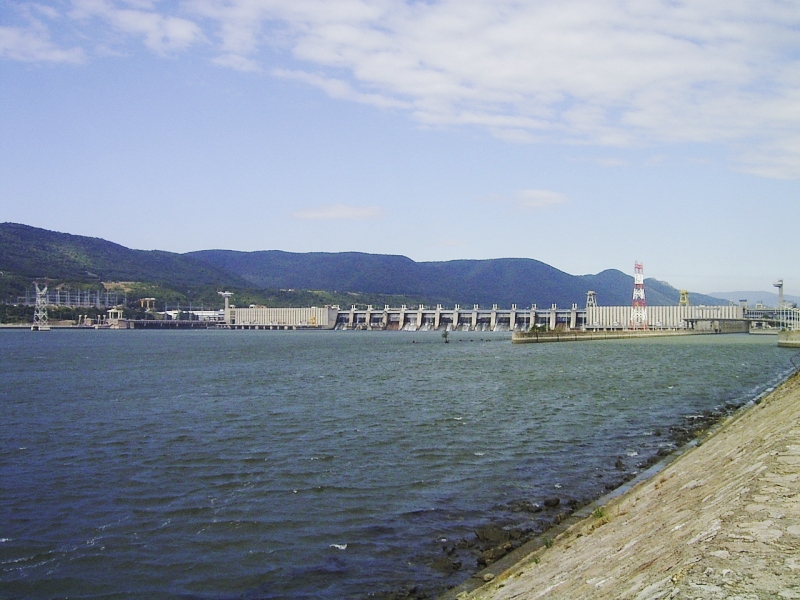
The Iron Gates I Dam is one of those human-made marvels that feels so perfectly integrated into the landscape it’s hard to imagine the Danube without it. Straddling the border between Romania and Serbia, this massive structure tames one of Europe’s most powerful rivers, creating a reservoir so vast it could easily be mistaken for a natural lake. Most travelers pass by without a second glance, catching only a fleeting glimpse from a bus or car window on their way to more famous destinations. But those who take the time to stop here discover something far more interesting than just another piece of infrastructure.
The dam’s construction began in 1964 as a joint effort between Romania and Yugoslavia, a rare moment of cooperation between two socialist states. At the time, it was as much a political statement as an engineering feat. The Danube had always been a formidable force at the Iron Gates, the narrow gorge where the river squeezes between the Carpathian and Balkan mountains. For centuries, the treacherous currents and whirlpools made navigation nearly impossible, turning this stretch into a graveyard for ships. The dam changed all that, transforming the river into a smooth, navigable highway while generating enough electricity to power entire regions.
Standing nearly a kilometer and a half long and sixty meters high, the dam is an imposing sight, though its true magic lies in how seamlessly it blends with the surroundings. On the Romanian side, rolling hills covered in dense forest slope gently toward the water, while on the Serbian side, sheer cliffs plunge dramatically into the reservoir. The water itself shifts with the weather—turquoise and shimmering on clear days, dark and brooding when the sky is overcast. From certain angles, it’s easy to forget this was ever a wild river at all.
The hydroelectric plant at the base of the dam remains one of the largest in Europe, supplying power to millions of homes. For visitors, though, the real fascination lies in watching the lock system in action. The massive chambers slowly raise and lower ships, allowing them to bypass the dam’s towering height difference. The process takes about half an hour, just enough time to grab a coffee at a nearby riverside café or simply stand by the water, listening to the hum of machinery and the lapping of waves against the concrete.
Locals treat the dam with quiet familiarity, as if it were just another part of the scenery—somewhere to fish, take a walk, or commute to work. In Orșova, the nearest town, it’s as much a part of daily life as a bridge or a train station. But for outsiders, it can be a revelation, especially from the observation deck. From there, the full scale of the project comes into view: the river, once constricted by mountains, suddenly widening into an endless expanse of water, with barges crawling along like tiny toys.
Long before the dam existed, this stretch of the Danube was already steeped in history. The Romans attempted to tame it with canals and fortifications, while medieval traders risked their lives navigating the deadly currents. Legends speak of sunken treasures and daring divers who tried to recover them. The dam may have ended the river’s dangers, but echoes of the past linger in local folklore and the names of nearby villages.
Today, the Iron Gates region is more than just a dam—it’s a national park spanning both sides of the Danube. Wild stretches of forest and wetlands provide a haven for rare birds and wildlife, while the reservoir itself becomes a playground in summer, with excursion boats gliding across the water. In winter, when the surface freezes, locals gather on the ice for impromptu markets and skating. The lack of crowds gives the place an unhurried, almost forgotten feel. There are no souvenir stalls or tour groups here, just the quiet rhythm of the river and the distant roar of turbines.
For those traveling downstream from Budapest toward the Black Sea, the Iron Gates mark a subtle but unmistakable shift. The landscape grows wilder, the air drier, the people more reserved. The dam itself seems to embody this transition—one side rooted in familiar Central Europe, the other hinting at something more untamed. It’s less about the engineering and more about the sense of standing at a crossroads, where history, nature, and human ambition collide.