Ada Kaleh is one of those rare places where time seems to have paused, leaving behind a quiet echo of layered history. Tucked along the Danube near the Romanian town of Orșova, this small island was once a crossroads of empires, wars, and cultures. Today, little remains above water—just a few submerged ruins that surface during droughts—but that very absence gives it a haunting allure.
Long before it was known as Ada Kaleh, the island sat at the edge of the Roman world, a frontier between civilization and the unknown. Over centuries, it became a strategic outpost for Byzantines, Hungarians, and Ottomans, each leaving their mark. By the 16th century, the Ottomans had transformed it into a fortified stronghold, a place where minarets rose beside the river and markets thrived under the watchful gaze of soldiers. But Ada Kaleh was more than a military post; it was a living community. Turkish and Serbian families built homes, ran shops, and traded goods along the Danube, creating a world of its own.
What made Ada Kaleh truly unusual was its ambiguous status. Officially part of the Ottoman Empire, it was effectively under Austro-Hungarian control, a quirk of diplomacy that turned the island into a limbo of laws and loyalties. Locals paid taxes to two empires, spoke a mix of languages, and lived by their own rules. The island’s bazaar was a miniature Istanbul, filled with spices, textiles, and jewelry from across Europe and the Middle East. Travelers passing through would stop at the caravanserai, swapping stories and deals before continuing their journeys.
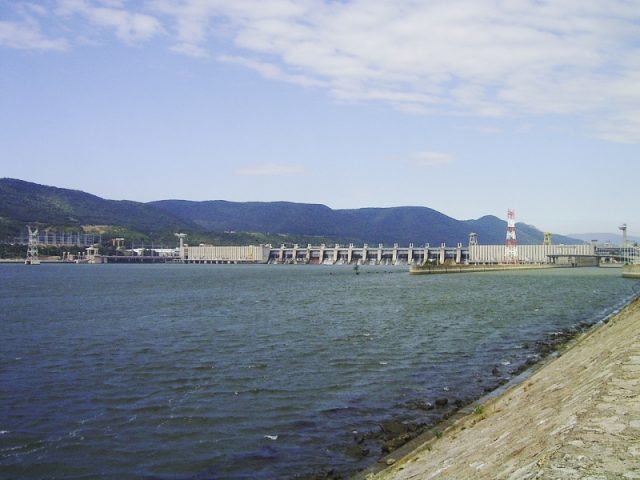
That fragile balance ended in the early 20th century, when plans for a massive hydroelectric dam threatened to reshape the Danube. The project, completed in 1970, submerged Ada Kaleh beneath the rising waters of the Djerdap I reservoir. The last residents packed their belongings and left, taking with them a way of life that had endured for centuries. The island vanished from maps, becoming a footnote in history.
Yet Ada Kaleh refuses to disappear entirely. In dry years, when the Danube’s waters recede, the past briefly resurfaces. Crumbling walls, the foundations of houses, and the skeletal remains of a minaret emerge from the depths, offering a glimpse of what once was. These rare moments draw curious visitors, who stand on the shore and try to imagine the island as it was—alive with the sounds of a bustling market, the call to prayer, and the murmur of a community that thrived between worlds.
Old photographs and records paint a vivid picture of Ada Kaleh in its prime. Narrow streets wound between red-tiled roofs, while mosques with slender minarets punctuated the skyline. The island was small, but its cultural mix was rich—Ottoman traditions blended with Balkan influences, and the rhythms of daily life were shaped by the river’s ebb and flow. For those who lived there, it was home, a place where children played in courtyards and families gathered for celebrations. The island’s unique identity was something its people carried with pride, even as empires rose and fell around them.
Some call Ada Kaleh the Atlantis of Europe, a lost world preserved only in memory. But its story is more than a tale of conquest and decline. It’s a reminder of how ordinary lives unfold in extraordinary places. People were born, married, and buried on that tiny patch of land; they wove carpets, baked bread, and told stories by firelight. The island’s culture was a living thing, passed down through generations, even as the world beyond its shores changed beyond recognition.
Today, the area around Orșova draws visitors not just for Ada Kaleh’s submerged ruins, but for the Danube itself. The river here is wide and powerful, cutting through rocky gorges with the Carpathian Mountains looming in the distance. On clear days, the faint outline of the island can still be seen beneath the water, a ghostly reminder of what was lost. It’s a place that invites reflection, where the past feels closer than it should.
For anyone who appreciates history, architecture, or simply the quiet weight of a place, Ada Kaleh offers a moment of pause. It’s a testament to how quickly the world can shift—how a thriving island can vanish, leaving only stories behind. Yet those stories endure, and sometimes, all it takes is a glance at the water to feel the presence of what once was. The Danube flows on, but the memory of Ada Kaleh lingers, a whisper of a time when this corner of Europe was something entirely its own.