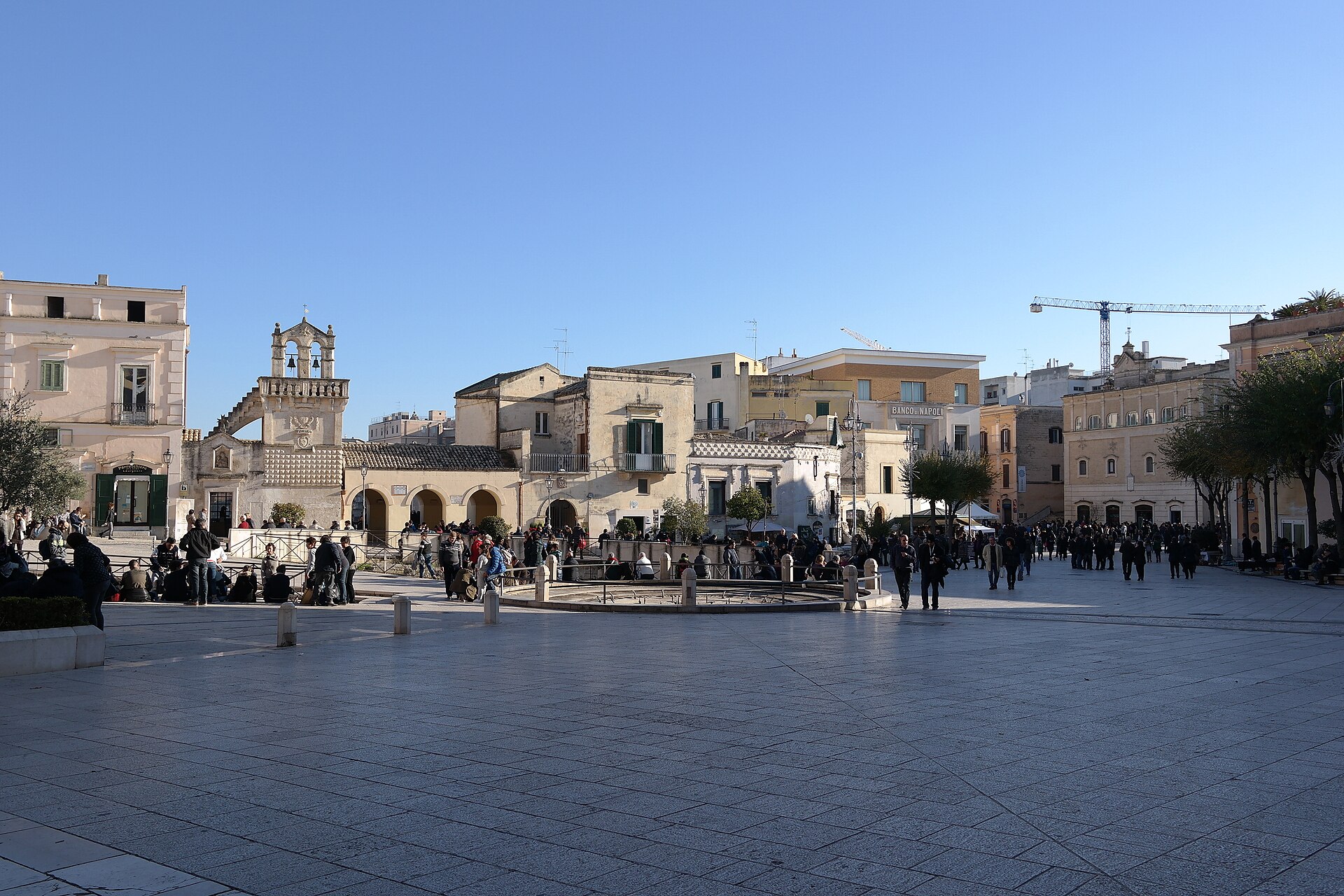
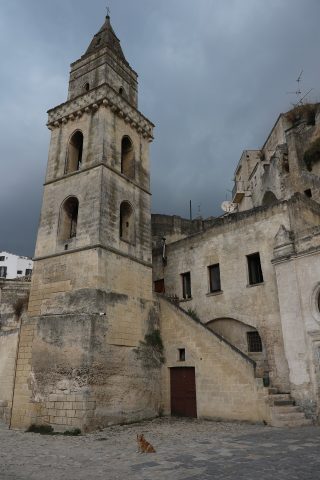
Piazza Vittorio Veneto in Matera is one of those places where the city reveals itself unexpectedly, as if inviting you to look beyond its familiar face. Tucked in the heart of the historic center, it sits on the edge between the ancient Sassi districts and the more recent buildings that rose in later centuries. Unlike the crowded tourist spots, this square feels like a quiet stage where everyday life unfolds—locals sipping coffee in small bars, children playing near the fountain, and elderly residents chatting on benches.
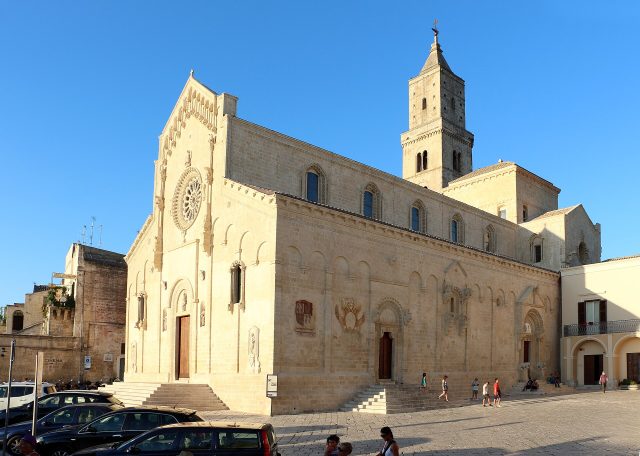
The architecture here isn’t grand or imposing, and that’s part of its charm. The square took shape gradually, absorbing the layers of different eras. The buildings around it blend Baroque, Neoclassical, and more modest 19th-century facades, once home to craftsmen and merchants. At its center stands the Church of San Domenico, built in the 17th century on the site of an older temple. Its exterior is restrained, almost austere, but inside, frescoes and altars tell the story of Matera’s religious life over the centuries. Nearby, the fountain with lion heads—a common feature in southern Italian towns—once drew women with jugs for water, and now attracts visitors with cameras.
The square’s history is deeply tied to Matera’s development. For centuries, it wasn’t just a public space but a vital commercial hub. Markets thrived here, bringing goods from surrounding villages—olive oil, wine, wool. In the Middle Ages, it was known as Piazza Maggiore, the starting point for roads leading to neighboring regions. The name Vittorio Veneto came later, in the 20th century, honoring Italy’s victory in World War I, though locals still call it simply *Piazza*, just as they have for generations.
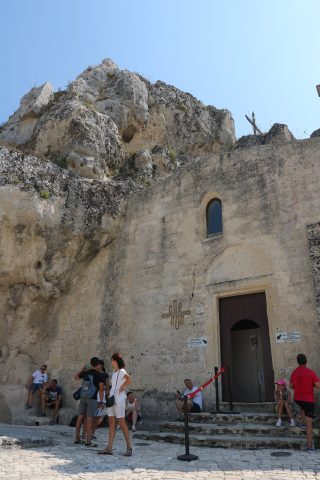
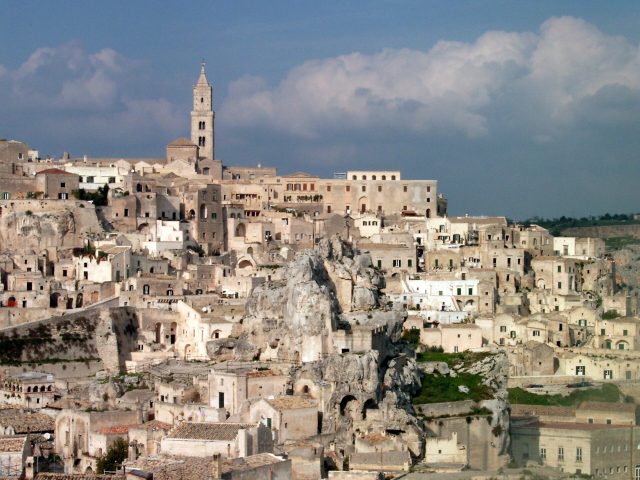
What makes this square special is how it bridges two versions of Matera: the ancient city carved into rock and the one built above ground. Step down one of the side streets, and you’ll find yourself in the labyrinth of the Sassi, where people lived in cave dwellings until the mid-20th century. Walk uphill, and you’ll emerge among more modern buildings, with cafes, hotels, and small shops. The square feels like a place designed to let you experience the contrast between past and present.
The atmosphere here is unhurried, almost provincial. In the morning, the square wakes with the city—shutters open, espresso machines hum, and the first voices fill the air. By midday, the sun warms the stone paving, and the shade of the churches offers the only relief from the heat. In the evening, when the air cools, locals take their evening strolls—some with dogs, some with books, others just to chat with neighbors. On weekends, small concerts or open-air exhibitions might take place, but even without them, the square never feels empty.
For visitors, this is often the starting point before diving into the Sassi. It’s a place to catch your breath after a long journey, sip an espresso at a sidewalk café, and tune into the city’s rhythm. Time seems to move differently here—slower, more deliberate. Perhaps because Matera itself is a living monument, where every stone holds a memory. Piazza Vittorio Veneto isn’t just a geographic center; it’s where that memory becomes tangible.
In winter, the square takes on a particularly picturesque quality. Rain washes the dust from the stones, and a cold wind sweeps dry leaves into the corners. In December, a Christmas tree is set up, and its lights reflect in the wet pavement at night. Summer, though, is when the square truly comes alive. The sun blazes overhead, and even the shade offers little respite from the heat. Yet this is when the square buzzes with energy—musicians play on church steps, street artists sketch portraits, and children run around the fountain.
Remarkably, Piazza Vittorio Veneto has barely changed in the last hundred years. New cafes have opened, some facades have been restored, but the spirit of the place remains the same. That’s rare in Italian cities, where pockets of the past often have to be hunted down amid modern development. Here, history isn’t locked away in museums; it lives beside you—in the creak of a door, the scent of fresh bread from a nearby bakery, the conversations of old men on a bench.
If you visit Matera, spend at least an hour on this square. Not to check it off a list, but to feel the city’s pulse. There are no loud announcements, no flashy signs, no crowds of tourists. Just the quiet dialogue between history and the present, waiting to be heard if you listen closely.