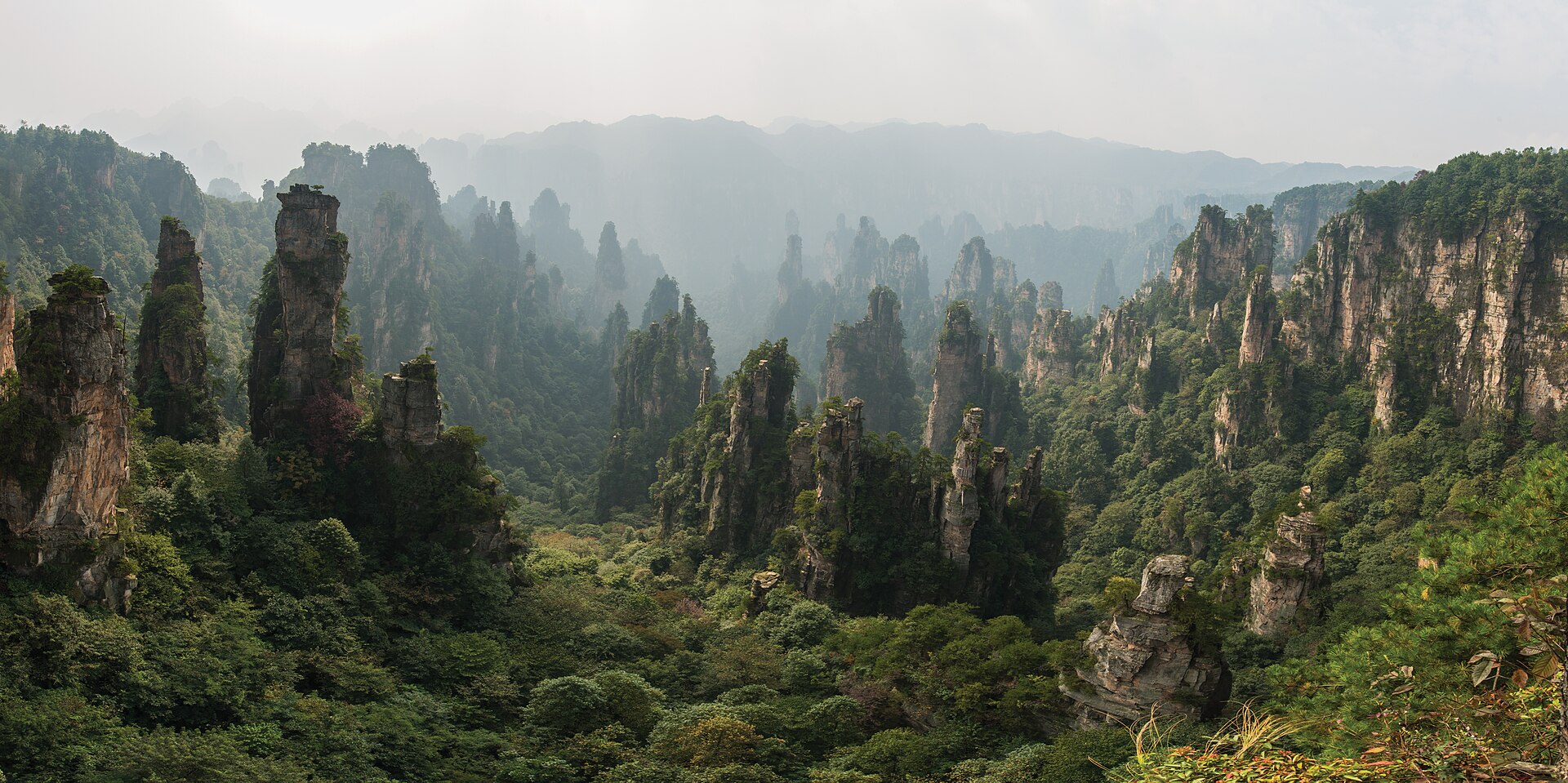
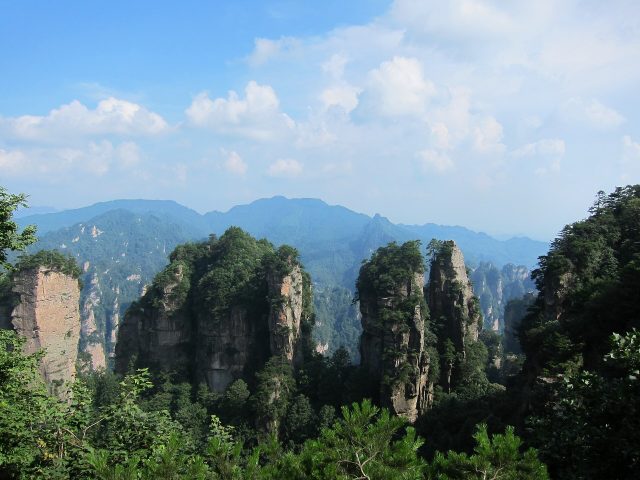
Wulingyuan feels like a place where the earth decided to test the limits of its own imagination. Tucked away in Hunan Province, this landscape defies the usual expectations of rolling hills or gentle valleys. Instead, it presents a forest of stone pillars, some soaring hundreds of meters into the sky, their surfaces draped in dense greenery. The effect is almost surreal—like stumbling upon the ruins of an ancient civilization, except these formations were carved not by human hands, but by the slow, relentless work of wind and water over millions of years. Every path here leads to a new perspective, each turn revealing another layer of this natural masterpiece.
The story of Wulingyuan begins long before humans ever set foot in these mountains. Once, this land lay beneath a shallow sea, its sediments compressed over eons into limestone. Then, the earth shifted, lifting these layers upward, while rain and rivers sculpted them into the jagged spires and deep ravines we see today. For centuries, local communities regarded these peaks with reverence, weaving them into folklore as the dwelling places of immortals and mountain spirits. The name itself, Wulingyuan, hints at this mystical past—*Wuling* refers to the five legendary peaks said to be the home of the gods. In the 20th century, the area was designated a national park, and later, UNESCO recognized its global significance, ensuring its preservation for future generations.
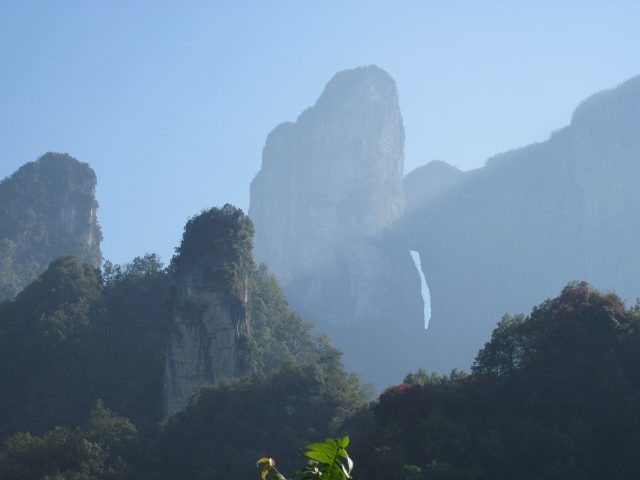
What makes Wulingyuan truly extraordinary is the sheer variety of its rock formations. Some resemble the turrets of medieval castles, others the silhouettes of animals or even human figures frozen mid-gesture. The most famous of these is Tianzishan, or the "Son of Heaven Mountain," a cluster of peaks that rise dramatically from the surrounding forest. From its summit, the view stretches endlessly—hundreds of stone columns fading into the mist, as if the earth itself is dissolving into the sky. Another iconic sight is the Golden Whip Rock, a slender pillar that glows warmly in the late afternoon light, its surface catching the sun like a beacon. These formations aren’t static; they change with the light, the weather, even the season, each moment offering a different mood.
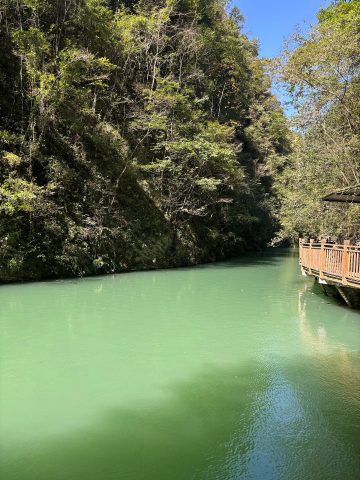
Beyond the stone forests, Wulingyuan is a living ecosystem. The park shelters over three thousand plant species, many of them found nowhere else on earth. Ancient trees cling to the cliffs, their roots twisting around the rock like veins, while rare orchids and ferns thrive in the damp, shaded crevices. Wildlife here is elusive—clouded leopards, golden snub-nosed monkeys, and even the occasional South China tiger are said to roam these forests, though sightings are rare. Water is another defining feature of the landscape. Streams carve their way through the valleys, forming waterfalls that cascade into emerald pools. One of the most serene spots is Baofeng Lake, a mirror-like expanse surrounded by cliffs, where the only sounds are the rustle of leaves and the occasional call of a bird.
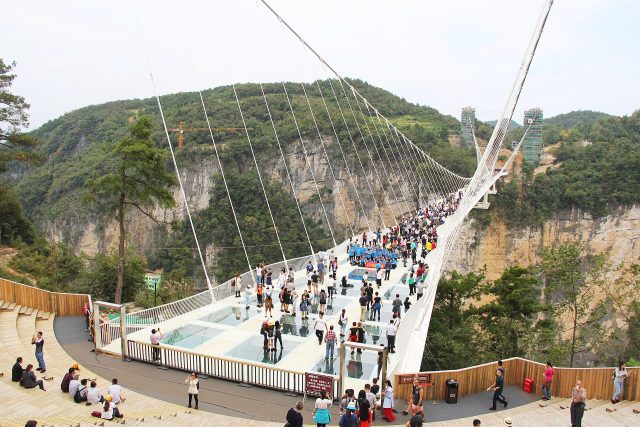
For visitors, Wulingyuan is less about ticking off sights and more about immersion. The park’s trails are designed to lead you through its most breathtaking sections without disturbing the delicate balance of the environment. One of the most talked-about experiences is crossing the Tianxia Diyi Bridge, the world’s highest and longest glass-bottomed walkway. Suspended nearly 400 meters above the ground, it offers a heart-stopping view of the valley below—an experience that’s equal parts thrilling and humbling. But even without the adrenaline rush, the park has a way of making you feel small in the best possible sense. Here, the air is cooler, the silence deeper, and the sense of time more fluid, as if the outside world has faded into the background.
Wulingyuan transforms with the seasons. In spring, the forests burst into bloom, filling the air with the scent of magnolias and camellias. Summer brings a veil of mist that softens the edges of the peaks, lending the landscape an almost dreamlike quality. Autumn turns the foliage into a blaze of reds and golds, while winter occasionally dusts the highest ridges with frost, turning the stone pillars into something out of a fairy tale. Locals say the park never looks the same twice, and it’s easy to see why. Even the most frequent visitors discover new angles, new details, with every return.
Despite its remote location, Wulingyuan has become a well-trodden destination, though it hasn’t lost its sense of wildness. Small guesthouses and family-run restaurants dot the area, serving hearty Hunanese dishes—spicy stews, steamed fish, and mountain vegetables, all prepared with local ingredients. Guides, many of them from nearby villages, offer their knowledge of the park’s hidden corners, pointing out the best vantage points for sunrise or the quietest trails for solitude. Yet for all its accessibility, Wulingyuan demands a certain respect. Litter, loud noises, or careless behavior feel out of place here, where the landscape itself seems to command reverence.
What lingers after a visit to Wulingyuan isn’t just the memory of its sights, but the way it makes you feel. There’s a quietness here that seeps into your bones, a reminder of how vast and intricate the natural world can be. It’s the kind of place that puts things into perspective—where the rush of daily life fades, and the only thing that matters is the next bend in the trail, the next glimpse of stone against sky. For many, it becomes more than a destination; it’s a place they carry with them, a touchstone for moments when the world feels too loud or too fast. And perhaps that’s why people keep coming back—not just to see the peaks, but to remember what it’s like to stand in their shadow and feel, even briefly, like part of something timeless.