Taumadhi Square in Bhaktapur is one of those rare places where time seems to soften, where the weight of centuries lingers in the air like dust motes caught in sunlight. Tucked within the ancient heart of the city, it feels less like a tourist attraction and more like a living museum—one where history, faith, and daily life intertwine without pretense. The square is part of Bhaktapur’s Durbar Square, a UNESCO World Heritage site, yet it carries a quieter, more intimate energy than its more famous counterparts. Perhaps it’s the way the narrow lanes curve away from the main thoroughfares, or the way the temples here stand not as relics but as active participants in the city’s rhythm. Whatever the reason, Taumadhi invites you to slow down, to look closer, to let the place reveal itself at its own pace.
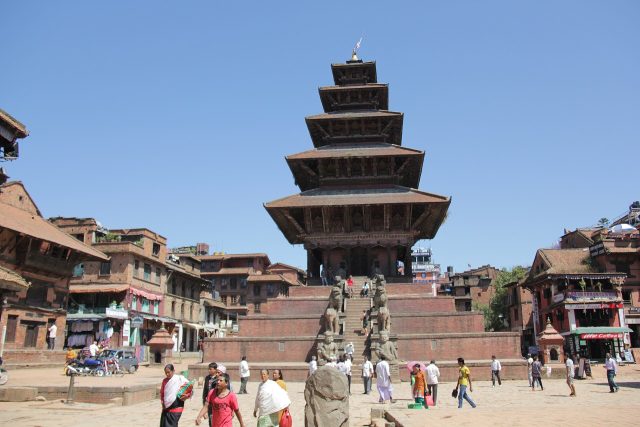
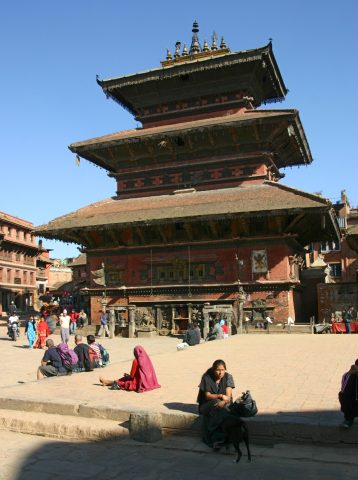
The most striking presence on the square is the Nyatapola Temple, a five-tiered masterpiece that dominates the skyline. Built in the early 18th century, it remains the tallest temple in Nepal, a testament to the skill of Newari craftsmen. The structure is a marvel of symmetry and precision, its ascending levels adorned with intricate carvings of deities and mythical guardians. At the top, the statue of Siddhi Lakshmi watches over the city, though visitors are not permitted to climb the steps. The temple’s construction is shrouded in legend—some say it was completed in just seven months, a feat that seems impossible given its scale. Whether true or not, the story adds to the sense of awe that lingers as you stand before it. Nearby, the smaller but equally compelling Bhairavnath Temple offers a stark contrast. Dedicated to Bhairava, a fierce manifestation of Shiva, its facade is dominated by a massive wooden mask of the deity, its expression both terrifying and mesmerizing. During festivals, the mask is paraded through the streets, a reminder of the temple’s deep roots in local tradition.
What makes Taumadhi Square different from other historic sites in Nepal is its refusal to be just a backdrop for photographs. It is, first and foremost, a place where people live, work, and worship. The square is surrounded by red-brick houses, their windows and doorframes carved with delicate patterns that have survived centuries. Some of these buildings date back to the 17th and 18th centuries, their facades bearing the marks of time and the occasional earthquake. Yet even in their worn state, they exude a quiet dignity, their wooden balconies and latticework telling stories of generations who called this place home. In the mornings, vendors set up stalls selling fresh produce, their voices blending with the clatter of pottery wheels from nearby workshops. By afternoon, the scent of incense drifts from the temples, mingling with the earthy aroma of clay and the faint tang of spices from open-air kitchens. Children dart between the stone pillars, their laughter echoing off the ancient walls, while elders sit on low stools, sipping tea and watching the world go by.
The architecture here is a study in contrasts—simple yet ornate, sturdy yet delicate. The temples, with their pagoda-style roofs and elaborately carved struts, stand in sharp relief against the more modest homes of the locals. Many of the buildings were restored after the devastating earthquakes of 2015, but the restorations were done with care, preserving the original craftsmanship. Walking through the square, you notice how the design of the structures guides your gaze upward, from the intricately carved doorways to the towering spires of the temples. It’s a subtle reminder of the spiritual and artistic values that shaped this place, where every detail was meant to honor the divine.
Taumadhi Square is deeply tied to the culture of the Newars, the indigenous people of the Kathmandu Valley. For centuries, they have been the custodians of Bhaktapur’s traditions, and their influence is evident in everything from the architecture to the festivals that animate the square. One of the most vibrant is Bisket Jatra, a New Year celebration that transforms Taumadhi into a stage for ancient rituals. During the festival, towering chariots are pulled through the streets, masked dancers perform sacred dramas, and the air hums with the sound of drums and cymbals. Even if you visit outside of festival season, the square retains a sense of ceremony. In the early morning, the first light catches the edges of the temples, casting long shadows across the stone. In the evening, oil lamps flicker to life, their glow softening the harsh lines of the carvings. It’s in these quiet moments that the true character of Taumadhi reveals itself—not as a monument to the past, but as a living, breathing part of Bhaktapur’s identity.
What lingers after a visit to Taumadhi is not just the memory of its temples or the beauty of its architecture, but the feeling of having stepped into a place that still moves to its own rhythm. There are no crowds jostling for the best photo spot, no vendors aggressively hawking trinkets. Instead, there is space—space to wander, to observe, to let the details unfold naturally. The square doesn’t demand attention; it simply exists, as it has for centuries, a silent witness to the ebb and flow of life in Bhaktapur. Whether you spend an hour or a day here, the experience stays with you, a quiet reminder of the power of places that refuse to be rushed.