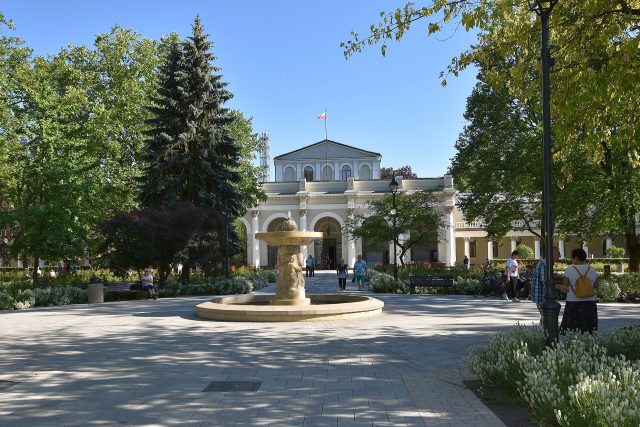
Freedom Square in Busko-Zdrój is one of those places where a town reveals its quiet rhythm without trying too hard. It’s not a grand plaza with towering monuments or crowds of tourists, but a modest, lived-in space where the pace of life feels just a little slower. The square is small enough to feel intimate, yet large enough to hold the everyday moments that define the town—locals stopping for coffee, neighbors chatting on benches, or the occasional street musician setting up near the fountain. There’s no rush here, just the unhurried cadence of a Polish provincial town where time hasn’t been swallowed by the demands of tourism.
The architecture surrounding the square is unassuming but telling. Most of the buildings are two or three stories tall, their facades a mix of late classicism and eclectic details that hint at the town’s 19th-century heyday. Some have been restored in recent decades, their pastel hues and decorative moldings softened by time, while others retain the patina of age—peeling paint, wrought-iron balconies, and heavy wooden doors that once welcomed visitors to the town’s spas. The town hall, a modest structure with a small tower, stands at the center, its understated presence more functional than grand. It’s the kind of building that blends into the background until you notice how it anchors the square, a quiet symbol of the town’s identity.
Busko-Zdrój’s history as a spa town has left its mark on Freedom Square. In the 1800s, when the town’s mineral springs began attracting visitors seeking cures and relaxation, the square was the heart of the action. Carriages would drop off guests at the hotels and cafes lining the plaza, and the air buzzed with the chatter of patients and vacationers. Today, that bustle is gone, but traces remain—ornate doorframes, the occasional faded sign for a long-closed guesthouse, or the way some buildings still seem to lean toward the square as if waiting for the next influx of visitors. The square doesn’t shout about its past, but if you look closely, it whispers.
Life here moves at its own pace. Mornings start with the clatter of chairs being set outside cafes, the scent of fresh bread drifting from a nearby bakery. By afternoon, the benches fill with retirees watching the world go by, while children dart around the small fountain in the corner. Evenings bring a soft glow from the streetlamps, turning the square into a pocket of warmth against the dark. There are no grand events most days—just the occasional summer concert or a small market—but that’s part of the appeal. Freedom Square isn’t a stage for spectacle; it’s a place where the ordinary feels a little more meaningful.
The square hasn’t always been called Freedom Square. Over the centuries, it’s borne different names, reflecting the shifting tides of Polish history—honoring rulers, commemorating events, or simply adapting to the times. The current name arrived after World War II, when many Polish towns renamed their central squares in celebration of liberation. It’s a name that carries weight, not just as a political statement but as a reminder of how places evolve alongside the people who live in them. The square has seen wars, occupations, and rebirths, yet it endures, much like the town itself.
There are small details here worth noticing. A plaque on one building honors a local doctor who helped shape Busko-Zdrój’s reputation as a health resort. The fountain, though modest, serves as a gathering spot, its basin often filled with coins tossed by visitors making wishes. In winter, it’s draped in lights, becoming a focal point for the town’s holiday decorations. Even the trees lining the square seem to have their own stories—some are old enough to have witnessed the town’s transformation from a quiet backwater to a modest spa destination and back again.
What makes Freedom Square special isn’t any single landmark or attraction, but the way it captures the essence of Busko-Zdrój. This isn’t a town that tries to impress; it simply exists, comfortable in its own skin. The square reflects that. There are no grand monuments or tourist traps, just a handful of cafes serving pierogi and coffee, a few shops selling local honey and handmade crafts, and the kind of quiet corners where you can sit undisturbed for hours. It’s the kind of place where you might strike up a conversation with a stranger or lose track of time watching the light change over the rooftops.
Beyond the square, the town unfolds in gentle layers. A short walk leads to Józef Piłsudski Park, where old trees shade winding paths and a statue of the marshal stands sentinel. From here, the surrounding hills and forests come into view, offering a glimpse of why Busko-Zdrój was once prized as a retreat. The air is cleaner, the pace slower, and the landscape feels untouched by the rush of modern life. Freedom Square serves as a threshold between the town and its surroundings—a place where the urban and the natural meet without fuss.
The square changes with the seasons, each bringing its own mood. Winter turns it into a cozy enclave, with strings of lights draped between lampposts and the occasional scent of mulled wine from a holiday market. Summer softens its edges, the trees casting dappled shade over the pavement and potted flowers adding splashes of color. Spring and autumn bring their own quiet transformations, the square adapting effortlessly to the shifting light and temperature. No matter the time of year, it remains a place where the town’s heartbeat is easiest to feel—steady, unhurried, and deeply human.