Busko-Zdrój is one of those quiet Polish towns that doesn’t announce itself with grand monuments or tourist crowds. Tucked away in the Świętokrzyskie region, it sits among gentle hills and forests, where the air carries the faint scent of pine and the pace of life slows to a natural rhythm. This isn’t a place for those seeking excitement or novelty—it’s where time seems to soften, where the days unfold without hurry, and where the landscape itself feels like a gentle invitation to rest.
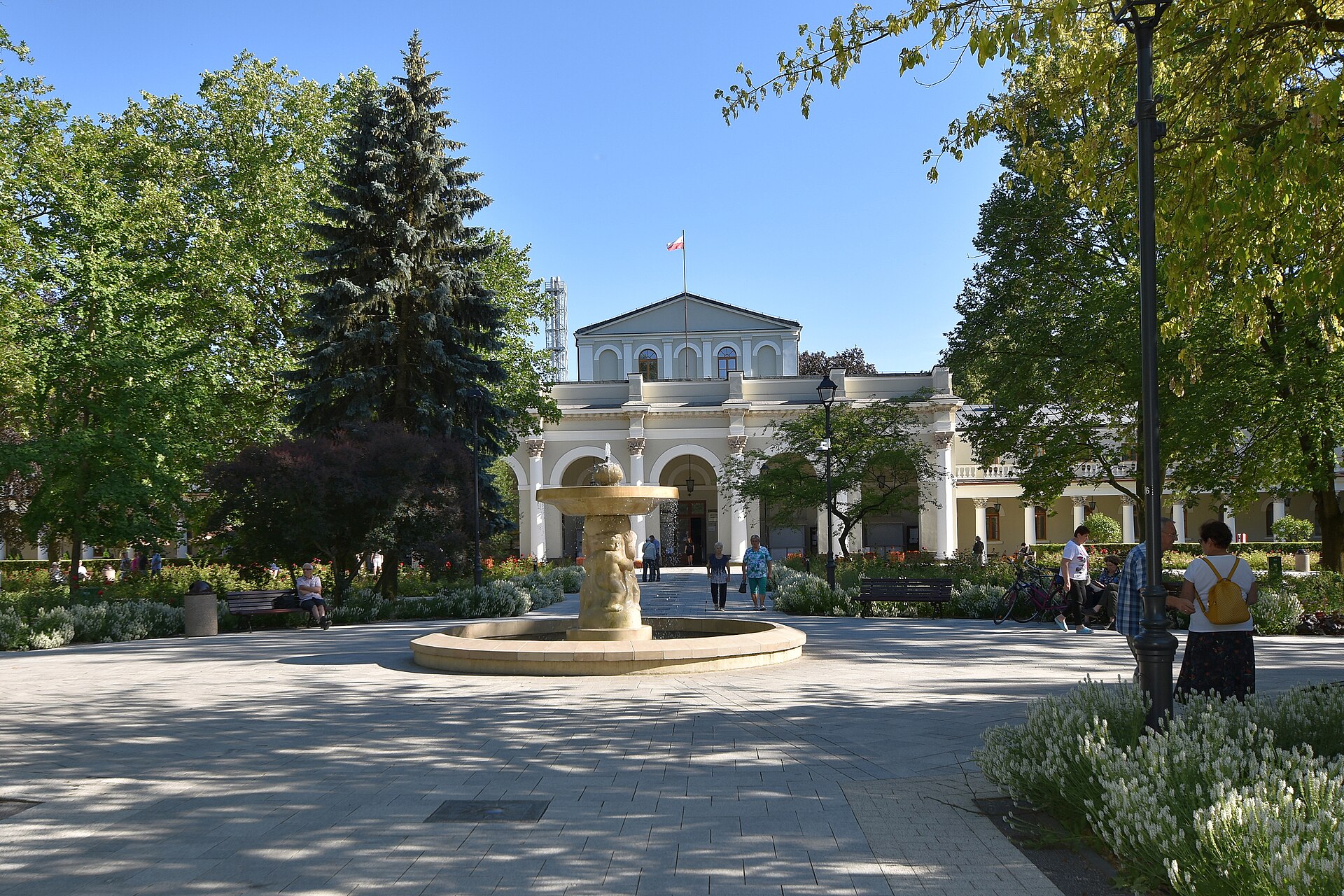
The town’s reputation as a spa destination stretches back centuries. The first written records of its mineral springs date to the 16th century, when their healing properties caught the attention of Polish nobility and wealthy merchants. But it was the 19th century that truly shaped Busko-Zdrój, turning it into a fashionable retreat for Europe’s elite. Back then, the waters were considered among the finest in the region, and the town flourished with elegant sanatoriums, grand hotels, and landscaped parks. Many of those buildings still stand today, their architecture a quiet testament to the town’s golden age. Walking past them, you can almost hear the echoes of horse-drawn carriages and the murmur of conversations in French or German, the languages of the aristocrats who once summered here.
The architecture of Busko-Zdrój is a blend of styles, each layer telling a part of its story. The oldest sanatoriums, with their neoclassical facades, tall windows, and wrought-iron balconies, were built to impress—though not with the opulence of larger resorts, but with a kind of understated refinement. Later additions, from the early 20th century, introduced more functional designs, their simplicity reflecting the changing tastes of the time. The real charm, though, lies in the details: the faded grandeur of a once-luxurious villa, the intricate woodwork of a park pavilion, or the way ivy climbs up the walls of an old guesthouse. The town’s central park, laid out around the springs, is particularly lovely, with shaded paths leading to small gazebos and benches where visitors have sat for generations.
At the heart of Busko-Zdrój’s appeal are its mineral waters, rich in sulfates, chlorides, and sodium. Locals and visitors alike swear by their therapeutic effects, particularly for joint and skin conditions, as well as respiratory ailments. The town’s sanatoriums offer a range of treatments—mineral baths, mud wraps, inhalations—but you don’t need to be a patient to experience the waters. The springs are open to the public, and many people come just to fill a bottle or two, drawn by the water’s reputation. It has a distinct, slightly salty taste, nothing like the bland mineral water from a supermarket. Drinking it, you can’t help but wonder how many people over the centuries have stood in the same spot, hoping for relief or simply curious.
Beyond the spa culture, Busko-Zdrój has a quiet, unassuming beauty. The surrounding countryside is perfect for leisurely exploration, with rolling hills, dense forests, and well-marked trails. Nearby, the Świętokrzyski National Park offers a chance to see rare plants and geological formations that date back millions of years. The town itself has a small but thoughtful museum dedicated to its history as a spa, filled with old photographs, medical instruments, and personal mementos from past visitors. It’s the kind of place where you might spend an hour or two, piecing together the stories of those who came before—doctors, patients, and travelers who all left their mark on this unassuming town.
Life in Busko-Zdrój moves at its own pace. There’s no rush here, no sense of urgency. The streets are lined with low houses, many with gardens bursting with flowers in summer, and in the evenings, the town settles into a peaceful hush, broken only by the occasional chime of a church bell or the distant bark of a dog. The cafés and restaurants serve hearty Polish dishes—thick soups, slow-cooked meats, pierogi stuffed with mushrooms or cheese—along with local specialties that have been passed down through generations. Sitting outside with a cup of herbal tea or a glass of compote, watching the world go by, it’s easy to forget the outside world entirely.
What makes Busko-Zdrój special isn’t any single attraction, but the way it feels. It’s a place that doesn’t try to impress, that doesn’t need to. There are no grand claims, no must-see sights—just the quiet assurance of a town that has been doing the same thing, in the same way, for centuries. For some, that might sound dull. But for those who appreciate the value of stillness, of a place where the biggest event of the day might be the sunset over the hills or the first sip of mineral water in the morning, Busko-Zdrój offers something rare. It’s a reminder that sometimes, the best way to recharge isn’t to seek out new experiences, but to let the world fade away for a while.