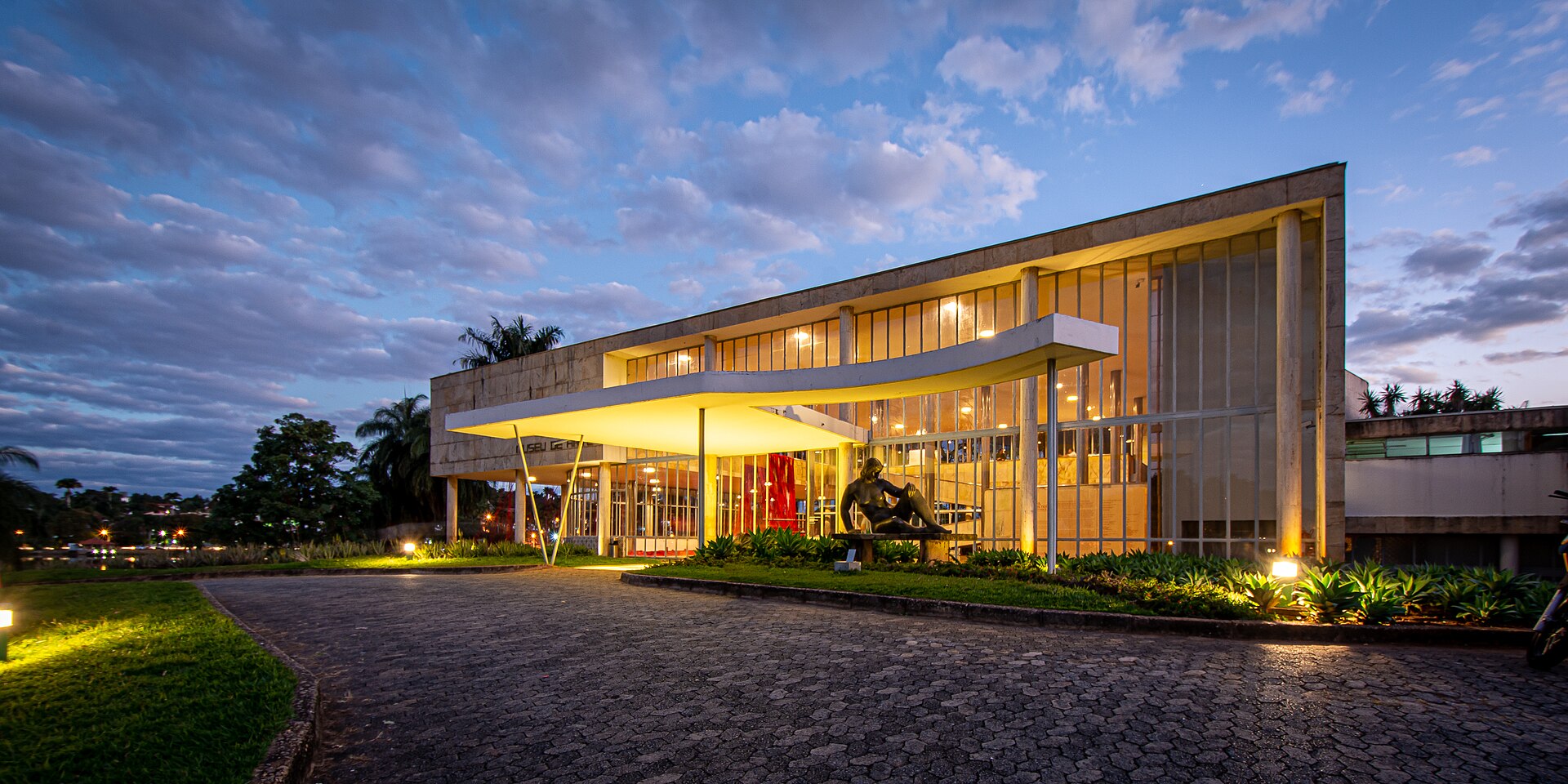
Belo Horizonte’s Pampulha Art Museum is one of those rare places where architecture doesn’t just house art—it becomes part of the art itself. Built in the early 1940s as part of an ambitious urban experiment, the museum was originally designed by Oscar Niemeyer as a casino, a bold statement of modernist ideals in a country still finding its architectural voice. When gambling was banned in Brazil in 1946, the building was repurposed, but its spirit remained unchanged: a celebration of curves, light, and the seamless blend of indoor and outdoor space.
The museum’s design is unmistakably Niemeyer—fluid, almost sculptural, with sweeping lines that guide the eye and the body through its galleries. Large windows dissolve the boundaries between the interior and the surrounding gardens, designed by Roberto Burle Marx, where tropical plants and geometric pathways create a living counterpoint to the building’s concrete forms. Inside, the collection focuses on Brazilian modernism, with works by Candido Portinari, Di Cavalcanti, and others who shaped the country’s artistic identity in the 20th century. Some pieces were created specifically for the space, their bold colors and dynamic compositions echoing the architecture around them.
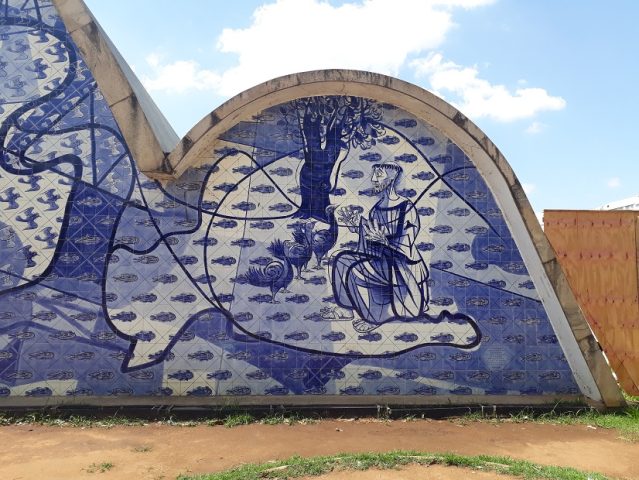
What makes the museum special isn’t just its collection but the way it engages with its surroundings. The Pampulha complex, which includes the museum, the Church of Saint Francis of Assisi, a former dance hall, and a yacht club, was declared a UNESCO World Heritage Site in 2016. Each structure is a masterpiece in its own right, yet together they form a cohesive whole, a testament to Niemeyer’s vision of architecture as a dialogue with nature. The church, with its blue-tiled exterior and Portinari’s frescoes, is particularly striking—a fusion of sacred tradition and modernist innovation.
Visiting the museum feels less like a formal tour and more like stepping into a living experiment. The spaces are open and airy, with exhibitions that change regularly, reflecting both historical works and contemporary perspectives. In the warmer months, the inner courtyard hosts concerts and film screenings, while in cooler weather, outdoor installations transform the gardens into an extension of the galleries. The museum doesn’t just preserve the past; it invites artists and visitors to reinterpret it, making each visit feel fresh and personal.
For architecture enthusiasts, Pampulha is a masterclass in Niemeyer’s approach. There are no rigid angles here—only curves that seem to flow effortlessly, as if defying gravity. The contrast between the building’s smooth concrete surfaces and Burle Marx’s structured gardens creates a dynamic tension, a reminder that modernism doesn’t have to feel sterile or imposing. Instead, it feels warm, almost playful, as if the space itself is encouraging you to explore, to touch, to engage.
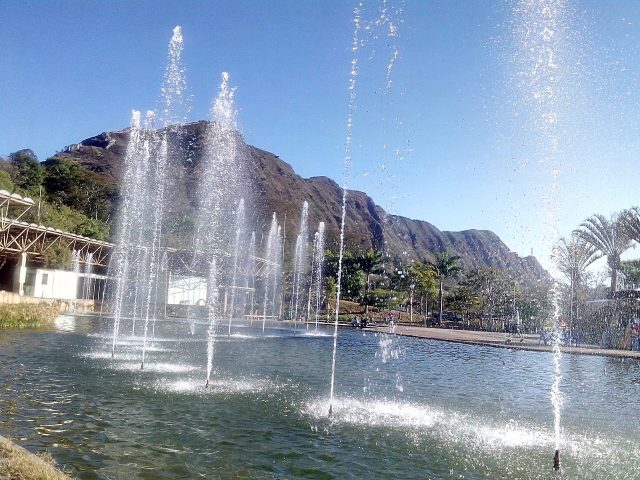
Beyond the museum, the Pampulha neighborhood offers a quiet escape from the city’s hustle. The artificial lake at its center is a popular spot for cycling, picnics, and leisurely strolls, with paths winding through parks and along the water’s edge. On weekends, the lakeside comes alive with food stalls and artisan markets, where locals gather to eat, browse, and relax. It’s a side of Belo Horizonte that many visitors overlook—a place where urban planning and nature coexist in harmony.
The Pampulha Art Museum isn’t just a stop on a tourist itinerary; it’s a piece of the city’s cultural DNA. It tells the story of Brazil’s artistic evolution, but also of how architecture can shape a community’s identity. There’s no pretension here, no grand statements—just an open invitation to experience art, history, and design in a way that feels both personal and universal. For those willing to look beyond the usual postcard images of Brazil, it offers a glimpse into the country’s creative soul.