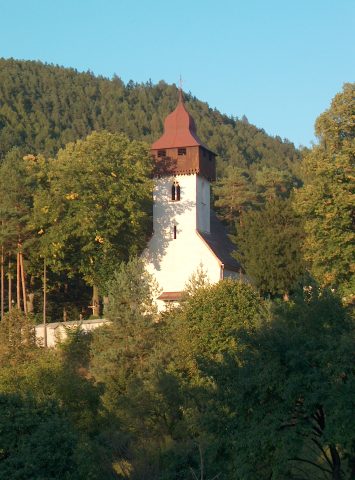
Raec Gorge isn’t the first place you’d name when thinking of Slovakia. Its main square, Námestie Slovenského národného povstania, doesn’t have the grandeur of larger cities. Instead, it holds something else: a space where history and daily life merge without fuss. The square is small, framed by low-rise buildings with faded pastel facades and red-tiled roofs. The architecture doesn’t draw eyes—it just stands, as the town has for centuries.
The square’s name honors the Slovak National Uprising of 1944, when resistance fighters and locals opposed Nazi occupation. Raec wasn’t a battleground, but the memory remains in small ways. No towering memorials here—just plaques and markers most walk past without noticing. History isn’t forced; it’s there if you look. The past lingers in worn cobblestones, uneven sidewalks, and buildings leaning into each other after centuries.
Most structures around the square date to the 18th and 19th centuries, when Raec thrived as a trading and craft hub. The facades are modest, with occasional stucco or faded frescoes. Unlike Bratislava or Banská Štiavnica, the buildings here feel lived-in. Their imperfections tell stories of generations who called this place home. Even newer shops and cafés fit in, their signs and awnings never clashing with the old-world feel.
A simple fountain sits at the square’s heart. People perch on its edge to rest or chat. It’s not a tourist attraction, but it makes the place feel like home. In warmer months, small markets or concerts sometimes fill the square. Music drifts between buildings while people linger over coffee or ice cream. The sounds—clinking dishes, laughter, street musicians—are as much a part of Raec as the square itself.
The square’s size is just right. Not so large you feel lost, not so small it feels cramped. You can stand in the middle and take it all in, or find a quiet corner to watch the world go by.
Mornings are quiet. The only sounds are footsteps and rustling leaves. By afternoon, life fills the square—parents with strollers, elderly men playing chess, teenagers meeting before heading to the park. There’s no rush here.
Raec doesn’t try to impress. It lacks the drama of the High Tatras or the grandeur of Levoča. That’s not the point. This is a town that moves at its own pace. The square is its center—not just geographically, but emotionally. Some come to learn about the past, others to soak in the atmosphere, or just to sit and watch the day unfold.
No tour buses idle here. No vendors sell trinkets. No selfie sticks compete for space. Just a square, a town, and the quiet rhythm of life.
If you visit, don’t expect a checklist of sights. Sit at a café, order coffee, and let the square reveal itself. Watch how light changes over rooftops. Notice how locals greet each other. See how the older buildings sag slightly, tired from centuries of standing, yet still standing. Raec doesn’t demand attention. But if you give it time, it might just stay with you.