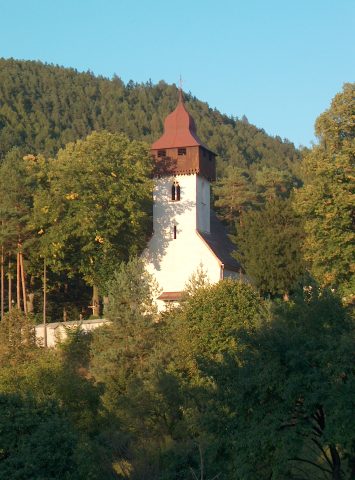
Nestled in the gentle embrace of the Rajec River valley, Rajecké Teplice is a quiet corner of Slovakia where time moves at its own unhurried pace. The town sits cradled by low hills, their slopes draped in vineyards and forests that soften the wind and lend the air a mild, almost Mediterranean quality. There’s no rush here, no hum of city life—just the steady murmur of the river, the rustle of leaves, and the occasional clink of glasses from a nearby café. For centuries, people have come to this place not for excitement, but for something far rarer: the chance to slow down, to breathe, and to let the warmth of the earth restore what the pace of modern life has worn away.
The story of Rajecké Teplice begins with water—specifically, the mineral-rich springs that bubble up from deep beneath the ground. The first written records of these thermal waters date back to the 13th century, though local legend claims their healing properties were discovered long before that, when shepherds noticed how quickly their livestock recovered from injuries after drinking from the springs. By the Middle Ages, the waters were already being used for their restorative powers, but it wasn’t until the 19th century that the town truly began to take shape as a destination. That was when the first bathhouses and grand hotels rose along the riverbank, their neoclassical and Art Nouveau facades designed to welcome the aristocrats and wealthy burghers of the Austro-Hungarian Empire. The town’s golden age as a spa retreat had begun, and though the world around it has changed, the echoes of that era still linger in its streets.
Walking through Rajecké Teplice today, you can still feel the weight of its history in the architecture. The heart of the town is a quiet, elegant ensemble of 19th- and early 20th-century buildings, their high windows and wrought-iron balconies casting delicate shadows on the cobblestones below. Some of the grander villas, built for the well-to-do visitors who once flocked here, stand alongside more modest homes, their facades adorned with the same careful attention to detail. The main street leads toward the thermal complex, where the old bathhouses remain, their marble halls and colonnades a testament to a time when taking the waters was as much about socializing as it was about healing. Even the newer structures, built in recent decades, seem to defer to the past, their designs blending seamlessly with the town’s established character.
The thermal waters themselves are the town’s beating heart. Rich in calcium, magnesium, and bicarbonates, they emerge from the earth at a soothing 38°C, their warmth easing aches in joints, calming frayed nerves, and soothing irritated skin. The water isn’t just hot—it’s silky, almost alive, and its benefits have been trusted for generations. The modern spa complex offers a range of pools, from indoor basins lined with smooth stone to outdoor ones where steam rises into the crisp mountain air, even in winter. For those who prefer a more traditional approach, there are saunas, whirlpools, and massage rooms, where the focus is on quiet restoration rather than flashy indulgence. It’s the kind of place where you might spend an entire afternoon drifting between pools, losing track of time as the water works its slow magic.
Beyond the spa, Rajecké Teplice has a few quiet treasures of its own. The surrounding countryside is dotted with the remnants of medieval fortresses, like the crumbling ruins of Topoľčany Castle, which cling to a hillside like a half-remembered dream. The nearby vineyards produce wines that are as much a part of the region’s identity as the thermal springs, and in autumn, the town comes alive with festivals celebrating the harvest. For those who prefer to explore on foot, the hills around the valley offer gentle trails with sweeping views of the Rajec River winding through the landscape. In summer, bicycles are a popular way to cover more ground, while winter brings the chance to ski on the modest slopes just outside town. None of these activities are grand or dramatic, but that’s part of their charm—they’re simple, unassuming pleasures, the kind that leave room for reflection.
Life in Rajecké Teplice unfolds at a pace that feels almost forgotten elsewhere. Mornings often begin with a stroll through the park, where old trees shade benches and hidden fountains, and the air carries the scent of damp earth and pine. By evening, the central square fills with the murmur of conversation as locals and visitors alike gather in cafés and restaurants. The food here is hearty and unpretentious—thick goulash served with dumplings, fried carp fresh from the river, and cheeses made from the milk of nearby farms. Many of the dishes rely on ingredients grown or raised within a few kilometers of the town, and there’s a quiet pride in that connection to the land. The wine, too, is local, poured generously into glasses that catch the last light of the setting sun.
What makes Rajecké Teplice special isn’t any single attraction, but the way it makes you feel. There are no crowds here, no grand spectacles, no pressure to see or do anything in particular. Instead, there’s space—space to sit by the river and watch the water flow, space to wander the streets without a map, space to simply be. It’s the kind of place that doesn’t demand your attention, but quietly earns it, offering a rare kind of rest that goes beyond the physical. In a world that often feels like it’s moving too fast, Rajecké Teplice is a reminder of what it means to pause, to listen, and to let the world wait for a while.
In recent years, the town has begun to attract visitors from beyond Slovakia’s borders—Czechs, Hungarians, and Austrians who come for a weekend escape from the demands of daily life. For many of them, Rajecké Teplice offers something even more valuable than relaxation: a glimpse of the real Slovakia, the one that exists outside the guidebooks and tourist trails. There are no world-famous museums here, no architectural marvels, no Instagram-worthy landmarks. What there is, instead, is authenticity—a sense of place that feels untouched by time, where the rhythm of life is still dictated by the seasons and the slow, steady pulse of the earth.
If you ever find yourself in this part of the world, don’t just pass through. Stay for a day or two. Walk the streets, linger in a café, and let the evening settle around you as you follow the river’s path. You might not leave with stories of grand adventures, but you’ll carry something quieter, something deeper—the memory of a place where time didn’t just stand still, but gently wrapped itself around you, offering the rare gift of stillness. Rajecké Teplice won’t be the kind of destination you brag about, but it might just be the kind you find yourself returning to, again and again.