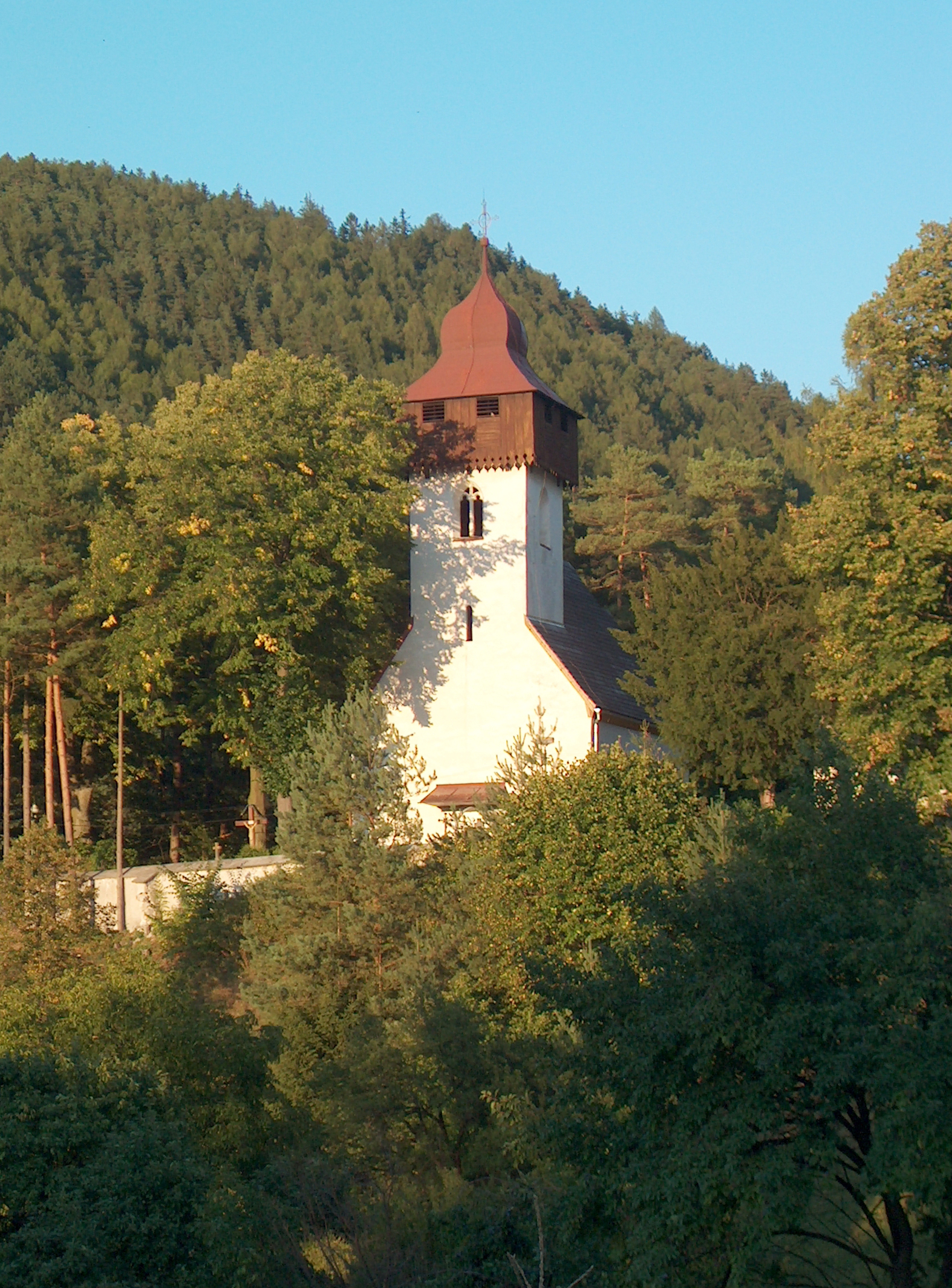
The Church of St. Ladislaus in Rajecká Gorge is one of those quiet places where time seems to stand still. The small village of Rajecká Lesná sits in the foothills of the Malé Karpaty, or Lesser Carpathians. It rarely appears on tourist maps, but here you can find the authentic atmosphere of the Slovak countryside, where history and everyday life intertwine. The church stands on a gentle hill above the village’s old tiled-roof houses.
The origins of the church stretch back to the Middle Ages. Historians debate its exact founding date, but the earliest records mention it in the 13th century, when this region was part of the Kingdom of Hungary. A wooden church dedicated to St. Ladislaus—a Hungarian king and patron saint of warriors—was likely built then. Over the centuries, the structure changed from wood to stone, reflecting the architectural and religious trends of each era.
The church’s current appearance took shape in the 18th century, when Baroque influences replaced earlier Gothic elements. From the outside, the building is plain: whitewashed walls, a simple gabled roof, and a small bell tower. But details hint at its age. Sturdy buttresses line the sides, narrow pointed windows remain from the Gothic period, and the semicircular arch of the Baroque portal marks the entrance. Inside, high windows flood the space with light. The gilded altar carvings and faded frescoes on the vaulted ceilings show the faith of those who worshipped here centuries ago.
For generations, the Church of St. Ladislaus has been the heart of the community. It has hosted festivals, weddings, baptisms, and funerals. The churchyard once held a cemetery, traces of which remain in old gravestones embedded in the surrounding walls. Some stones date back to the 17th and 18th centuries, bearing the names of villagers. Though the cemetery was later moved, the memory of those buried here lingers in stories told by the elderly.
The church blends different styles. The exterior is Baroque, but the interior reveals Gothic and Renaissance elements. The vaulted ceiling of the main nave retains its Gothic ribbing, while the side chapels feature Renaissance details. This mix is common in rural Slovak churches, where renovations were funded by local parishioners. Additions were made gradually, preserving the church’s authentic feel.
Around the church, a small park shaded by old linden trees offers a quiet place to rest. Rajecká Lesná is tiny, with narrow streets and houses featuring carved shutters. Locals treat the church with respect, not as a relic but as part of daily life. On weekdays, the church is usually closed, but you might meet the caretaker, who may share stories about its history.
The church has witnessed the region’s history. In the Middle Ages, Rajecká Gorge lay along trade routes connecting Hungary with Moravia and Bohemia. Merchants, pilgrims, and armies passed through. The church bells would have rung in times of victory or crisis, and villagers gathered in the square to discuss news.
Today, life in Rajecká Lesná moves slowly. There are no crowds, no guided tours, no souvenir stalls. The church stands as it has for centuries. If you sit on a bench nearby, you can listen to the birds and think about the generations who have passed through its doors.