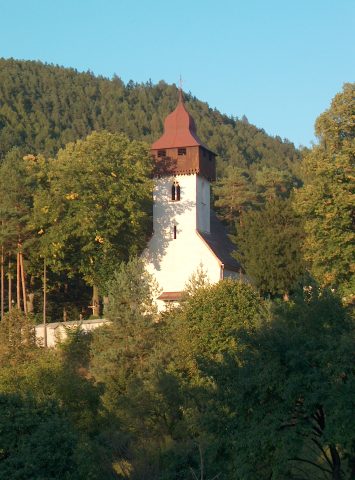
Perched on a gentle hill above the Raec River valley, Raec Castle feels like a place where time has quietly paused. The ruins aren’t grand or imposing like some of Slovakia’s more famous fortresses, and that’s precisely what makes them compelling. Here, the past doesn’t announce itself with fanfare—it lingers in the weathered stones, the half-collapsed walls, and the way the light falls across the courtyard at dusk. The castle has always been more of a witness than a protagonist, standing silently as centuries unfolded around it.
The first records of Raec Castle date back to the mid-13th century, when it served as a modest stronghold under the Hungarian crown. Its original purpose was practical: to guard the trade routes winding through the valley below. Over the centuries, it changed hands between noble families, each leaving their mark in the form of architectural additions or modifications. By the 16th century, the threat of Ottoman raids prompted further fortifications—moats were dug, bastions added—but by the 18th century, the castle’s military role had faded. What remained was a residence, a place where life continued in quieter rhythms.
What survives today are fragments, but they tell a story. The main tower, often called the watchtower by locals, still offers sweeping views of the surrounding landscape. On clear days, the horizon stretches toward the Malé Karpaty mountains to the west and the rolling hills that lead toward the Danube in the south. The tower’s purpose was likely more observational than defensive, a place to keep an eye on the valley below rather than repel invaders. The remnants of the moat, now dry, hint at the castle’s former defenses, while the scattered stones of the inner walls suggest the layout of rooms long gone.
The architecture reflects the castle’s layered history. Gothic elements blend with Renaissance touches, a testament to the different eras of its existence. The walls, built from local stone, have mellowed into a soft gray-brown that blends seamlessly with the landscape. Inside, you can still make out traces of vaulted ceilings, fireplaces, and even faint remnants of frescoes that once adorned the walls. Most of the interior details have been lost to time, but enough remains to imagine the castle in its prime—a place of feasts, whispered conversations, and the everyday routines of those who lived here.
Raec Castle was never the site of legendary battles or political intrigue. It wasn’t home to kings or warlords, and no famous sieges were fought within its walls. Instead, its history is one of quiet persistence. You can almost picture the servants moving through the courtyards, the sound of music drifting from the halls, or the clatter of horses in the stables. By the 19th century, the castle had fallen into disrepair, and locals began dismantling it for building materials. Fortunately, the destruction was halted before it was too late, and today the ruins are preserved as a reminder of what once was.
Visiting Raec Castle feels less like a typical tourist stop and more like stepping into a different era. There are no crowds, no souvenir stands, no guided tours rushing you along. The only sounds are the rustling of leaves, the distant call of birds, and the occasional crunch of gravel underfoot. The surrounding area is perfect for wandering—you can follow the riverbank, explore the forest trails, or simply sit on one of the old stones and let the atmosphere settle over you. It’s the kind of place where you might find yourself lingering longer than planned, lost in thought about the people who once walked these same paths.
In recent years, the castle has drawn the attention of history enthusiasts and photographers, particularly at sunset when the light casts long shadows and bathes the ruins in warm hues. Winter transforms the scene entirely, with snow clinging to the stones and the bare trees adding a stark, almost melancholic beauty. Spring brings a softer mood, as moss and ivy creep over the walls, making the ruins seem almost alive again. Each season offers a different perspective, which is why many visitors return more than once.
Raec Castle isn’t the kind of place you can rush through in half an hour. It demands a slower pace, an openness to the quiet stories embedded in its stones. If you find yourself in this part of Slovakia, it’s worth taking the time to explore—not just the ruins themselves, but the landscape around them. Walk the same paths the castle’s guards once patrolled, imagine the lives that unfolded within these walls, and let the sense of history settle in. It’s not just a monument; it’s a piece of the past that still breathes, waiting to be discovered.