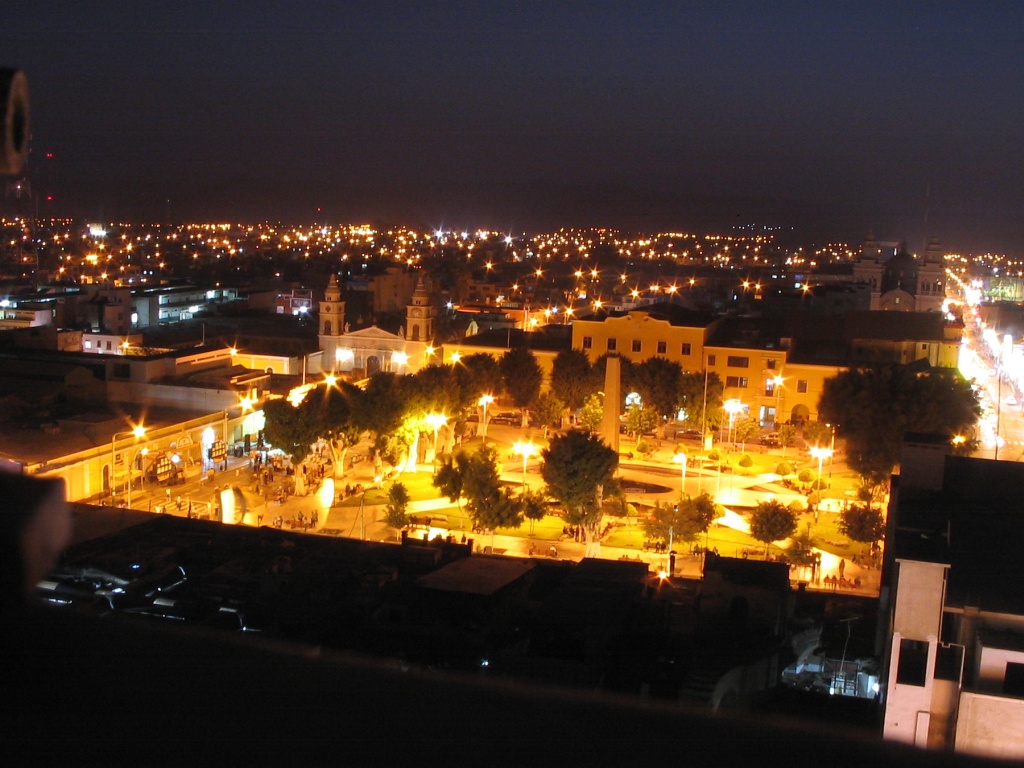
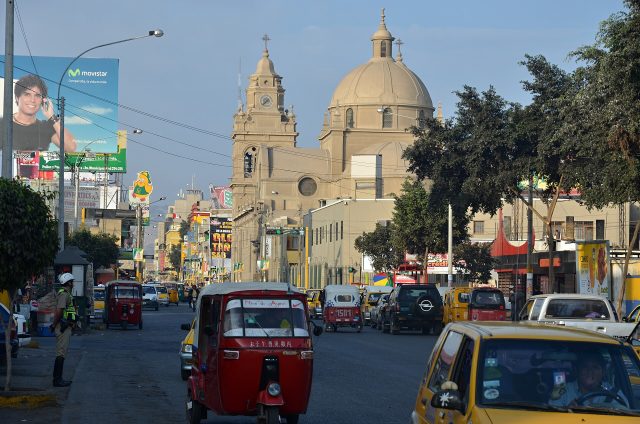
Plaza de Armas in Ica is where the city’s past and present intersect in the most ordinary, unassuming way. This isn’t a place frozen in time for tourists, nor is it a grand stage for history’s most dramatic moments. Instead, it’s a quiet, sunlit square where life unfolds at its own pace—where old men play chess under the shade of ancient trees, children chase each other around the central fountain, and vendors sell fresh fruit from carts that have been part of the scenery for generations. The square has seen centuries of change, yet it remains the kind of place where you can sit on a bench for an hour and feel like you’ve slipped into the rhythm of the city itself.
The architecture here is unmistakably colonial, though softened by the desert climate and the passage of time. Low, pastel-colored buildings with wooden balconies line the perimeter, their facades weathered but still elegant. Some retain the delicate stucco work and carved details that hint at Ica’s former importance as a trading hub in southern Peru. The municipal building stands out with its clean lines and the Peruvian flag hanging above the entrance—a reminder that this has long been a place of local governance, where decisions were made under the same sun that now beats down on the cobblestones. Nearby, the cathedral, built in the late 1700s, offers a contrast between its modest exterior and the ornate interior, where gold leaf glints in the dim light and centuries-old paintings watch over the faithful.
At the heart of the square is a statue of Jerónimo Luis de Cabrera, the Spanish conquistador who founded Ica in 1563 on the site of an indigenous settlement. The monument is unremarkable in itself—just a figure on a pedestal—but it serves as a gathering point for the city’s daily life. In the mornings, office workers cut across the square on their way to work; in the afternoons, students linger after school, and by evening, the area around the statue fills with the sounds of laughter and conversation. It’s a place where history feels less like a relic and more like a backdrop to the ordinary.
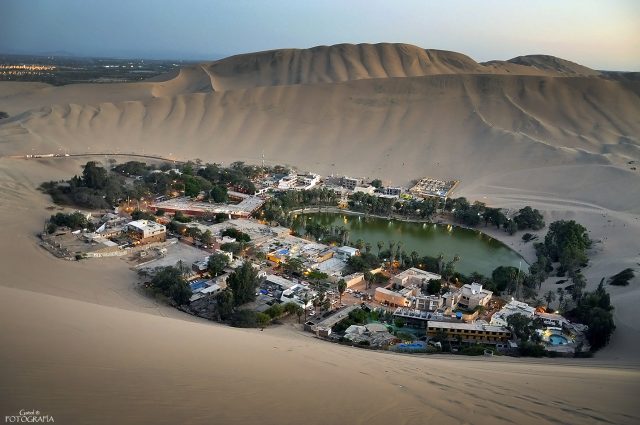
Ica sits in a desert valley, where the air is dry and the sun relentless for much of the year. Plaza de Armas is one of the few spots in the city where you can escape the heat, thanks to the thick canopy of trees planted long ago. The central fountain adds a touch of coolness, its water catching the light as it spills over the edges. On weekends, the square comes alive with families strolling, street vendors selling sweets and empanadas, and artists sketching portraits of passersby. The atmosphere is relaxed, almost lazy, as if the heat has slowed time itself.
Surrounding the square are buildings that tell their own stories. The cathedral, with its simple facade, has been a spiritual center for centuries, its interior a quiet refuge from the bustle outside. Not far away stands the house where Simón Bolívar once stayed during his campaigns for South American independence. Today, it’s a museum, though the real draw isn’t the exhibits but the sense of connection to a pivotal moment in history. These structures aren’t just relics; they’re part of the city’s living fabric, still serving the same purposes they were built for.
Ica is known for its wine and pisco, and the square plays a central role in the region’s cultural celebrations. The most famous is the annual wine festival, when the plaza transforms into a stage for music, dance, and, of course, plenty of drinking. Tables spill out from the cafes, and the air fills with the scent of grilled meat and fermented grapes. For a few days, the square becomes the heart of a larger celebration, drawing people from across the region to taste, dance, and toast to the harvest. Even outside of festival season, you’ll find locals sipping pisco sours in the shade, debating the best vineyards or reminiscing about past gatherings.
Despite its historical weight, Plaza de Armas doesn’t feel like a museum. It’s a place where the past and present coexist without fanfare. Students rush past colonial buildings on their way to class, their backpacks bouncing as they weave through the slower-moving crowds. Vendors set up stalls selling everything from fresh mangoes to handmade crafts, their voices blending into the hum of the city. Tourists wander with cameras, but they’re just one part of the scene, no more or less important than the old woman selling flowers or the group of friends sharing a bottle of soda on the steps of the cathedral.
As evening falls, the square takes on a different character. The harsh daylight softens into a golden glow, and the streetlights cast long shadows across the cobblestones. The scent of grilled anticuchos—beef heart skewers—fills the air, mingling with the sound of guitars and cajóns from impromptu performances. Couples stroll arm in arm, while groups of teenagers gather near the fountain, their laughter echoing off the old buildings. It’s a scene that could have played out a hundred years ago, or last night. The desert beyond the square might be harsh and unforgiving, but here, in this small patch of green and stone, life feels gentle and timeless.
Plaza de Armas isn’t a place you visit to check off a list of sights. It’s a place to sit, to watch, to let the city reveal itself in its own time. There’s no grand narrative here, no single story that defines it. Instead, it’s a patchwork of moments—some fleeting, some enduring—that together create something far more interesting than any monument could. To understand Ica, you don’t need to read about it in a guidebook. You just need to find a bench, order a coffee, and wait for the city to show you what it’s made of.