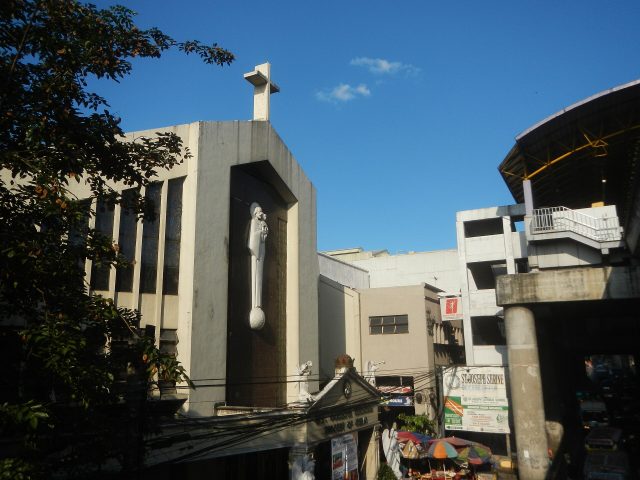
Miranda Square is one of those places in Manila where the city’s relentless energy settles into a rhythm all its own. Here, the past and present don’t just coexist—they collide in the most ordinary, everyday ways. Located in Quiapo, a district that pulses with life, the square isn’t so much a landmark as it is a living, breathing part of the city. There are no grand monuments or polished tourist attractions, just the raw, unfiltered heartbeat of Manila: vendors shouting over one another, old buildings sagging under the weight of time, and people who come here out of habit, necessity, or simply to feel the city’s pulse.
Quiapo wasn’t always the bustling hub it is today. Once a quiet suburb, it grew alongside Manila, transforming into one of the capital’s most vibrant districts. During the colonial era, wealthy families settled here, but over time, the area became a center for trade and craftsmanship. Miranda Square emerged naturally as a crossroads of urban life—a place where roads converged, where you could buy anything you needed, and where news traveled fast. That role hasn’t changed, though the square itself has. Now, it’s a maze of stalls selling everything from fresh fruit to knockoff electronics, the air thick with the shouts of hawkers and the scent of sizzling street food.
The architecture around the square tells its own story—a patchwork of old and new, where crumbling facades stand next to modern market stalls. Some buildings date back to the Spanish era, while others were thrown up during Manila’s mid-century construction boom. Nearby, the Quiapo Church, or Basilica of the Black Nazarene, looms over the scene with its dark, imposing structure. The contrast between the church’s solemnity and the square’s chaos is striking, a reminder that Quiapo isn’t just about commerce; it’s also a spiritual center. Every January, thousands of devotees flock here for the Feast of the Black Nazarene, turning Miranda Square into a waypoint on their pilgrimage.
The square itself isn’t so much a designed space as it is an organism. Mornings start early, with vendors setting up their stalls, bargaining already underway, and street musicians tuning their instruments. By midday, the place is packed—students on lunch breaks, office workers grabbing a quick bite, tourists wandering through, and locals hunting for bargains or just catching up with friends. One of the most fascinating corners is the section selling traditional herbs and charms, where you can find everything from folk remedies to good-luck amulets. The chaos has its own order; even first-time visitors quickly learn where to find what they need.
As evening falls, the square takes on a different character. Bright lights illuminate the stalls, and the air fills with the smell of grilled meat, seafood, and sweet desserts. This is where you’ll find some of Manila’s most beloved street food—adobo, sinigang, lechon—cooked right in front of you. Locals often gather here for a casual dinner, sitting at plastic tables or perching on low stools, chatting about the day’s events or simply enjoying the cooler air. For outsiders, it’s a chance to see Manila without the gloss, to experience the city as it really is.
Quiapo isn’t just about buying and selling, though. The district has long been a hub for Filipino culture and folk art. Around Miranda Square, you’ll find workshops where craftsmen make traditional musical instruments, weave fabrics, and create handmade jewelry. On weekends, impromptu performances sometimes break out—street musicians playing folk songs, poets reciting verses to the strum of a guitar, or artists displaying their work on the sidewalks. It’s a scene of creative chaos, where something new is always happening.
The square has also been a stage for history. Over the years, it’s seen protests, rallies, and public gatherings. During times of political upheaval, it became a place where people voiced their demands, while in calmer periods, it hosted festivals and celebrations. Today, you’re more likely to see families enjoying a meal than political activists, but the echoes of the past are still there. Old photographs of Quiapo, sometimes sold at the stalls, offer glimpses of how the district has changed over the decades.
For first-time visitors, Miranda Square can feel overwhelming—too loud, too crowded, too chaotic. But that’s exactly what makes it special. There are no guided tours here, no scripted experiences. Every visit is different, every moment unpredictable. You might spend hours wandering the stalls, listening to vendors haggle, watching kids play in the alleys, or just sitting on a bench, soaking in the scene. It’s not a place for those who want a picture-perfect postcard; it’s for those who want to feel the city’s real, unfiltered life.
Quiapo and Miranda Square aren’t just attractions—they’re part of Manila’s soul. There are no luxury hotels or trendy cafes here, just the kind of authenticity that’s hard to find in modern cities. History isn’t confined to museums; it’s alive in the worn cobblestones, the conversations between strangers, the goods piled high on every stall. To visit is to understand why Manila is the way it is—loud, vibrant, a little messy, but undeniably alive.