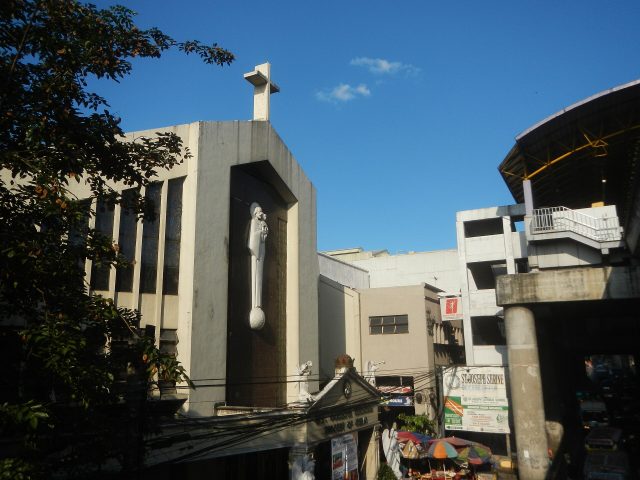
Quiapo’s streets twist between spice stalls and colonial facades, but San Sebastian Church stops you mid-step. Its dark steel walls, sharp as a knife’s edge, rise where everything else is bright or crumbling. The Gothic lines look borrowed from a European engraving, yet the church belongs here—soaked in Manila’s heat, its shadows stretching over the same pavement where vendors sell rosaries and fried bananas.
The steel wasn’t a stylistic choice. In the 1880s, Quiapo’s wooden churches kept burning or collapsing. Genaro Palacios y Guerrero designed a fireproof skeleton, fabricated in Gustave Eiffel’s French workshops. The pieces crossed the ocean, then Filipino workers bolted them together under Spanish overseers. The result stands today: a cathedral that’s also a bridge—between continents, between eras, between the hands that shaped it.
Inside, the air is cool. Light filters through narrow stained glass, painting the floor in reds and blues. The frescoes show saints in moments of suffering or grace—arrows piercing Sebastian’s body, Mary cradling a dead Christ. Steel columns, painted to mimic marble, hold up the vaulted ceiling. The altar glows under the dim light, its gold leaf catching every flicker of candle flame.
For locals, the church is where life happens. Baptisms, weddings, the daily rhythm of mass. But January is different. During the feast of Saint Sebastian, Quiapo erupts. Lanterns dangle overhead, drums echo off the steel walls, and the scent of lechon mixes with incense. The church isn’t just a backdrop; it’s the heart of the celebration, a place where the sacred and the rowdy collide.
It has survived. World War II bombs shattered the neighborhood, but the church stood. Later, restorers scraped off rust and repainted the columns, keeping the original design intact. Now it’s a National Cultural Treasure—not just a building, but proof of what endures.
Quiapo doesn’t wait for visitors. Around the church, the streets pulse: vendors shout prices, tricycles weave through crowds, and the air smells of frying oil and damp concrete. Colonial buildings lean next to neon signs, a mess of past and present. San Sebastian anchors it all, quiet amid the noise.
The church tells a story without words. Spanish rule, European engineering, Filipino labor—all of it pressed into steel and stained glass. What was once modern now feels ancient, a relic from a time when the Philippines stood at the edge of change.
Visit on a weekday. The crowds thin, and the church’s stillness wraps around you. Sit in a pew. Listen to the murmurs, the creak of wood, the occasional cough. Outside, Manila rushes. Here, time slows. You don’t just see history—you feel the weight of it.