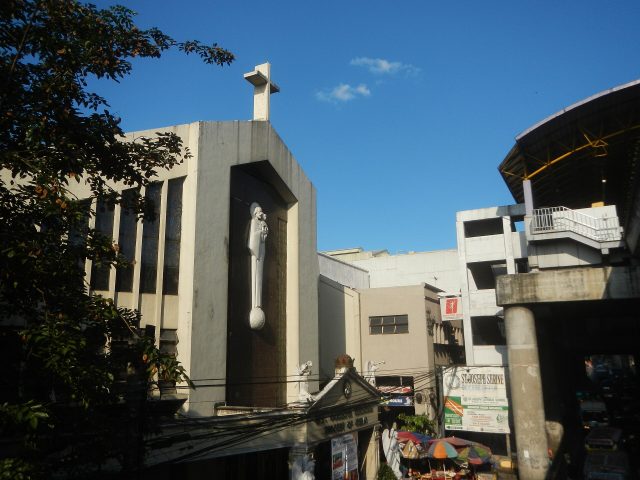
Quiapo Church, tucked away in one of Manila’s oldest districts, doesn’t demand attention the way grand cathedrals or tourist landmarks might. Instead, it lingers in the memory like a quiet conversation—unassuming, but deeply felt. The church sits slightly removed from the district’s bustling streets, where vendors sell everything from ripe mangoes to knockoff gadgets, and where the air hums with the energy of a place that has seen centuries of trade, migration, and daily life. Here, amid the low-slung buildings and narrow alleys, the church feels like a pocket of stillness, though not entirely untouched by the city’s relentless pulse.
The story of Quiapo Church is inseparable from the history of the district itself. Long before it became the crowded, vibrant neighborhood it is today, Quiapo was a marshy expanse where fishermen and traders settled, later giving way to waves of Chinese immigrants who brought their crafts and customs. By the late 19th century, a small chapel dedicated to Saint John the Baptist, the patron saint of Manila, stood on this site. The current structure was built much later, in the 20th century, when Quiapo had already transformed into a thriving commercial and cultural hub. The architecture reflects this evolution—simple, practical, and unadorned. Whitewashed walls, a modest triangular pediment, and a bell tower that rises just enough to be seen above the surrounding rooftops. Inside, high ceilings and wooden pews create a sense of openness, while the altar, adorned with images of saints, offers a focal point without ostentation. There’s nothing extravagant about it, and that’s precisely what makes it feel welcoming.
For the people of Quiapo, the church is more than a place of worship. It’s woven into the fabric of their lives. On Sundays, the pews fill with parishioners, and after Mass, the steps outside become a gathering spot—neighbors catching up, children darting between stalls, the scent of freshly fried snacks mingling with the incense drifting from the open doors. On weekdays, the church offers a respite from the chaos outside, a place to sit in silence or light a candle. Weddings and baptisms spill into the streets, turning the narrow lanes into impromptu celebrations. The church doesn’t stand apart from the neighborhood; it’s part of its rhythm, its joys, and even its struggles.
One of the most significant aspects of Quiapo Church is its connection to the Black Nazarene, a revered religious icon in the Philippines. While the original statue resides in the nearby basilica, a replica is housed here, making this church a stop for the thousands of devotees who flock to Manila each January for the Feast of the Black Nazarene. The procession is a spectacle of faith, with barefoot pilgrims carrying the statue through the streets, but for many, it’s also an act of personal devotion—a moment to seek solace, give thanks, or hope for better days. Even those who don’t consider themselves particularly religious often respect the tradition, recognizing its place in the country’s cultural and spiritual identity.
The church’s architecture doesn’t aim for grandeur, but there’s a quiet harmony in its design. The facade, with its neoclassical columns and pediment, echoes the forms of ancient temples, though in a stripped-down, functional way. Inside, the space is arranged to feel airy and bright, with large windows allowing natural light to filter in and wooden beams adding warmth. It’s a place that serves its purpose without pretense—whether for prayer, reflection, or simply a moment of quiet in a busy day.
Quiapo itself is a district of contrasts, where old and new collide in unexpected ways. Poverty and wealth exist side by side, traditions endure alongside modernity, and the past lingers in the shadows of the present. Quiapo Church bridges these divides, standing as a reminder of a time when Manila moved at a slower pace, when life was shaped by the rhythms of the neighborhood rather than the demands of a global city. Yet it’s far from a relic. People still gather here to mark life’s milestones, to seek comfort, or to find a moment of peace. The church doesn’t try to be a museum or a tourist attraction; it simply exists, as much a part of Quiapo as the vendors, the jeepneys, and the stories that unfold on its streets.
Visiting Quiapo Church isn’t about ticking off a landmark or admiring architectural details. It’s about stepping into a space that feels lived-in, where the weight of history and the immediacy of daily life coexist. There are no crowds of tourists here, no guides reciting rehearsed facts. Instead, there’s the murmur of the city beyond the walls, the scent of candles and incense, and the sense that time moves a little differently within these walls. If you find yourself in Quiapo, it’s worth stopping by, even just for a few minutes. Not to see something extraordinary, but to feel something real—the pulse of a neighborhood, the quiet resilience of a place that has endured, and the unspoken bond between a church and the people who call it home. Sometimes, the most meaningful places are the ones that don’t announce themselves at all.