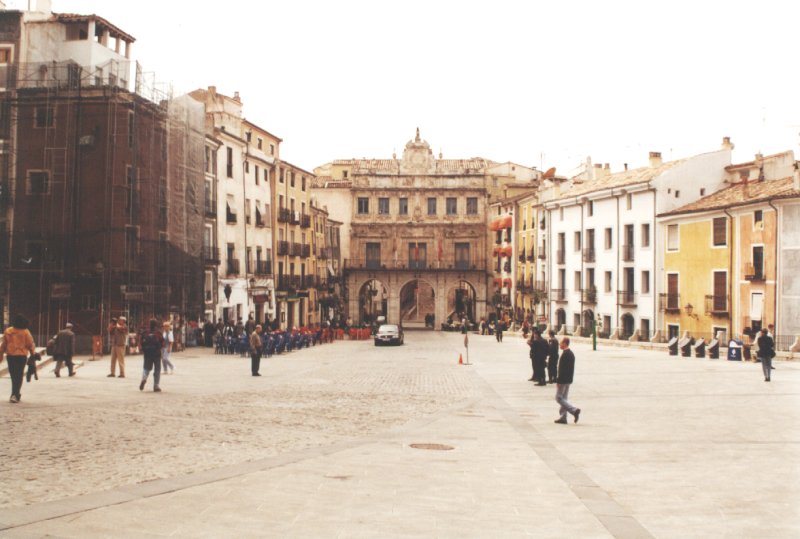
Plaza Mayor is where Cuenca breathes. The city unfolds here without hurry, its pace set by the rhythm of footsteps on cobblestones and the murmur of voices from café tables. The square sits in the old town’s heart, where Cuenca began as a fortress clinging to cliffs, and it still feels like the city’s natural center—both for those who live here and those who visit.
The buildings around Plaza Mayor carry the weight of centuries. Most rise two or three stories, their facades softened by wooden balconies, wrought-iron grilles, and heavy doors. Some walls still show medieval stonework; others display Baroque details—scrollwork, cornices, and stucco that catch the light at different angles. The town hall, built in the seventeenth century, stands out. Its arcade at street level and tall windows above give it a presence that’s both grand and unassuming.
This was once Cuenca’s commercial and administrative core, enclosed by walls and watchtowers. Markets thrived here, townspeople gathered for trade and news, and life followed the comings and goings of merchants. Over time, the city expanded, the walls fell, and the square opened to the surrounding streets. Cobblestones were laid in the nineteenth century, and restorations in the twentieth returned some buildings to their original appearance. Yet the square never lost its sense of continuity. It remains the place where Cuenca’s past and present meet.
Mornings in Plaza Mayor start with the scent of fresh bread and coffee. Cafés open their doors, and the square fills with the hum of conversation—elderly men reading newspapers, mothers with strollers, students heading to class. Some linger over coffee; others hurry past. A few simply sit and watch.
By evening, the square transforms. Streetlights flicker on, and locals gather in bars, ordering wine or beer, talking with friends, or watching the world go by. There’s no spectacle, just the easy rhythm of people settling in for the night.
Sometimes, the square becomes a stage. Families bring chairs for small concerts or local festivals, spreading out on the cobblestones to listen to music under the open sky. These moments feel unplanned, as if the square itself is inviting everyone to pause.
What makes Plaza Mayor special? The wooden shutters creak in the breeze. Faded signs hang above doorways. Narrow alleys lead toward the Huécar River. There’s no pretense here—just a place where history and daily life balance each other.
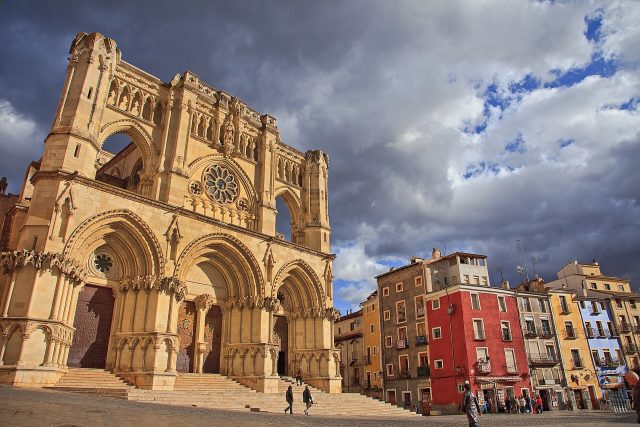
The Cathedral, with its mix of Romanesque and Gothic elements, stands nearby. The Museum of Abstract Art, housed in a historic building by the river, offers another kind of beauty. But you don’t need to leave the square to feel Cuenca’s charm. The streets around it hold small surprises—a hidden fountain, an artist’s studio, an old pharmacy with wooden shelves and glass jars.
Plaza Mayor doesn’t rush to impress. There are no grand monuments or tourist traps, just a quiet harmony. The square exists as it always has, solid and enduring. It’s the kind of place that lingers in your memory, a reminder to slow down and notice the details.