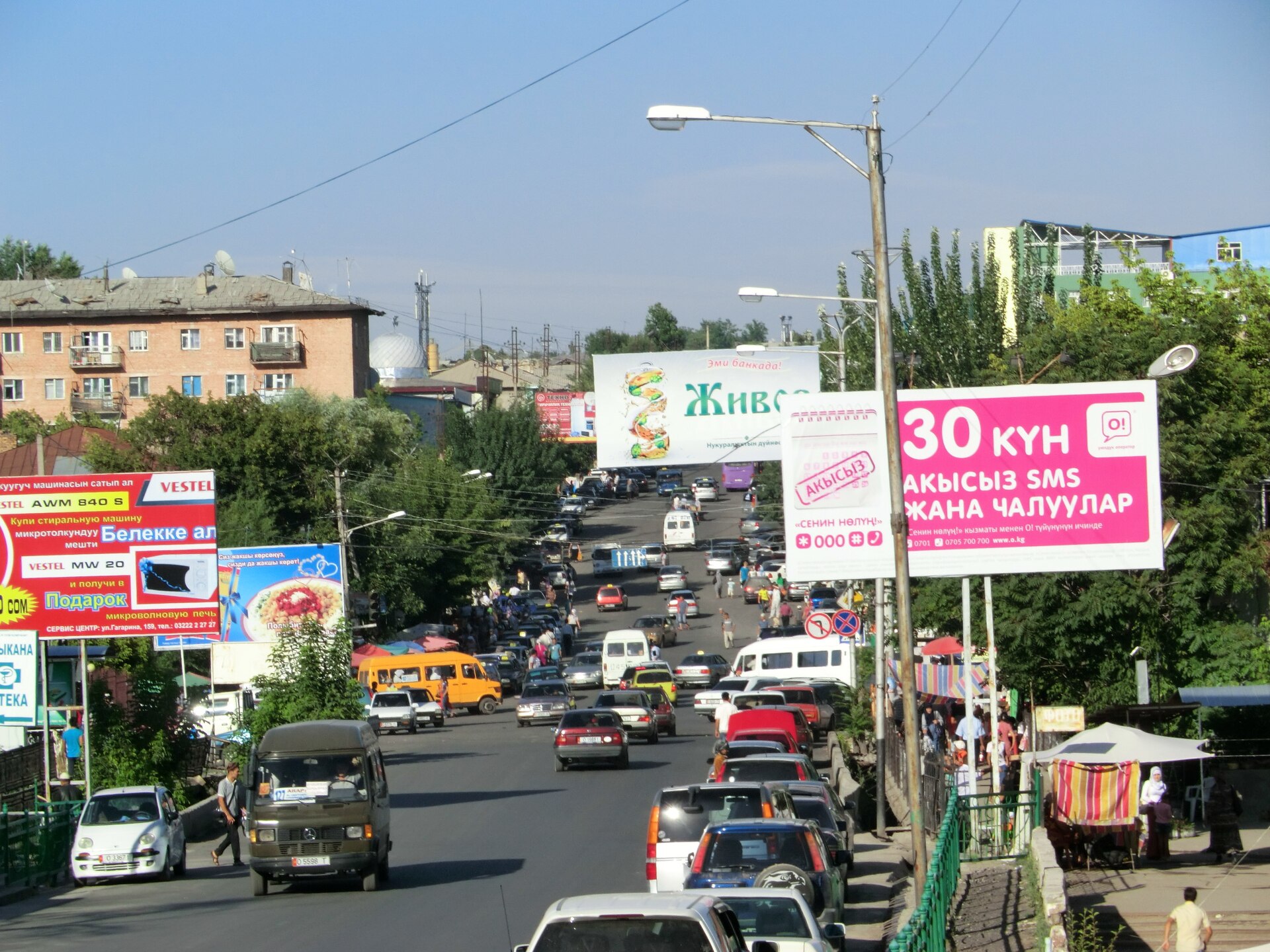
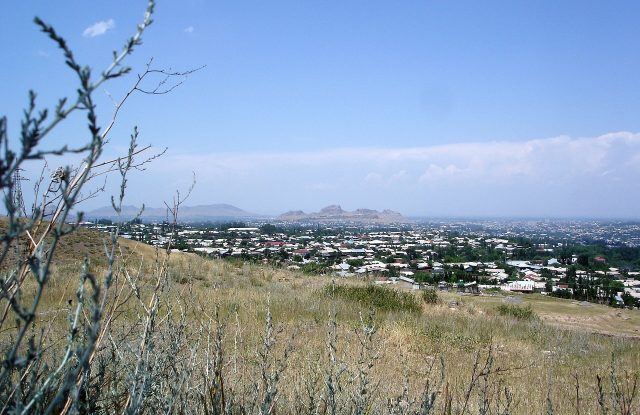
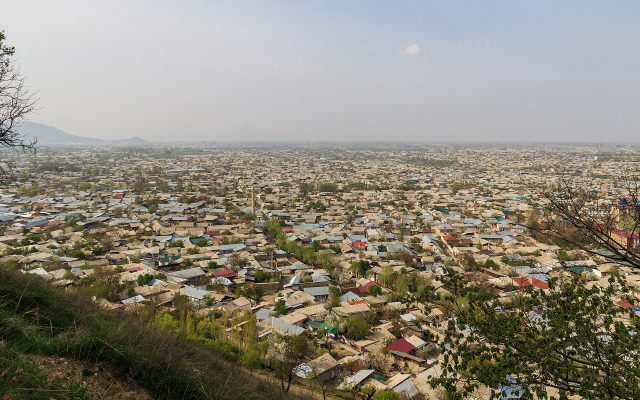
Lenin Square in Osh is one of those places where the city’s layered history feels almost tangible. Tucked in the heart of the city, where the main streets intersect, it has been a gathering point for centuries—first as a marketplace, later as an administrative hub, and now as a living public space. The square itself isn’t large, but its significance runs deep. It’s where the rhythms of daily life unfold: people hurrying to work, friends meeting for tea, or families strolling past the flowerbeds. Even on ordinary days, the square hums with activity, a quiet testament to Osh’s role as the cultural and economic center of southern Kyrgyzstan.
The architecture here tells its own story, a patchwork of eras stitched together over time. At the center stands the Lenin monument, one of the few remaining Soviet-era statues in Central Asia. The figure, perched on a tall pedestal, faces the square with an almost indifferent permanence, as if it has always been part of the landscape. Around it, the buildings form a curious mix: pre-revolutionary facades with ornate details stand beside utilitarian Soviet structures, while newer constructions blend in without fanfare. Each layer adds something to the square’s character, creating a space that feels both timeless and ever-changing.
Osh is one of the oldest cities in the region, with roots stretching back over three thousand years. The square sits on what was once a bustling trade route, a place where merchants from different corners of Central Asia would converge. In the pre-Soviet era, it was home to a lively bazaar, and later, under Soviet rule, it became the city’s administrative and social heart. Today, it retains that role, hosting everything from political rallies to festivals and concerts. On national holidays, the square transforms entirely—stages are set up, crowds gather, and the air fills with music and the scent of grilled meat from street vendors.
Though the square bears Lenin’s name, it has long since outgrown its Soviet symbolism. Now, it’s a place where different cultures and traditions coexist. You might see elderly men in traditional *chapan* robes playing backgammon on a bench, while nearby, a group of teenagers scrolls through their phones. The sounds of Russian, Kyrgyz, and Uzbek blend together, and the occasional notes of a *komuz* drift from a nearby café. On weekends, artisans set up stalls selling felt carpets, silver jewelry, and handmade ceramics, turning the square into a miniature market of Kyrgyz craftsmanship.
The area around the square is just as lively. A short walk away lies Osh’s Central Bazaar, one of the largest in Central Asia, where the sheer variety of goods—from piles of fresh pomegranates to stacks of dried apricots and pyramids of spices—can be overwhelming. Nearby, the city’s administrative buildings, banks, and small shops line the streets, while a pedestrian walkway leads toward Suleiman’s Mountain, the city’s most famous landmark. The mountain looms over Osh like a silent guardian, its slopes dotted with shrines and caves that have drawn pilgrims for centuries.
What makes Lenin Square special is how seamlessly it fits into the fabric of everyday life. It’s not just a historical site but a place where the city breathes. In the mornings, pensioners gather to chat over tea, while in the afternoons, students lounge on the benches, soaking up the sun. As evening falls, the square’s lights flicker on, casting a warm glow over the pavement. On weekends, street musicians sometimes perform, and in winter, a modest New Year’s tree appears, decorated with simple ornaments. The square has seen decades of change, yet it remains a constant—a place where Osh feels most like itself.
For visitors, Lenin Square is a natural starting point for exploring the city. From here, it’s easy to wander into the labyrinthine alleys of the old bazaar, stop for a cup of *samsa* at a roadside stall, or set off toward Suleiman’s Mountain. The square offers a glimpse into the unhurried pace of southern Kyrgyz life, far removed from the bustle of Bishkek. Osh has its own distinct character, shaped by centuries of trade, migration, and cultural exchange, and the square, despite its Soviet-era name, captures that essence perfectly. It’s a place where history isn’t just preserved in monuments but lived, day after day, by the people who call this city home.