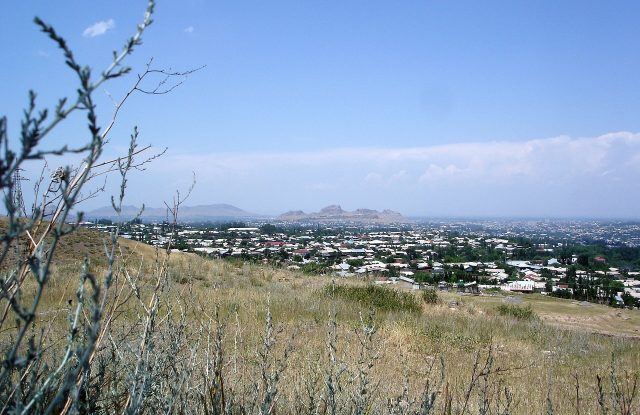
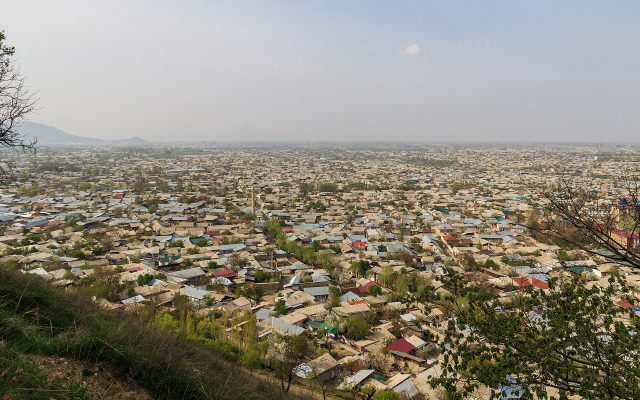
Suleiman Mountain rises in the heart of Osh, a natural landmark that has shaped the city’s identity for centuries. More than just a hill, it is a place where Kyrgyzstan’s layered history meets the quiet persistence of legend. The mountain’s slopes have been walked by generations—traders, pilgrims, shepherds, and seekers—each leaving behind traces of their lives, their beliefs, and their journeys. At its summit, the National Historical and Archaeological Museum Complex preserves these stories, not just in glass cases, but in the very stones beneath your feet.
Long before the museum existed, the mountain was already sacred. Known locally as Suleiman-Too, it takes its name from the prophet Sulayman, or Solomon, who, according to local tradition, once rested here during his travels. For centuries, people have climbed its paths to pray, to touch the rocks in hope of blessings, or simply to stand in silence. Archaeologists have found evidence of human activity dating back to the Bronze Age, with later settlements and religious sites suggesting the mountain was a place of gathering, worship, and trade. Even today, you might see an elderly woman pressing her palm against a boulder or a young couple whispering wishes into the wind—small rituals that connect the present to the past.
The museum itself is a relatively recent addition, established in the mid-20th century, but its origins go much further back. In the 19th century, when Osh was part of the Russian Empire, scholars and officials began collecting artifacts from the mountain—tools, weapons, jewelry, and everyday objects that told the story of Central Asia’s nomadic and settled peoples. Over time, these fragments grew into a collection of thousands of items, from ancient farming implements to medieval manuscripts. The exhibits don’t just display history; they reveal how this region has always been a crossroads, where cultures, languages, and traditions intersected.
The museum isn’t confined to a single building. Its galleries are scattered across the mountain, blending into the landscape. One of the most striking is the cave exhibition, where artifacts found within the mountain itself are displayed—shards of pottery, animal bones, and remnants of ancient burials. The real draw, though, are the petroglyphs, carved into the rock thousands of years ago. These images—hunters with bows, ibexes leaping across cliffs, strange half-human figures—offer a glimpse into the minds of people who lived here long before written records. They weren’t just documenting their world; they were trying to make sense of it, to leave something behind.
Walking the mountain’s trails, it’s easy to imagine the countless feet that have trodden these same paths. The slopes still bear the marks of old roads that once connected the Fergana Valley to the rest of Central Asia. During the Middle Ages, Osh was a key stop on the Silk Road, and Suleiman Mountain served as a landmark for merchants, pilgrims, and travelers. From the summit, the view stretches over the city and beyond, toward the Alay Mountains in the distance. It’s not hard to see why this place became a natural resting point—a place to pause, to reflect, and to prepare for the journey ahead.
What makes Suleiman Mountain special is that it doesn’t feel like a museum in the traditional sense. There are no crowds, no rigid tour schedules, no pressure to hurry from one exhibit to the next. Instead, the mountain invites you to wander, to sit on a rock and listen to the wind, to let the weight of history settle around you. On clear days, the sounds of Osh drift up from below—the hum of Osh Bazaar, the occasional honk of a car, the distant call of a muezzin. But step into one of the caves or pause in front of a petroglyph, and the modern world fades, replaced by the quiet persistence of the past.
The mountain is full of small, almost hidden details that make it feel alive. On one slope, there’s a shallow depression in the rock known as the "cradle," where mothers once placed their babies, believing it would ensure their health and strength. Nearby, a smooth stone called the "wishing rock" draws those hoping for luck or love. These aren’t just curiosities; they’re reminders that Suleiman Mountain has always been more than a historical site. It’s a place where people have come to seek comfort, to mark important moments in their lives, and to feel connected to something larger than themselves.
Visiting the museum complex is as much about seeing Osh differently as it is about learning history. The city is often seen as a gateway to Kyrgyzstan’s mountains or a stopover on the way to Issyk-Kul, but Suleiman Mountain reveals a deeper side. It’s a place where the past isn’t just remembered—it’s still present, in the stones, in the stories, and in the way people interact with the land. Even if you’re not someone who usually seeks out museums, a walk up the mountain leaves you with a sense of having touched something enduring, something that has watched over this corner of the world for millennia.