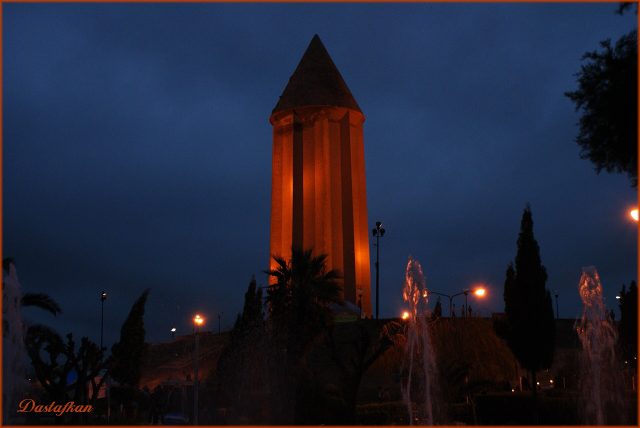
Imam Khomeini Square in Gonbad-e Qabus isn’t just the city’s central point—it’s where the past and present quietly intertwine. This northern Iranian town in Golestan Province moves at its own unhurried pace, and the square serves as its natural heart. Unlike the bustling streets of Tehran or the grand boulevards of Shiraz, Gonbad-e Qabus retains a provincial warmth, and this square embodies it perfectly. It isn’t vast or imposing, but that’s precisely what makes it special. There are no crowds of tourists snapping photos or vendors hawking trinkets, just the steady rhythm of everyday life unfolding as it always has.
The architecture here is simple and practical, much like the rest of the city. There are no ornate facades or towering structures, yet the square doesn’t lack character. Low-rise buildings with flat roofs, typical of the region, line the edges, along with small shops, cafes, and offices. The effect is unassuming, as if the city isn’t trying to impress visitors but simply exists as it always has. At the center, a modest fountain often draws locals on hot days, offering a place to rest in the shade of the trees or catch up with neighbors. It’s a gathering spot without pretension, where people come to pause rather than perform.
Gonbad-e Qabus isn’t a place that appears on most tourist itineraries, and that’s part of the square’s appeal. There are no souvenir stalls or pushy guides, just the quiet hum of daily routines. Elderly men play backgammon on benches, children dart around the fountain, and women in traditional headscarves hurry past on errands. The scene feels authentic in a way that’s increasingly rare in more tourist-heavy destinations. This isn’t an open-air museum; it’s a living part of the city where something small and real happens every day.
The history of Gonbad-e Qabus stretches back centuries, and while Imam Khomeini Square itself isn’t ancient, it reflects the spirit of the region. The city sits near the Turkmenistan border, once a crossroads for trade routes linking Iran to Central Asia. Over time, this blending of Persian and Turkic influences shaped the local culture, leaving traces in everything from architecture to the way people interact. The square subtly echoes this heritage—there’s no sharp divide between "locals" and "outsiders," just an easy openness that has defined the city for generations.
One of the most prominent buildings on the square is the mosque, which serves as both a place of worship and a community hub. In Iran, mosques often double as social spaces, and this one is no exception. On Fridays, worshippers gather for prayers, while on other days, you might see people chatting on benches or simply enjoying the quiet. The mosque isn’t lavishly decorated, but its understated presence underscores its importance to the neighborhood. It’s a place where people come not just for spiritual reflection but to feel connected to something larger than themselves.
The square comes alive in the evenings when the heat of the day subsides. Families stroll with children, groups of friends meet up, and street vendors set up small stands selling fresh fruit or sweets. The air carries the scent of tea and spices, and the murmur of conversation creates a sense of calm. This is when the square truly becomes a shared space, where each person finds their own reason to be there—whether it’s a moment of rest, a chance to socialize, or just a familiar part of the walk home.
Gonbad-e Qabus doesn’t try to mimic other Iranian cities, and that’s what makes it special. There’s no Tehran-style chaos or Isfahan’s grand mosques, but there is a quiet, unshakable identity. Imam Khomeini Square captures that perfectly—modest yet full of life. It doesn’t tell stories of grand historical events or architectural masterpieces, but it does show how people live in this corner of Iran. There’s nothing staged or artificial here, just the kind of authenticity that makes a place feel real.
If you ever find yourself in Gonbad-e Qabus, don’t rush straight to the UNESCO-listed Gonbad-e Qabus Tower. Instead, take a walk around Imam Khomeini Square first. Sit by the fountain, listen to the conversations around you, and watch the day unfold. It’s here, in these small, unscripted moments, that you’ll catch the true spirit of the city—unhurried, welcoming, and genuinely alive. After all, travel isn’t just about seeing landmarks; it’s about those fleeting connections to the everyday lives of the people who call a place home.