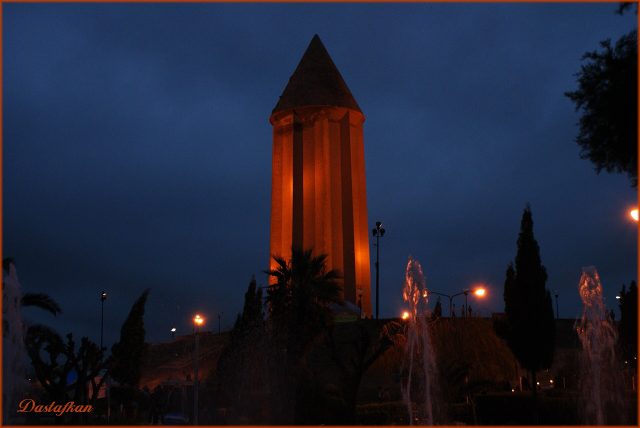
Gonbad-e Kavus is a place where the past lingers in the very air, a quiet corner of northern Iran where time seems to have settled into the earth and stone. The city takes its name from the towering structure that dominates its skyline—the Gonbad-e Kavus, or Tower of Kavus—a monument that has stood for over a thousand years, defying both the elements and the passage of time. Unlike the bustling cities of modern Iran, this is a place where life moves at an unhurried pace, where the weight of history is felt in the narrow streets, the old bazaars, and the way the light falls on the ancient brickwork of the tower.
The tower itself is a marvel of early Islamic architecture, built in 1006 under the orders of Qabus ibn Wushmgir, a ruler of the Ziyarid dynasty. At the time, this region was part of a vast empire stretching from the Caspian Sea to the heart of Persia, and the tower was conceived as a monument to power and legacy. Its exact purpose remains a subject of debate. Some believe it was intended as a mausoleum for Qabus himself, while others suggest it may have served as an astronomical observatory or even a beacon for caravans traveling the Silk Road. Whatever its original function, the tower became a symbol of the Ziyarids' cultural and political influence, a testament to the engineering prowess of the era.
Rising nearly seventy meters into the sky, Gonbad-e Kavus is one of the tallest brick towers in the world. Its design is deceptively simple—a perfect cylinder tapering into a conical dome, its surface marked by ten vertical ribs that create a rhythmic pattern of light and shadow as the sun moves across the sky. The brickwork is so precise that even after centuries, the seams between the blocks are barely visible. Inside, the tower is stark, almost austere, with bare walls and a narrow spiral staircase leading to the upper levels. There are no ornate decorations, no grand inscriptions—just the raw geometry of the structure, a reminder that sometimes the most powerful statements are made with restraint.
The city of Gonbad-e Kavus lies in Golestan Province, a region long known for its fertile lands and strategic importance. In medieval times, it was a crossroads for trade, a place where merchants from the East and West would pass through on their journeys. Today, the city retains a sense of its historical role, though in a quieter, more subdued way. The old caravanserais, the remnants of fortress walls, and the worn cobblestone paths all hint at a time when this was a thriving hub of commerce and culture. The people here, a mix of Turkmen and Persian communities, still carry the traditions of their ancestors, and it’s not uncommon to hear stories of ancient rulers and legendary figures who once shaped the fate of these lands.
In 2012, Gonbad-e Kavus was recognized by UNESCO as a World Heritage Site, an acknowledgment of its cultural significance and architectural brilliance. For Iranians, the tower holds a special place in the national imagination, woven into folklore and history. One legend claims that the tower was built in a single night by jinn, supernatural beings summoned by Qabus to immortalize his name. Another tale speaks of hidden treasures buried within its walls, though no one has ever found them. These stories, whether true or not, add a layer of mystery to the tower, drawing travelers who come not just to see a monument, but to feel the weight of its past.
Visiting Gonbad-e Kavus is more than just a stop on a tourist itinerary—it’s an opportunity to step into a different rhythm of life. The tower stands at the center of a small park, where locals gather in the shade of trees to escape the midday heat. In the evenings, the structure is bathed in soft lighting, transforming it into a beacon visible from afar. There are no crowds here, no hurried tourists snapping photos before rushing off to the next attraction. Instead, there’s a sense of stillness, a chance to sit on a bench and watch the sunset paint the tower in hues of gold and amber.
Beyond the tower, the city itself offers a glimpse into traditional Iranian life. The bazaars are filled with handwoven textiles, pottery, and other crafts passed down through generations. In the surrounding countryside, villages dot the landscape, their mud-brick houses blending seamlessly into the earth. Life here moves slowly, dictated by the seasons and the land. Travelers who venture into these areas often find themselves welcomed with warmth, invited to share a meal of fragrant rice pilaf or freshly baked bread, still warm from the tandoor.
Gonbad-e Kavus is one of those rare places where history isn’t confined to museums or textbooks—it’s alive in the streets, in the way people live, and in the silent presence of the tower itself. The monument serves as a reminder that even the mightiest empires fade, but the structures they leave behind endure, carrying stories that transcend time. For those who seek more than just a sightseeing experience, this is a place where the past feels tangible, where the air hums with the echoes of centuries gone by. There are no grand hotels or flashy attractions here, just the quiet dignity of a city that has chosen to remember rather than forget.