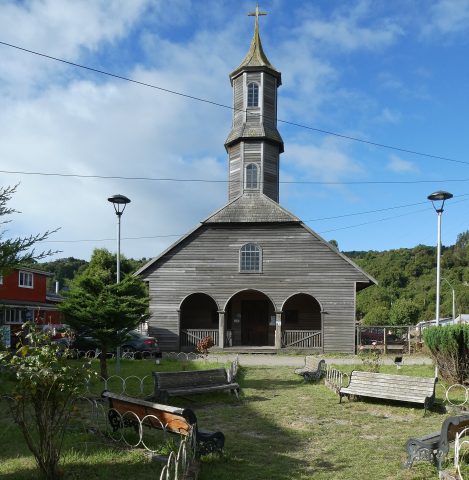
Dalcahue’s main square
Between the sea and the town’s past, the square unfolds without hurry. On Chiloé Island, it doesn’t feel like a tourist stop. It feels like a place where life has settled into its own rhythm.
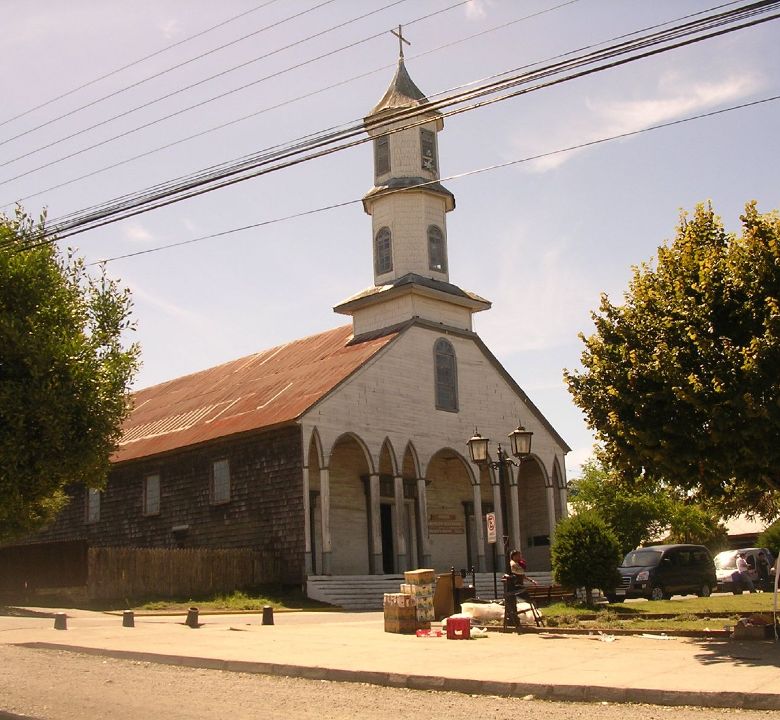
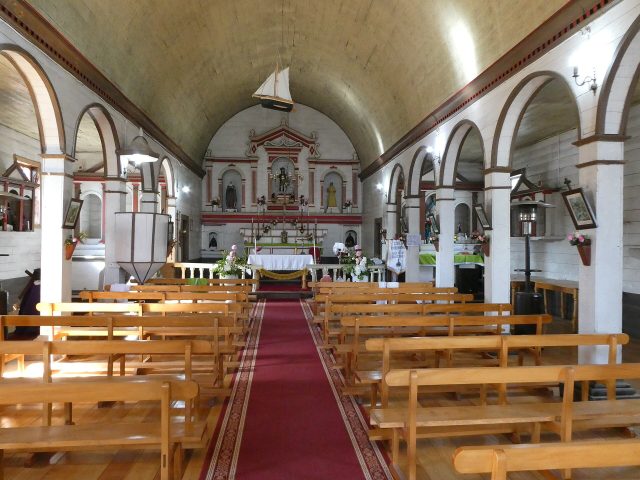
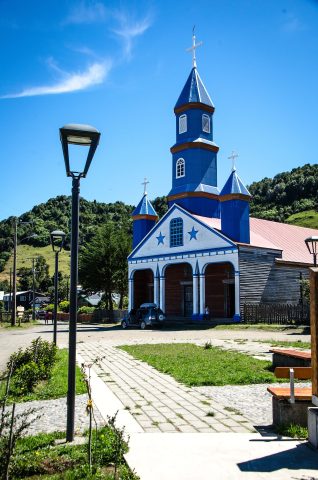
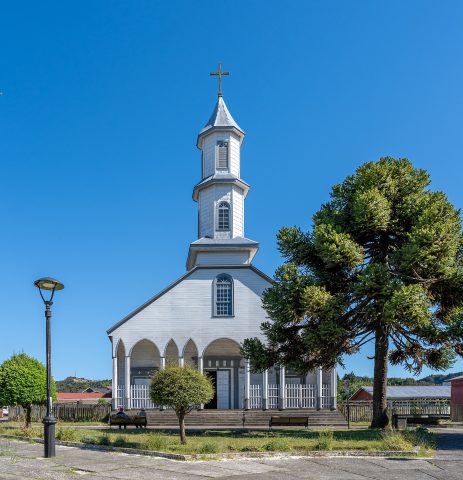
Wooden houses with weathered facades line the edges. Their pastel colors are softened by time. Carved window frames hint at the island’s 19th-century trading days. The church, one of Chiloé’s UNESCO-listed wooden churches, stands at the edge of the square. Its slender bell tower is a landmark for fishermen returning to port. The buildings around it have seen generations come and go.
The square is small. A modest fountain sits at its center. On weekends, children play there. In the mornings, older locals feed pigeons. The ocean is always close—its presence in the cool summer breeze or the winter mist. Old plane trees shade the benches. Their leaves rustle in the wind. Around the edges, a few cafés serve island dishes: *curanto*, a slow-cooked feast of meat and seafood, or *milcao*, dense potato bread. The food is simple.
Dalcahue isn’t a place for grand monuments. It offers something else: a sense of continuity. Fishermen unload their catch at the wooden pier in the morning. Women knit on benches in the afternoon. Teenagers linger by the fountain in the evening. The pace is set by the tides and the slow conversations between neighbors.
History isn’t confined to plaques here. It’s in the way the wooden houses lean with age. It’s in the street names that haven’t changed in a century. It’s in the stories passed down over cups of tea. Chiloé has always been a crossroads—Indigenous Huilliche, Spanish colonizers, German and Croatian settlers. Dalcahue played its part. In the 1800s, it was a port where salt, fish, and timber changed hands. The square was where deals were struck and news was shared. Today, that past lingers in the quiet.
Visit in February for the *Fiesta de la Candelaria*. The square fills with music, dancing, and the smell of grilled fish. Locals wear traditional costumes. The celebration isn’t staged for tourists. It’s a gathering of everyone—children, elders, families. The joy feels natural.
The town is a gateway to Chiloé. Ferries leave for smaller islands. Drivers offer trips to national parks or Indigenous settlements. But you don’t need to leave Dalcahue. The waterfront is good for watching seabirds and sea lions. Small shops sell handmade crafts—woven baskets, wooden carvings, wool socks. Each piece shows the hands that made it.
What stays with you isn’t any single sight. It’s the feeling of stepping into a slower way of life. Sit on a bench. Listen to the waves. Watch the light change over the water. The square is where paths cross and stories unfold. For some, it’s a childhood memory. For others, it’s a first glimpse of Chiloé’s quiet magic. For a few, it’s a place where time pauses.