Chonchi’s main square is where the town quietly gathers. It sits in the heart of this small island town on Chiloé, a pause in the day where time moves at the pace of conversation. There are no crowds here, no selfie sticks or hurried footsteps. Instead, the square breathes with the unhurried pulse of provincial Chile—neighbors greet each other by name, and the hours stretch just enough to notice the details.
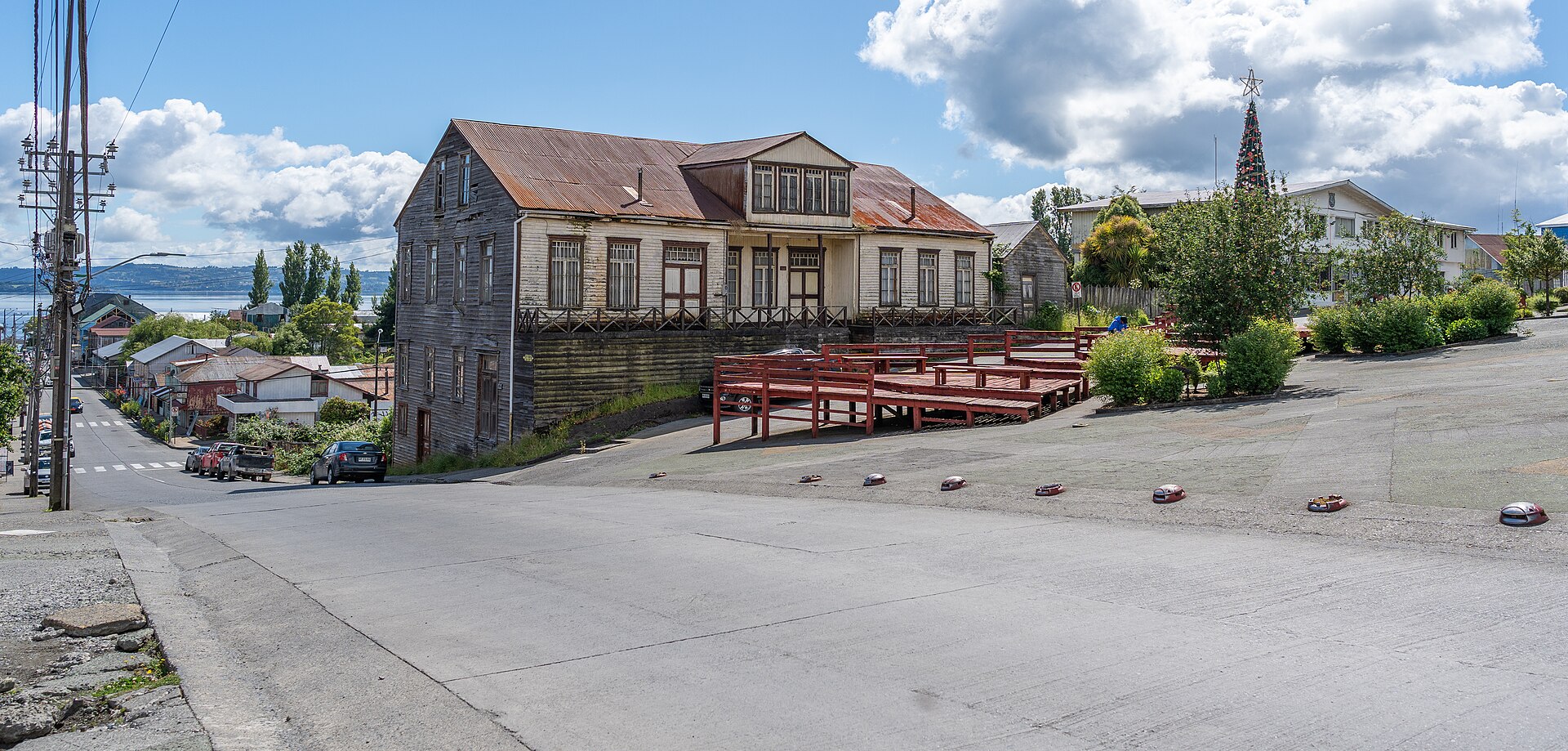
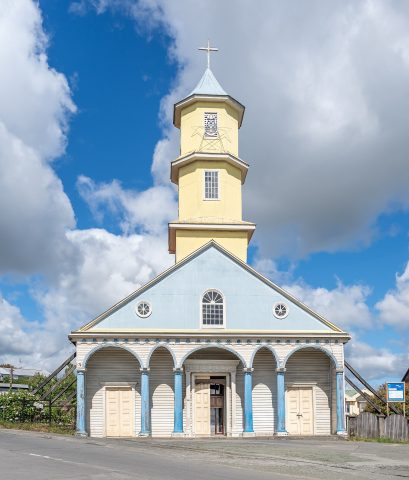
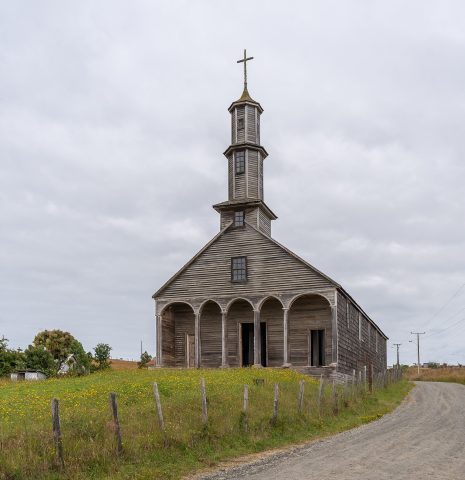
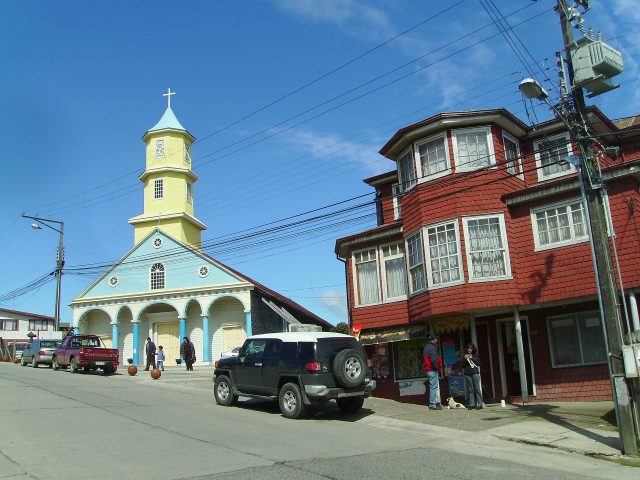
The architecture around the square shows Chiloé’s story. The wooden houses lining its edges are classic examples of the island’s building traditions, their facades painted in bold colors—deep blues, forest greens, warm reds—that look like they belong to the early 1900s. Each one carries the marks of families who have lived here for decades. Wood isn’t just a material on Chiloé; it’s a craft, a legacy of the island’s shipbuilders and carpenters. The church here, one of the famous wooden churches recognized by UNESCO, stands with its tall, slender spire rising above the square. It has watched over the town for more than a century.
The square is less a manicured park than a living room for the town.
Mornings bring a gentle bustle: locals stop by the small market for fresh produce, others linger over coffee in the tiny café. Children dart across the playground while older men and women toss crumbs to the pigeons. On weekends, the energy shifts—sometimes there’s live music, other times a craft fair where you can find hand-knit wool socks or wooden figures carved by island artisans. But even then, it never feels staged. This is where people come to be.
Chonchi isn’t a place that caters to tourists, and the square hasn’t been turned into an open-air museum. It remains a working part of the town, which is why it feels real. Chiloé isn’t just about its landscapes or its churches; it’s about the people who call it home, the way they move through the world, the stories they carry. No one is in a rush. No one is trying to impress. Life simply unfolds, and if you’re there, you’re part of it—even if only for an afternoon.
The town’s history is tied to the sea. Chonchi began as a port, where life was dictated by tides and catches. The square was once where fishermen gathered before heading out, where deals were struck and news was shared over cups of coffee. The sea no longer dominates daily life the way it once did, but its presence is still there—in the salt-tinged breeze, in the cries of gulls circling overhead, in the stories of old-timers who remember when Chiloé was nearly cut off from the mainland.
There are no luxury hotels or Michelin-starred restaurants here. Chonchi thrives on simplicity: family-run guesthouses where the owners serve breakfast, cafés dishing up fresh fish and locally grown potatoes, little shops selling homemade preserves. On the square, you can buy empanadas stuffed with cheese or seafood, still warm from the oven, and eat them on a bench while watching the town go about its day. As evening falls, the square becomes the perfect place to sit with a cup of tea, listening to someone strum a guitar in the fading light.
Chiloé is a place where myth and reality blur. Locals still speak of the island’s legendary creatures—spirits that dwell in the forests and along the shore—and sometimes, in the quiet of the square, you might hear a tale or two about encounters with them. Even if you don’t believe in the stories, there’s something about the place. Maybe it’s the way the light slants across the wooden houses, or the stillness that settles over the town. Or maybe it’s the sense that you’ve stumbled upon a corner of the world where Europe once met indigenous culture, where the sea meets the forest, and where the past feels as present as the ground beneath your feet.
This isn’t a place you visit for dramatic photos or high-energy entertainment. You come to Chonchi’s square to feel the rhythm of life, to understand that happiness isn’t always found in the noise of a big city. Sometimes it’s right here, in a quiet corner where people know each other’s names, where children play in the streets until dusk, and where the elderly sit on benches watching the sunset. There’s nothing extraordinary about it, and that’s exactly why it feels real.