The Church of Vilupulli in Chonchi feels like a place where time has quietly settled, untouched by the rush of the outside world. It stands on Chiloé Island, a land so distinct from mainland Chile that it might as well be its own country. Here, the air is thick with mist, rain arrives without warning, and the forests and hills seem to hold secrets older than memory. The island’s isolation has preserved its unique way of life, its language, and its traditions, blending the heritage of the indigenous Huilliche people with that of Spanish settlers. Vilupulli is more than just a building—it’s a piece of that living history, a wooden church that has witnessed the slow, steady rhythm of life on the edge of the world.
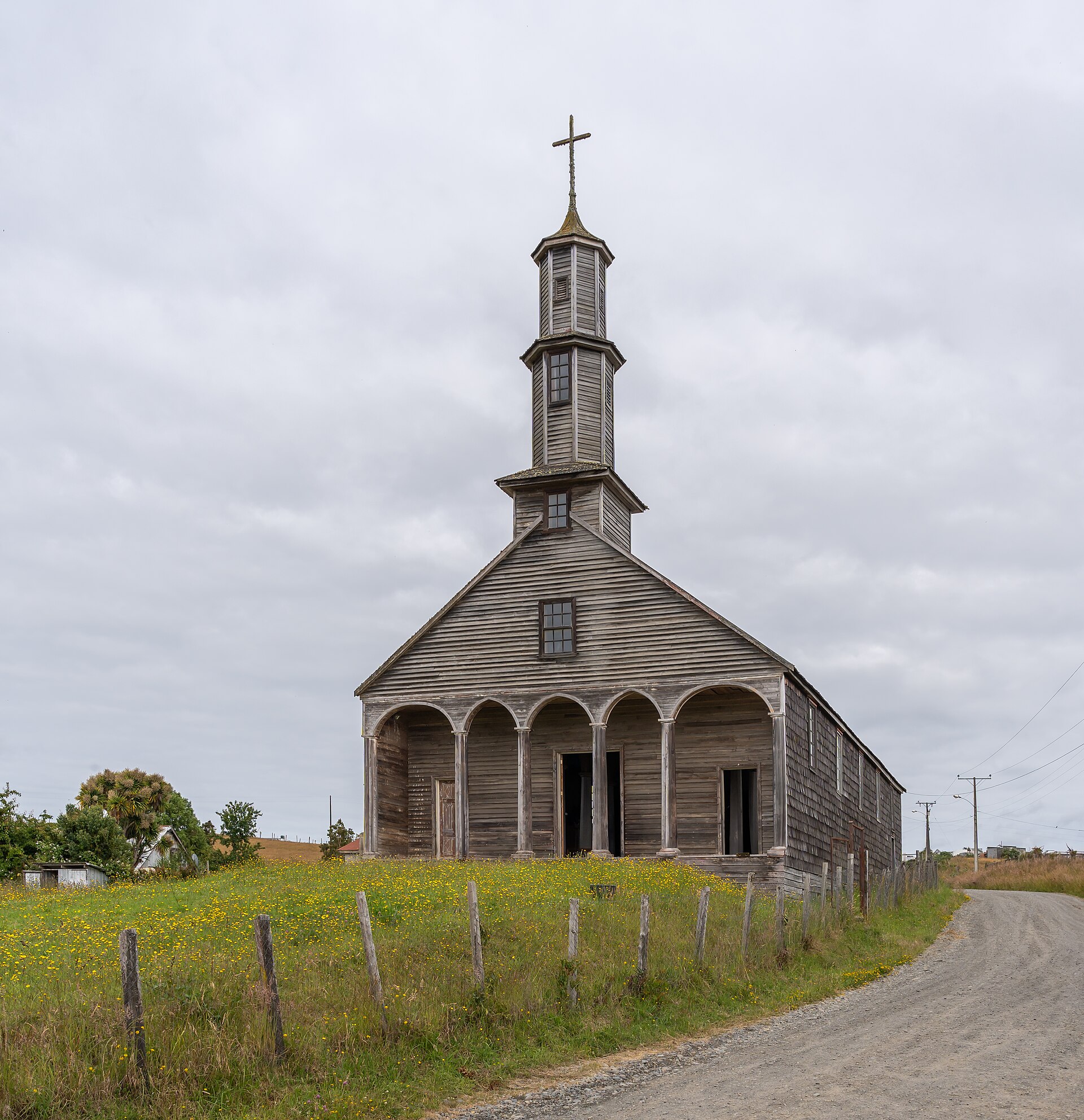
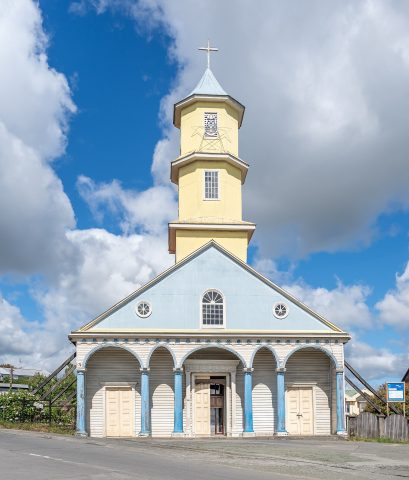
Built in the 19th century, when Chiloé was still a remote outpost of the Spanish colony, the church embodies the architectural style that defines the island’s wooden churches. These structures, known as *iglesias de Chiloé*, were crafted without a single nail, relying instead on wooden pegs and joints—a technique borrowed from indigenous builders and adapted to serve the needs of the Catholic faith. Vilupulli isn’t the grandest of these churches, nor the most famous, but its simplicity gives it a quiet strength. The steeply pitched roof, the three-part facade with its modest tower, and the subtle carvings all blend seamlessly into the landscape, as if the church grew from the earth itself. Inside, the wooden beams and darkened walls tell their own story, one of years passed and lives lived within these walls.
Chiloé has always been a place where faith and nature intertwine in ways that feel almost mystical. The island is steeped in legends of forest spirits and mythical creatures that dwell along its shores, and Catholicism here absorbed elements of those older beliefs. Churches like Vilupulli were never just places of worship—they were the heart of the community, where people gathered for festivals, shared news, and sought shelter from the island’s unpredictable weather. Even now, as many of Chiloé’s villages have emptied, these churches remain as symbols of resilience. They stand as reminders that life here has always been hard, but the people who called this place home found ways to endure.
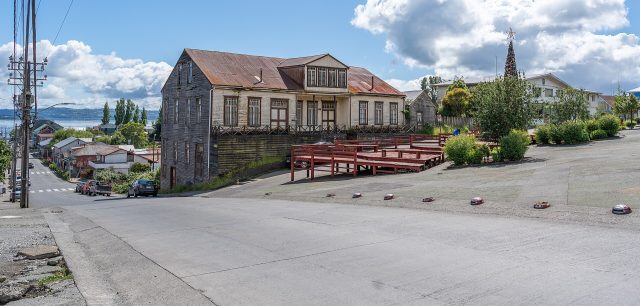
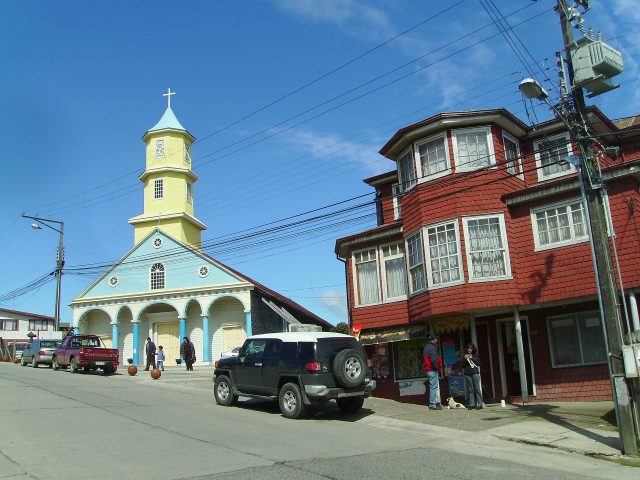
Vilupulli isn’t one of the island’s most visited churches, and that’s part of its charm. There are no crowds here, no tour groups snapping photos—just the quiet hum of the wind and the occasional cry of a gull. The church sits in a small village where the houses, like the church itself, are built in the same traditional style, their wooden planks weathered by salt and rain. If you meet someone along the way, they might nod in greeting, but they won’t intrude. This is a place where solitude is respected, where the land and the people move to their own unhurried rhythm.
The history of Chiloé is a history of survival. For centuries, the island was cut off from the mainland, forcing its people to rely on their own ingenuity. They fished the cold waters, cultivated potatoes long before they became a staple in Europe, and built boats to navigate the archipelago’s treacherous channels. Churches like Vilupulli became more than just spiritual centers—they were places where knowledge and traditions were passed down through generations. Even today, time seems to move differently here. There’s no rush, no urgency, as if the people of Chiloé understand that the journey matters more than the destination.
If you ever find yourself in Chonchi, it’s worth taking the detour to Vilupulli. The road isn’t short, but that’s part of what makes the journey meaningful. Along the way, you might pass old water mills, fields dotted with sheep, and forests where rare trees still grow. When the church finally comes into view, perched on a small hill, it’s clear why this spot was chosen. The location wasn’t accidental—it was meant to be seen from afar, a beacon for those returning home and a symbol of faith in a place where the world feels vast and untamed.
Inside, the church feels frozen in time. The altar, the pews, the icons—everything looks much as it did when the church was first built. The wood is worn, the paint faded, but that only adds to the sense of authenticity. There’s no gilded opulence here, no grand displays of wealth. Vilupulli doesn’t try to impress; it simply exists, a testament to the lives of those who built it and those who still come here to pray. The air is still, the silence broken only by the creak of old wood or the distant sound of rain.
Chiloé is often called the land of wooden churches, and Vilupulli is one of its quietest treasures. It’s not a museum piece, though—it’s a living reminder of how people can create beauty from the simplest materials and how faith can sustain them through the hardest of times. Maybe that’s why it still stands, despite the wind, the rain, and the passage of years. If you ever want to feel the true spirit of this island, this is the place to come—not for photographs or souvenirs, but to stand in the silence and understand that some places don’t need grand gestures to leave a lasting impression.