Perched on the edge of the world, where the Pacific’s restless waves meet the mist-laden forests of Chiloé, the Church of San Carlos de Chonchi stands as a quiet witness to centuries of faith and resilience. This wooden sanctuary, nestled in the heart of a small island town, feels like a place where time has paused, allowing the past to breathe alongside the present. There’s no grand announcement of its significance—just the steady presence of a building that has seen generations come and go, its weathered planks holding stories of devotion, hardship, and the slow rhythm of island life.
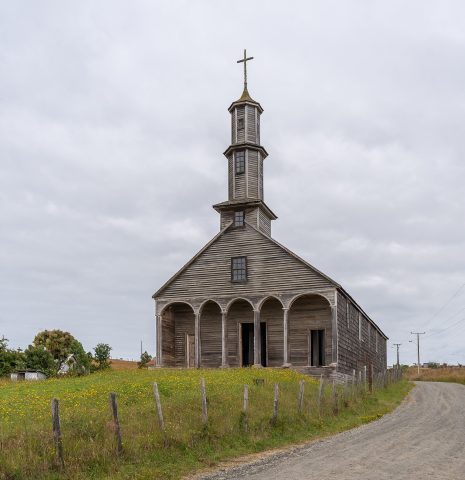
Built in the 19th century, the church is part of a remarkable tradition: the wooden churches of Chiloé, a collection of structures so unique they’ve earned a place on UNESCO’s World Heritage list. What makes them extraordinary isn’t just their beauty, but the way they were constructed—without a single nail. Instead, local craftsmen relied on a technique called *encaje de madera*, or wooden joinery, where beams and planks interlock like the pieces of a puzzle. This method, passed down through generations, reflects both the ingenuity of the island’s builders and their deep understanding of the materials at hand. The Church of San Carlos de Chonchi is one of sixteen such churches scattered across Chiloé, each a testament to the fusion of European missionary influence and the practical wisdom of the island’s indigenous communities.
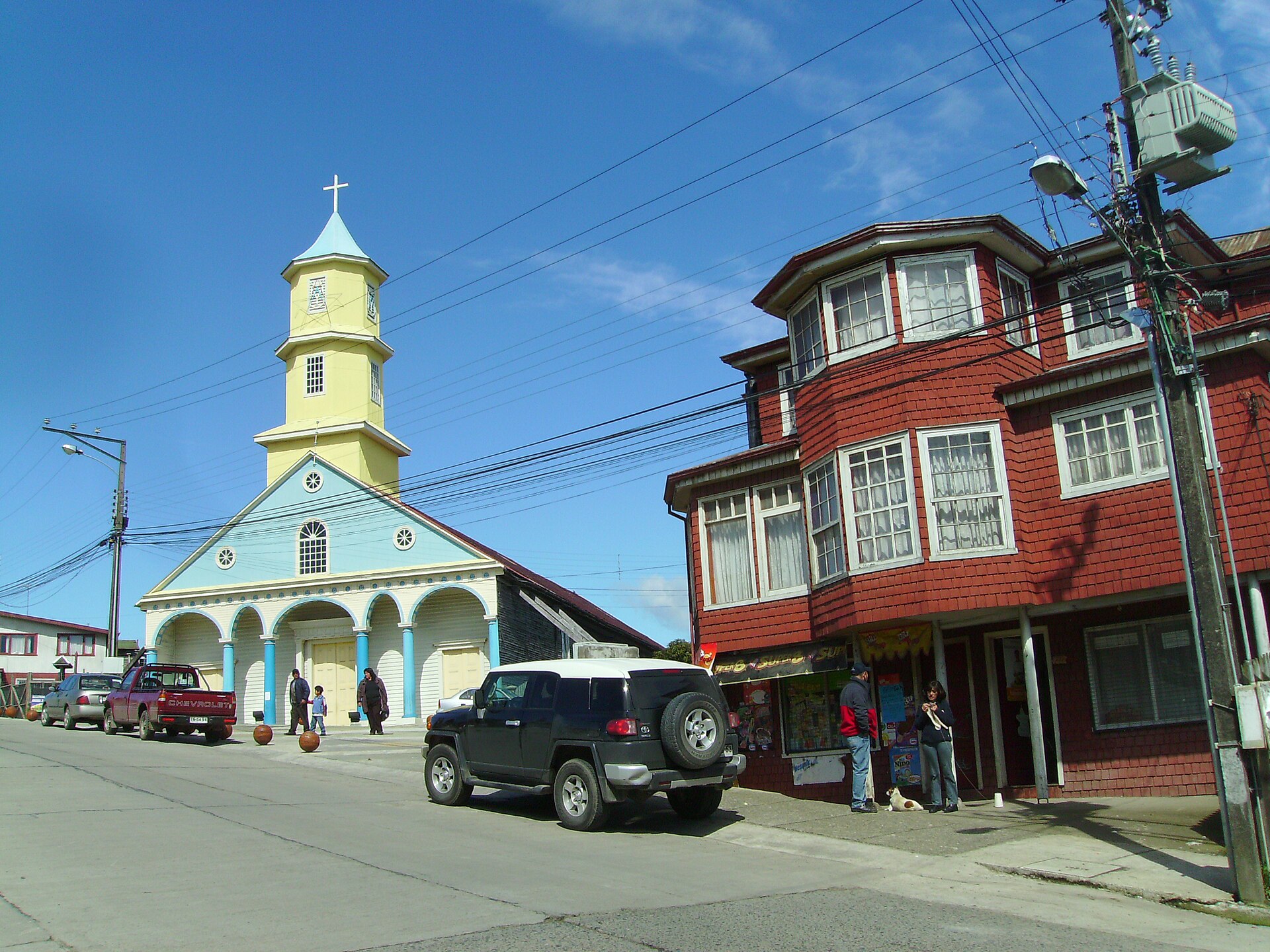
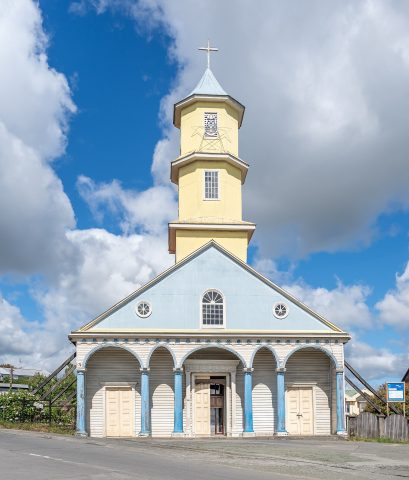
From the outside, the church appears deceptively simple. Its pale, pastel-hued facade blends softly with the muted colors of the surrounding landscape, while the slender bell tower rises like a finger pointing toward the sky. The wooden shingles, worn smooth by wind and rain, give the building a sense of age and endurance. Inside, the space feels both vast and intimate. The high, vaulted ceiling is supported by thick wooden beams, their grain still visible beneath layers of paint. The pews, carved by hand, face a modest altar adorned with religious icons, their details softened by time. There’s no opulence here—just the quiet dignity of a place built to serve, not to impress.
Chiloé has always been a land shaped by its environment. The island’s climate is unforgiving: damp, windy, and often shrouded in fog. For the people who settled here, survival depended on adaptability, and the churches they built were more than just places of worship. They were refuges—warm, dry spaces where communities could gather, share news, and find solace during long winters. The Church of San Carlos de Chonchi played this role for the town, becoming a hub of social and spiritual life. Even today, it remains a place where locals come to mark life’s milestones: baptisms, weddings, and funerals, each ceremony weaving another thread into the fabric of the town’s history.
The story of these churches begins with the arrival of Jesuit missionaries in the 17th century. Tasked with spreading Christianity, the Jesuits brought with them European architectural traditions, but they quickly realized that the island’s climate and available materials demanded a different approach. The solution was a collaboration: the missionaries provided the design, while the island’s indigenous people contributed their knowledge of woodworking and local conditions. The result was a style unlike anything else in the world—churches that were at once European in their layout and distinctly Chilote in their construction. The Church of San Carlos de Chonchi embodies this blend, its structure a silent dialogue between two cultures.
Stepping inside the church today, the first thing you notice is the silence. It’s not the hushed quiet of a museum, but something deeper—a stillness that seems to settle into your bones. The air smells of aged wood and candle wax, and the floorboards creak softly underfoot, as if whispering secrets from the past. There are no crowds here, no guided tours rushing through. Instead, there’s time to sit, to look around, and to imagine the generations of islanders who have filled these pews. What did they pray for? What fears did they bring to this place, and what comfort did they find? The church doesn’t offer answers, but it invites reflection.
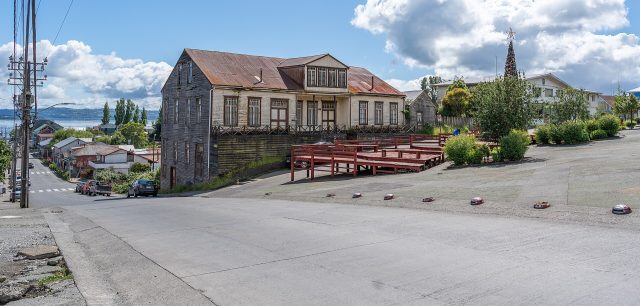
Chonchi itself is a town that moves at its own pace. There’s no urgency here, no need to hurry. The streets are lined with traditional *palafitos*—wooden houses perched on stilts along the water’s edge—while fishing boats bob gently in the harbor. The town’s layout is simple, almost unplanned, with narrow lanes winding between houses and small gardens bright with flowers. The Church of San Carlos de Chonchi fits seamlessly into this landscape, its presence as natural as the tides that shape the island’s shores. It’s not a monument to be admired from afar, but a living part of the community, still used for services and gatherings.
For travelers who make the journey to Chiloé, the church offers a rare opportunity to step away from the noise of modern life. There are no flashy attractions here, no souvenir shops or tourist traps. Instead, there’s the chance to experience something authentic—a place where history isn’t just preserved, but still alive. The Church of San Carlos de Chonchi doesn’t demand attention; it earns it, quietly, through the weight of its years and the stories it holds. To visit is to feel the pulse of an island where faith, craftsmanship, and the relentless beauty of nature have come together in a way that feels both timeless and deeply human.