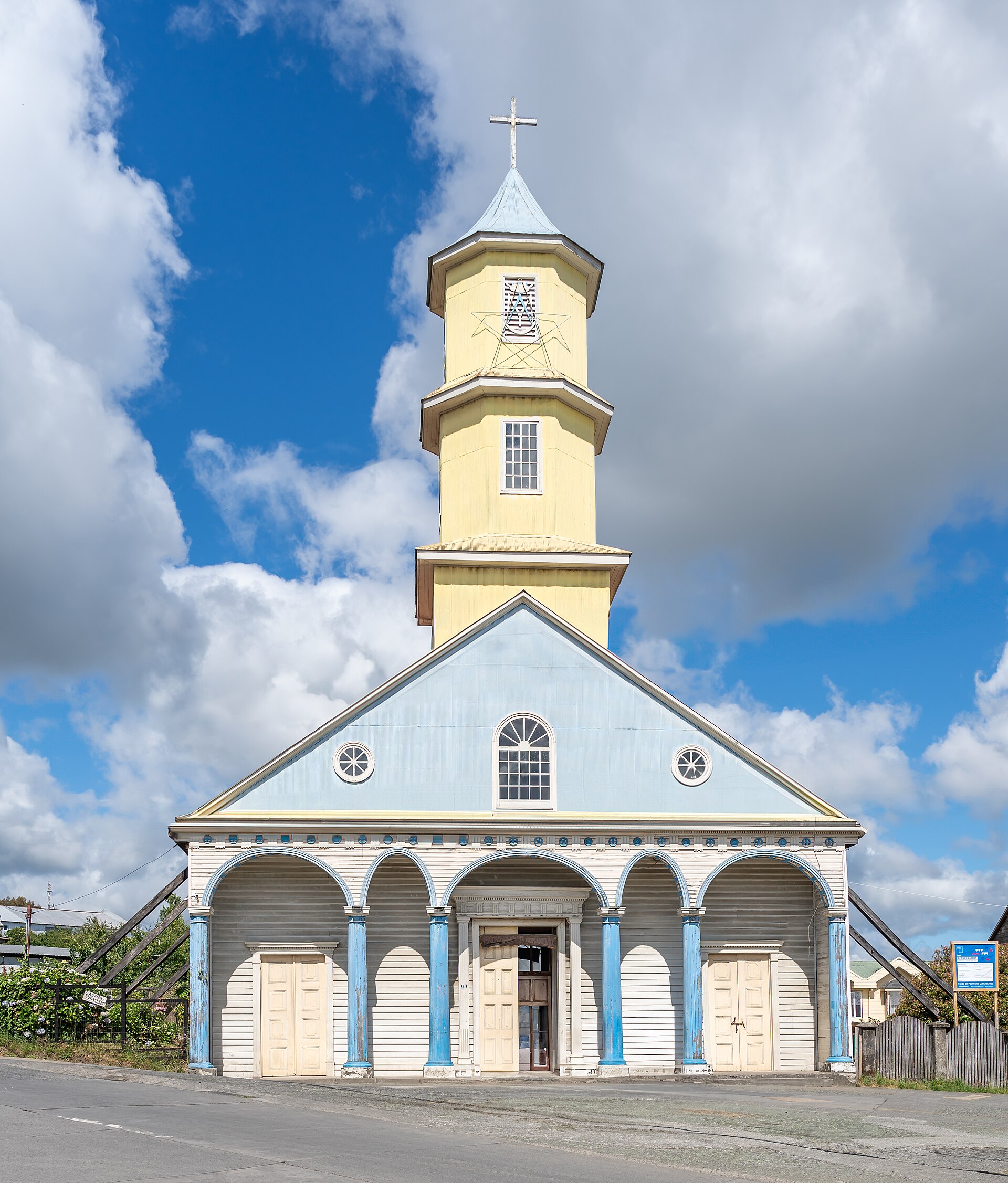
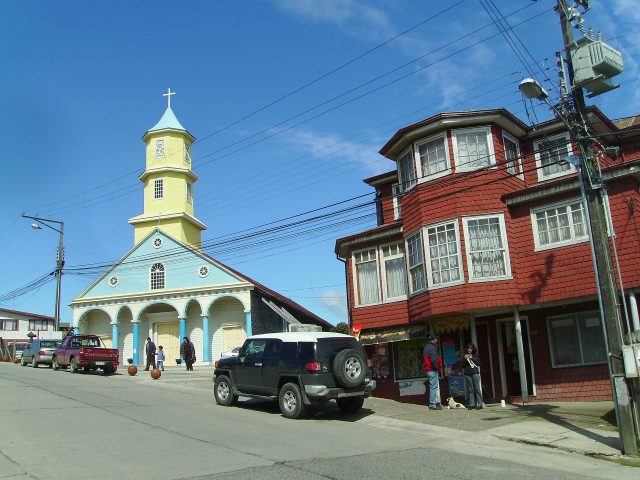
Chonchi is a quiet town on the island of Chiloé, where time moves to the rhythm of the tides. The pace of life here is unhurried, shaped by the ebb and flow of the sea and the slow turning of the seasons. Nestled among misty hills and dense forests in southern Chile, the town feels like a place where the modern world has only just begun to leave its mark. And at its heart stands the Church of Chonchi, a wooden structure painted a soft, weathered blue, its presence both gentle and enduring.
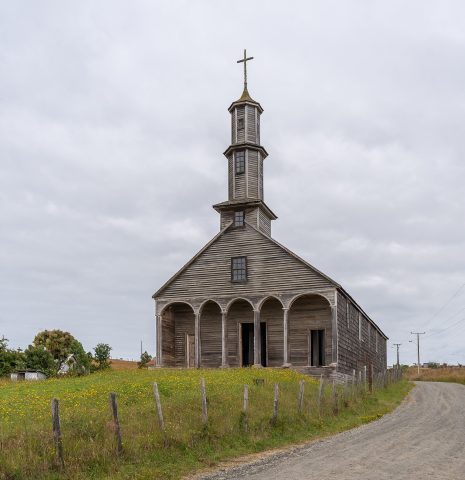
Built in the mid-19th century, the church is a product of Chiloé’s unique history. By then, the archipelago was no longer a distant outpost of the Spanish Empire, but it hadn’t yet fully integrated into the newly independent Chile. Isolated by the Chacao Channel, the islands developed in their own way, blending European influences with local traditions. The result was a distinct style of wooden architecture, where Gothic and Baroque elements merged with the practical techniques of island builders. Using native woods like cypress, larch, and alder, craftsmen created structures that were both functional and beautiful, designed to withstand the damp climate and strong coastal winds.
The Church of Chonchi is a fine example of this tradition. Its facade is marked by three graceful arches resting on slender columns, while a simple bell tower rises above the entrance. Inside, the space feels open and airy, with high ceilings supported by rows of wooden pillars. The altar, adorned with intricate carvings and gilded details, draws the eye, while the walls feature painted scenes from the Bible. Even on overcast days, the large windows fill the interior with soft, natural light, making the space feel warm and welcoming.
In 2000, the church was recognized as part of a UNESCO World Heritage Site, along with other wooden churches of Chiloé. This honor acknowledged not just their architectural significance, but also their role in the social and cultural life of the islands. For centuries, these churches were more than places of worship—they were community hubs where people gathered for festivals, made collective decisions, and even stored food during harsh winters. The Church of Chonchi, like others on the island, was a symbol of resilience, built by a community that had learned to thrive in a remote and often challenging environment.
Today, the church remains an active part of life in Chonchi. On Sundays, the sound of hymns fills the air during services, while on weekdays, visitors can wander through its halls, admiring the old icons and the craftsmanship of the wooden beams. The best time to experience the church’s spirit, though, is during local festivals, such as the Fiesta de San Pedro, when the town comes alive with music, processions, and celebrations that blend Catholic traditions with the island’s own customs.
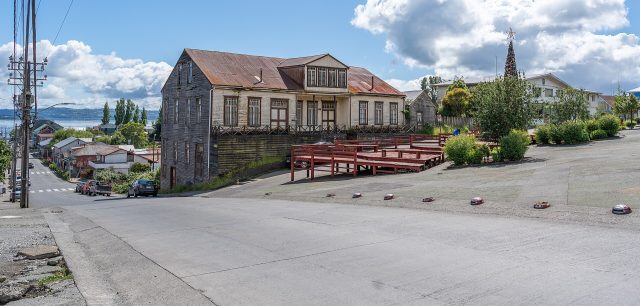
Chonchi itself is a town that feels suspended in time. Its narrow streets are lined with wooden houses perched on stilts, their foundations raised to protect against the damp earth and high tides. The harbor is a constant reminder of the island’s connection to the sea, where the scent of saltwater and seaweed lingers in the air. At the market, vendors sell fresh fish and *milcao*—a traditional potato pancake that’s a staple of Chiloé’s cuisine. The locals are friendly, often eager to share stories with those who take the time to listen.
Beyond the town, the island offers even more to explore. Chiloé National Park protects vast stretches of pristine forest, where ancient trees stand tall and the air is thick with the sounds of birds and rustling leaves. Nearby villages still hold onto old ways of life, with some communities preserving traditions that have faded elsewhere. And then there are the other wooden churches, each with its own character—some grand, some modest, but all bearing the unmistakable mark of Chiloé’s unique heritage.
The Church of Chonchi is more than just a historic building. It’s a living piece of the island’s story, a place where the past feels close enough to touch. The wood creaks underfoot, the paint is worn in places, and the air carries the faint scent of incense and old timber. Yet it doesn’t feel like a relic. The church is still very much alive, adapting to the present while holding onto the traditions that have shaped it. For those who visit, it offers a quiet reminder of how people, even in the most remote corners of the world, have always found ways to create something lasting.