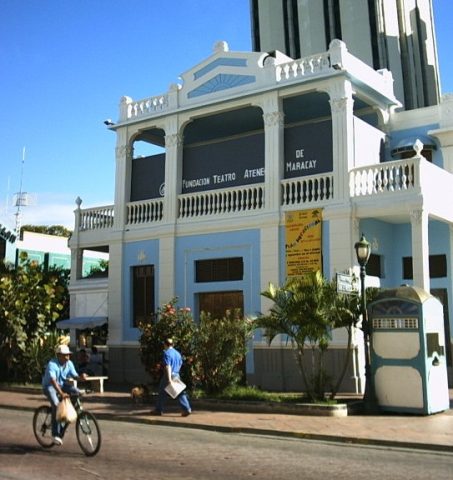
Bolivar Square in Maracay is one of those places where Venezuela’s past feels almost tangible. Named after Simón Bolívar, the liberator whose legacy shaped much of South America, the square carries his presence not as a distant monument but as something woven into the fabric of daily life. Located in the heart of the city, it serves as a quiet anchor for Maracay, a place where the main streets converge and the rhythm of the town unfolds without hurry.
The architecture here is understated, reflecting the colonial influences found across Venezuela, though without the grandeur of Caracas. At its center stands an equestrian statue of Bolívar, installed in the mid-20th century. The bronze figure, with its outstretched arm pointing forward, seems to embody the idea of progress—timeless, yet always moving. Around the statue, small patches of grass and low trees offer shade, softening the square’s edges and making it a natural gathering spot.
Maracay hasn’t always been the city it is today. Founded in the late 18th century, it remained a modest settlement for much of its early history, only gaining prominence in the 20th century as an industrial and military hub. Bolívar Square witnessed this transformation, evolving from a quiet provincial corner into a lively public space. Over the decades, it has hosted everything from political rallies to holiday celebrations, its role shifting with the city’s fortunes.
Nowadays, the square is as much a part of everyday life as it is a historical landmark. Mornings bring elderly locals strolling with newspapers, while evenings see groups of young people lounging on benches or snapping photos by the statue. On weekends, families fill the space, their laughter mixing with the sounds of street musicians. The cafés and small shops lining the square sell local sweets and coffee, offering a taste of the city’s unhurried pace.
Though Maracay isn’t the capital, its place in Venezuela’s history is significant. During the independence wars, it served as a strategic stronghold for revolutionary forces. Later, in the 20th century, the city became a military center, its academy shaping generations of officers. Bolívar Square, as the city’s main public space, has always been a stage for these shifts—less dramatic than Caracas, perhaps, but no less important in its own way.
The square’s charm lies in its simplicity. The buildings around it are mostly two or three stories tall, their pastel facades unassuming but well-worn. Some still bear traces of colonial design—wooden balconies, arched windows, tiled roofs—adding a touch of warmth to the scene. There’s no grand architecture here, just the quiet dignity of a place that has seen generations come and go.
Unlike more tourist-heavy spots, Bolívar Square remains firmly rooted in local life. There are no crowds of visitors, no staged performances—just the natural ebb and flow of the city. Sitting on a bench, you can watch the day unfold: the quiet of early morning giving way to the hum of afternoon, then the lively energy of evening. It’s a reminder that Venezuela’s history isn’t just about battles and revolutions; it’s also about the small, everyday moments that define a place.
If you find yourself in Maracay, take a moment to linger here. Step into one of the cafés, try a local dish, or simply listen to the conversations around you. The square won’t tell you everything about Venezuela, but it will give you a sense of what it means to be part of this city—a place where time moves slowly, yet never stands still.