Plaza Avellaneda sits in a quiet corner of Uyuni, where the town’s past and daily life meet. It doesn’t call for attention or compete with older Bolivian cities. Instead, it shows how small towns grow around a central point—a square that once held the entire settlement together.
The square is small, yet its role in Uyuni’s history is large. Low colonial-style buildings surround it, their pastel facades—soft whites, faded blues, pale yellows—bright under the high-altitude sun. In the center, a modest fountain attracts children during the day. In the mornings, flower vendors set up stalls nearby. The architecture is simple, with wooden shutters and balconies that suggest a time when Uyuni was still shaping its identity.
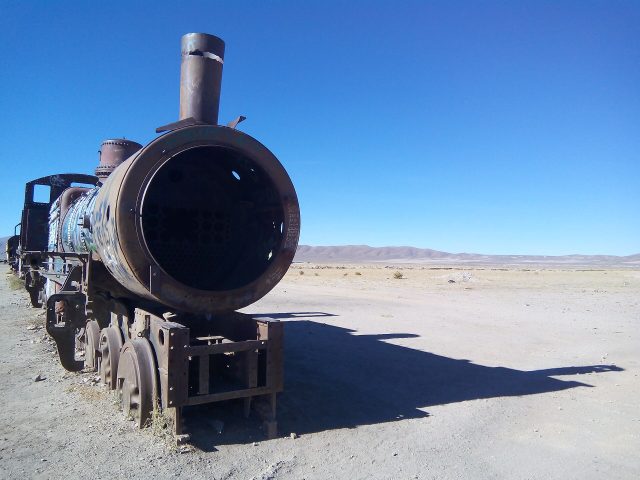
Uyuni became a transport hub in the late 19th century when the railway linked Bolivia to Chile and Argentina. The town turned into a key stop for travelers, traders, and railway workers. Plaza Avellaneda was where journeys started and ended. Deals were made over coffee, and stories of life on the desert’s edge took hold. The square absorbed these rhythms, becoming a natural gathering place in an otherwise isolated town.
Today, the square remains the community’s social heart. Mornings bring locals heading to work or the market. Weekends see families strolling with children. On holidays, lights hang from the buildings, and sometimes small concerts or dances fill the air. There’s no pretense—just the easy familiarity of a place where people meet, talk, and spend time.
The buildings around the square tell a story. Unlike the ornate colonial architecture in larger cities, Uyuni’s structures are practical, built to endure the harsh climate. Most are one or two stories tall, with wooden balconies and shutters to block the sun. A few still have original details—ironwork, carved cornices—that reflect a time when the town was young. The effect is understated but real, a snapshot of a place that has grown without losing itself.
The small church on the square doesn’t stand out. Its facade blends with the surrounding buildings. Inside, though, it holds quiet details: old wooden pews with carvings, faded frescoes likely painted by locals, and simple crucifixes that have seen decades of prayers. It isn’t a tourist attraction, but for Uyuni’s residents, it’s a spiritual anchor, a place where the town’s pace slows for reflection.
Evening changes the square. The day’s heat fades, and people gather—friends, families, solitary walkers. The fountain’s murmur fills the air. Teenagers linger near the church steps. Older residents sit on benches, watching life pass by. There’s no rush. The square simply exists, as it always has, as a backdrop to the small moments that make up a town.
Plaza Avellaneda doesn’t leave a dramatic impression. It has no towering monuments or grand stories. Instead, it offers something quieter: a sense of how life moves in a small town where days may feel similar but are never the same. There are no crowds, no tourist traps, no pressure to do anything. Just a place to sit, watch, and feel Uyuni’s unhurried rhythm—a town that has always followed its own pace.