Plaza de Armas in Castro is one of those places where the city unfolds at its own unhurried pace, like a well-worn book you leaf through with quiet pleasure. There’s no tourist hustle here, no sense of being rushed along by the expectations of a guidebook. Instead, time seems to move differently, following the rhythm of Chiloé Island itself. The square sits at the heart of Castro, and for most visitors, it’s the natural starting point for exploring the town. But it’s more than just a geographical center—it’s where history, daily life, and the small, unremarkable details that make a place feel real all come together.
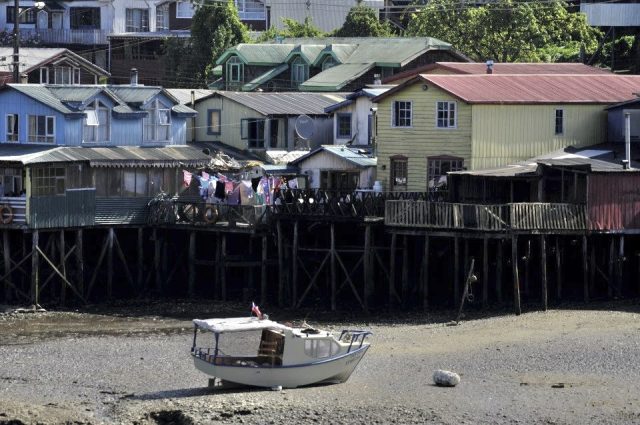
The architecture around the square isn’t grand or imposing, and that’s part of its charm. Low wooden houses, painted in soft pastels, form a gentle ring around the plaza, their facades carrying the quiet weight of time. Many are built in the traditional Chilote style, with steeply pitched roofs and overhanging balconies that seem to shelter the sidewalks below. These aren’t museum pieces but living spaces—cafés, small shops, and artisan workshops occupy them, blending seamlessly into the town’s fabric. It’s easy to imagine that each window holds a story, and in a place like Castro, where life has always moved at its own deliberate pace, that’s probably true.
At the center of the square stands a modest monument to Martín Ruiz de Gamboa, the Spanish conquistador who founded Castro in 1567. The statue is unassuming, without the pomp of grander memorials, but it serves as a reminder that this is one of Chile’s oldest cities, one that has weathered earthquakes, tsunamis, and centuries of change. Around the monument, flower beds bloom in summer, turning the plaza into a splash of color against the green of the trees and the muted tones of the wooden buildings. In winter, when Chiloé’s rains are frequent, the square takes on a different mood—cozy under the awnings of cafés, where a cup of tea or coffee offers warmth while you watch locals go about their day, or pause to enjoy a rare moment of sunshine.
Plaza de Armas isn’t just a place to stroll through; it’s a stage where the life of the town plays out. On weekends, it often hosts markets where artisans sell their wares—woven baskets, hand-knit wool socks, wooden carvings, and jewelry made from shells. Sometimes, street musicians set up near the edges of the square, their guitars or accordions adding a soundtrack to the scene, whether it’s the patter of rain or the rustle of leaves in the wind. For locals, the plaza is more than a marketplace—it’s a gathering spot, a place to catch up with neighbors, share news, or simply pass the time. For visitors, it’s a chance to see Castro as it really is, not as a postcard image.
The trees that dot the square give it a particular kind of charm. They’re not towering giants but sturdy, spreading things, their thick foliage providing welcome shade in summer and turning warm hues in autumn. Birds flit through the branches—Chilean pigeons, blackbirds—filling the air with their calls. In winter, the trees stand bare, but even then, they have a quiet beauty, especially when their branches are dusted with frost. The plaza seems to breathe with the seasons, shifting subtly with the weather, the light, and the time of year.
The history of Plaza de Armas is intertwined with that of Castro itself. The town has been rebuilt many times after earthquakes and tsunamis leveled entire neighborhoods, yet the square has always remained its heart. In the 19th century, it was the site of bustling fairs where everything from fresh fish to imported fabrics changed hands. By the 20th century, it had become a place for public gatherings and political rallies, especially during times of upheaval. Today, it retains its role as a communal space, where the layers of the past and present overlap in quiet, unassuming ways.
Walking around the plaza, you notice the small details that make it feel lived-in. The old-fashioned lampposts, for instance, cast a soft glow in the evenings, adding to the sense of warmth. The benches along the paths invite you to sit and watch the world go by. Sometimes, you’ll find street artists sketching portraits or landscapes, or artisans demonstrating their crafts. These little moments give the square a sense of life that doesn’t depend on visitors—it’s a place that exists for its own sake, not for show.
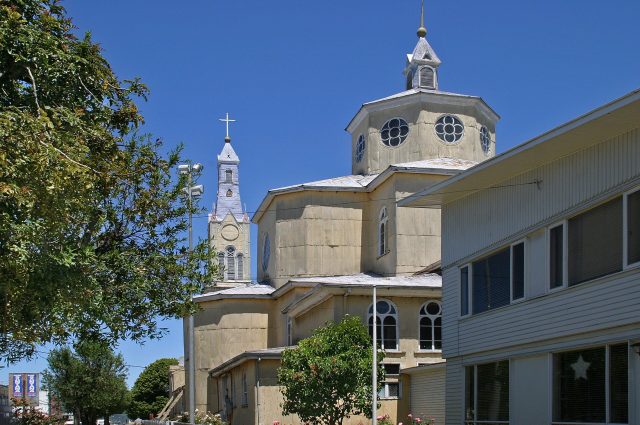
Castro isn’t a city that tries to impress at first glance, and Plaza de Armas is a perfect example of that. There are no grand cathedrals or palaces here, just the quiet authenticity of a place that has grown organically over centuries. It’s somewhere you can sit on a bench, listen to the wind in the trees, and realize that sometimes, the most meaningful experiences aren’t about seeing something spectacular, but about feeling the pulse of a place. Plaza de Armas is like that—unassuming but memorable, where history and the present coexist without fanfare.