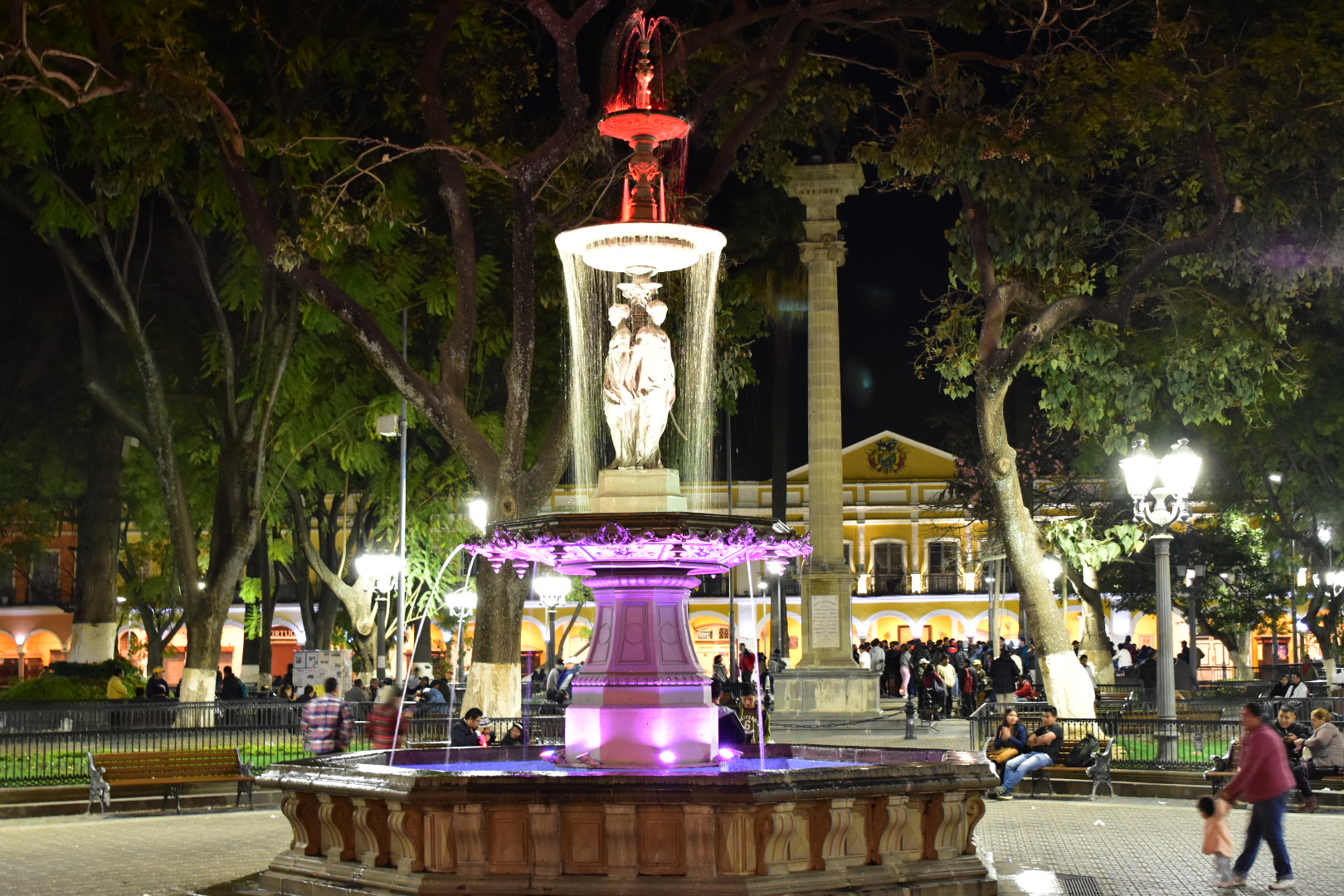
Plaza 14 de Septiembre isn’t just the geographical center of Cochabamba—it’s where the city’s past and present collide in a way that feels both deliberate and entirely unplanned. Perched at 2,500 meters above sea level, the square hums with the energy of a place that has seen revolutions, daily commerce, and quiet moments of reflection. It’s a stage where history isn’t just remembered; it’s lived, in the way people move through the space, the languages they speak, and the way the light hits the colonial facades at different times of day.
The name itself carries weight. September 14, 1810, marks the day Cochabamba rose against Spanish rule, one of the earliest sparks in Bolivia’s long struggle for independence. The rebellion was crushed, but the defiance of that moment lingered, shaping the city’s identity. Today, a bronze monument at the center of the plaza honors those who fought, their figures frozen in a moment of resistance. It’s not a grand or polished memorial, but something more raw—less about glory and more about the stubbornness of a people who refused to be erased. Locals pass it daily, some pausing to touch the base, others barely glancing up, as if the story it tells is already part of them.
The architecture around the plaza is a patchwork of eras, each layer revealing something about the city’s evolution. The Cathedral, built in the 17th century, dominates the square with its baroque bulk, its twin towers and ornate stonework a reminder of the Spanish imprint. Yet there’s something distinctly Cochabambino about it too—the way the light softens the hard edges of the facade, or how the bells ring out over the square at odd hours, not just for mass but as if marking the rhythm of the day. Nearby, the municipal building stands in stark contrast, its neoclassical columns and symmetrical windows a nod to 19th-century ideals of order and progress. And then there are the smaller, older buildings, their wooden balconies sagging slightly, their wrought-iron grilles rusted in places, whispering of a time when Cochabamba was little more than a colonial outpost.
But the plaza isn’t a museum. It’s a place where life spills out onto the pavement at all hours. Mornings belong to the market vendors, their stalls piled high with produce that speaks to the region’s agricultural roots—heaps of purple potatoes, stacks of corn in every shade of yellow, and wheels of salty cheese from the high-altitude pastures. By midday, the square fills with students from the nearby universities, their backpacks slung low, their laughter mixing with the shouts of street vendors selling empanadas and fresh juice. Office workers take their lunch breaks on the benches, unwrapping sandwiches or picking at plates of *silpancho*, the city’s signature dish of rice, beef, and fried eggs. As the sun dips lower, the pace slows. Couples stroll arm in arm, old men set up chessboards under the trees, and children chase pigeons in circles until their parents call them home.
The cafés and restaurants lining the plaza are where the city’s flavors come alive. There’s no need for a guidebook to find the best spots—just follow the scent of grilled meat and the sound of clinking glasses. *Pique a lo macho*, a dish of beef, sausage, and potatoes drenched in spicy sauce, is a local favorite, best washed down with a cold Paceña beer. For something lighter, *salteñas*—savory pastries filled with meat, potatoes, and a slightly sweet broth—are sold from carts in the morning. The cafés are where you’ll hear the most music, too. A guitarist might be playing a traditional *huayño* in the corner, or a group of friends could be passing around a *charango*, the small Andean lute that sounds like a cross between a ukulele and a mandolin. No one rushes you here. You can nurse a coffee for hours, watching the square transform from morning bustle to evening calm.
What makes Plaza 14 de Septiembre special isn’t just its history or its architecture, but the way it absorbs everything that happens around it. It’s a place where the personal and the political, the old and the new, the sacred and the mundane all coexist. On weekends, the square becomes a stage for festivals—folk dancers in bright costumes, street performers juggling fire, or impromptu concerts that draw crowds of all ages. During the week, it’s quieter, but no less alive. A group of teenagers might be practicing breakdancing near the fountain, while a few steps away, an elderly woman sells hand-knit scarves, her hands moving with the same rhythm they’ve had for decades. The plaza doesn’t judge. It simply is—a space where everyone, from the street vendor to the university professor, has a place.
Cochabamba is Bolivia’s third-largest city, but the plaza feels like the heart of a much smaller town. There’s none of the frantic energy of La Paz or the tourist sheen of Sucre. Instead, there’s a sense of time moving at its own pace, dictated by the altitude, the climate, and the people who call this place home. The city has always been a place of farmers and artisans, not factories or skyscrapers, and that shows in the way life unfolds here. People linger. They talk. They take their time. Even the pigeons seem to move more slowly, as if they, too, understand that there’s no need to hurry.
If you visit, don’t just pass through. Sit on one of the benches near the fountain and watch the water spill over the stone. Listen to the way the cathedral bells echo off the buildings, or the way the laughter of children playing blends with the hum of conversation. Notice how the light changes as the day wears on, turning the plaza from a bright, open space in the morning to something softer, more intimate by evening. This is a place where stories accumulate like layers of paint on an old wall—some visible, some faded, but all part of the same surface. You won’t find a plaque explaining every detail, and that’s the point. The plaza isn’t meant to be decoded. It’s meant to be experienced, in all its messy, beautiful, everyday glory.