
Cochabamba
Bolivia · 8 places
Photo: ozziebackpacker, CC BY 2.0
Nestled in a broad valley between the Andean ranges, Cochabamba sits at the heart of Bolivia, where the air carries the scent of grilled meat from market stalls and the freshness of nearby fields rather than the thin bite of high-altitude oxygen. The city earns its nickname as the "city of eternal spring" not because it never gets cold, but because the weather rarely strays from the pleasant—warm days that never quite tip into sweltering, cool nights that never quite freeze. There’s no grand, imposing beauty here like in other Bolivian cities; instead, Cochabamba feels almost provincial, as if time moves just a little slower, letting you settle into its rhythm without hurry.
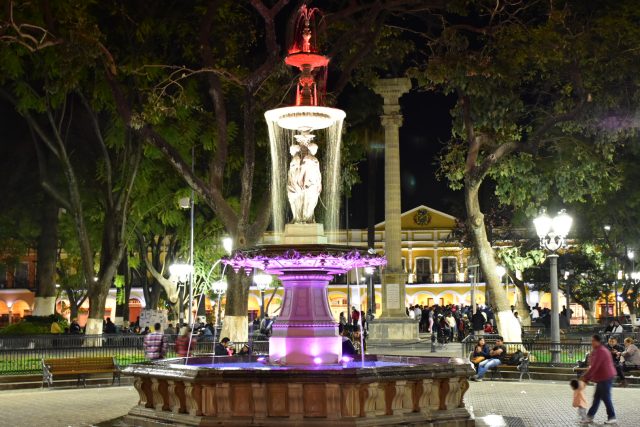
This isn’t a place that tries to impress visitors with polished tourist attractions. The charm of Cochabamba lies in its unfiltered, everyday life, the kind that spills onto plazas, into cafés, and through the bustling aisles of its markets. Plaza 14 de Septiembre is the city’s lively core, where locals gather in the evenings to chat, listen to street musicians, or simply watch the world go by from a bench. A short walk away, La Cancha market unfolds like a maze of sights and sounds—one of South America’s largest, where you can find everything from fresh fruit and spices to handmade crafts and traditional clothing. The market’s energy is timeless: the sizzle of meat on grills, the clatter of dishes, the shouts of vendors all blend into a scene that hasn’t changed in decades.
Cochabamba is a city of contrasts, where modern shopping centers and Wi-Fi-equipped cafés stand alongside neighborhoods of adobe and brick, where streets might still be unpaved. Here, women in traditional wide skirts and bowler hats balance heavy bundles on their backs while students rush to class at one of the local universities. The city doesn’t bend to tourist expectations, and that’s part of its appeal. There are no world-famous museums or architectural marvels, but what you do find is an authenticity that’s harder to come by in places accustomed to visitors. Cochabamba doesn’t perform for anyone; it simply exists, quietly confident in its own way of life.
For those who want a break from the city’s hum, the surrounding hills offer an easy escape. Just half an hour from the center, the foothills of the Andes begin, with green valleys and small lakes framed by rocky outcrops. Parque Tunari is a favorite spot, where families come on weekends to picnic or soak in the views of the city and mountains beyond. If you’re lucky, you might stumble upon one of the local festivals, where music, dancing, and dishes like *picante*—a spicy meat and potato stew—turn the day into something memorable.
Cochabamba won’t be the kind of place people write legends about, and that’s precisely why it lingers in the memory. There’s no need to chase sights or follow a checklist here—just let the city’s pace guide you. Watch how life unfolds in its unhurried way, savor the food, the conversations, the quiet moments. Maybe that’s the real magic of Cochabamba: it doesn’t try to dazzle you. Instead, it charms you slowly, like an old friend who’s always happy to see you, no fuss, no pretense—just the easy comfort of a place that feels like home.
See & Do
7 places
Places on the map
Marker colour follows the categoryClimate and weather
Detailed weather: Cochabamba- Average temperature
- 18 °C
- Precipitation per year
- 517 mm
- Sunshine hours per day
- 7.8 h
Average air temperature
°C
19
19
19
19
17
15
16
17
19
21
21
20
Jan
Feb
Mar
Apr
May
Jun
Jul
Aug
Sep
Oct
Nov
Dec


