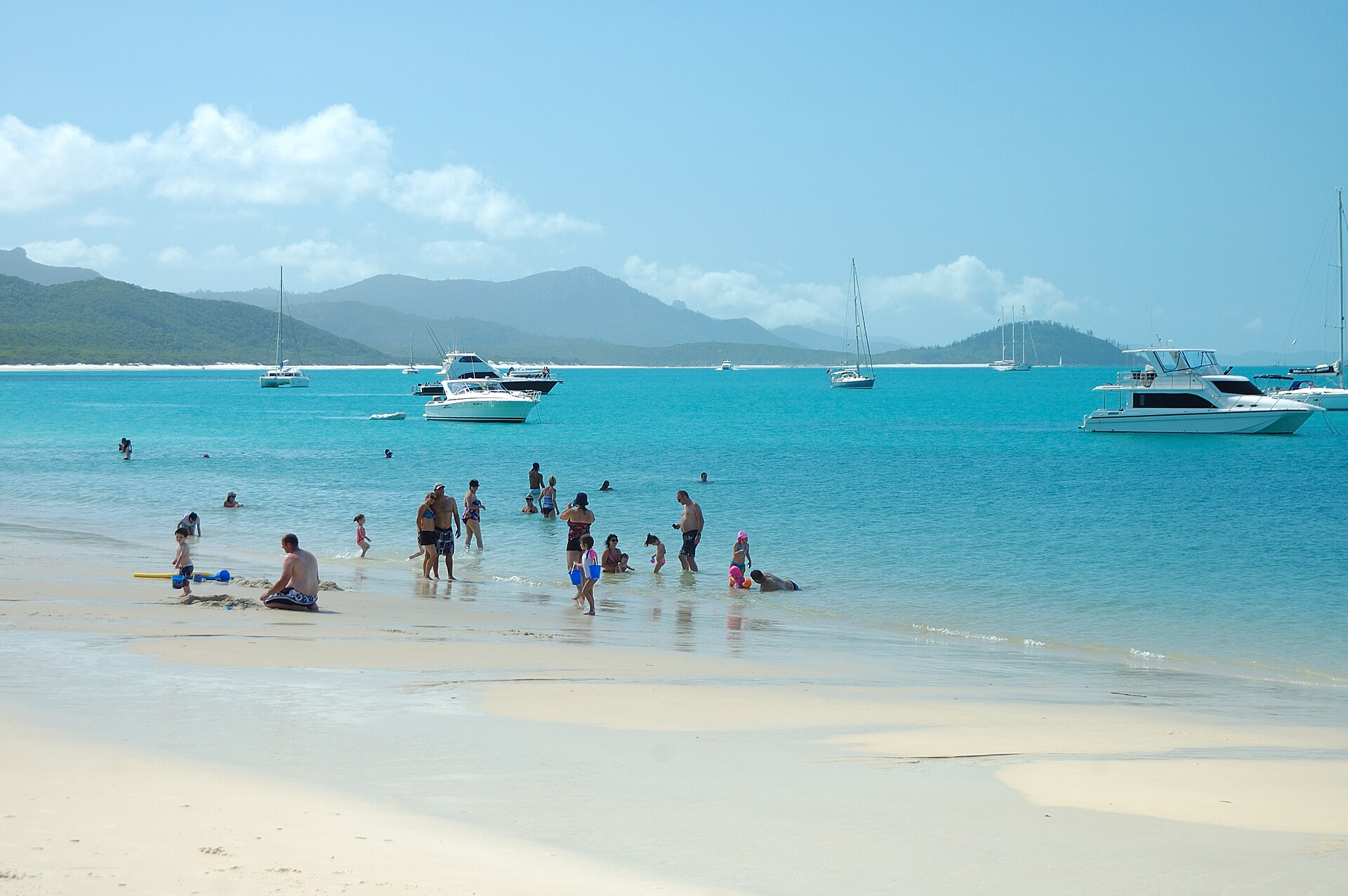
Whitehaven Beach feels like a place that exists beyond the edges of ordinary travel. Stretching along the eastern shore of Whitsunday Island, it’s known for sand so fine and bright it seems almost unreal. The beach is made almost entirely of silica, which gives the sand its unusual texture—soft as powder, cool underfoot even when the sun is high. The water here shifts between shades of turquoise and deep emerald, creating a contrast so vivid it’s hard to believe it’s natural. The effect is especially striking at low tide, when the receding water leaves behind intricate patterns in the sand, like something drawn by the tide itself.
The beach has been part of the landscape for thousands of years, long before it appeared on any map. The Ngaro people, the traditional custodians of these islands, considered this place sacred. For them, Whitehaven wasn’t just a stretch of coastline but a living part of their stories and traditions. European settlers arrived much later, and by the mid-20th century, the beach had become a symbol of Australia’s untouched beauty. Even now, efforts are made to keep it that way—visitor numbers are limited, and large-scale development is banned. The result is a place that still feels wild, as if time moves differently here.
There’s no grand architecture at Whitehaven, no monuments or buildings to mark its significance. The landscape itself is the attraction. The most famous viewpoint is Hill Inlet Lookout, a short but steep climb from the beach. From the top, the view is breathtaking: the curve of the shoreline, the swirling patterns of sand and water below, and the endless expanse of the Coral Sea. The best time to visit is at sunrise or sunset, when the light turns the water gold and pink, and the shadows stretch long across the sand.
The beach runs for seven kilometres, but the most striking section is around Hill Inlet. Here, the meeting of sand and sea creates a constantly changing scene. At low tide, the water retreats to reveal shallow pools and sandbars, where small fish dart between the rocks and crabs scuttle along the shoreline. The patterns left by the receding tide look almost deliberate, as if the sea has been painting them for centuries. It’s a place where you can walk for hours and still feel like you’re discovering something new with every step.
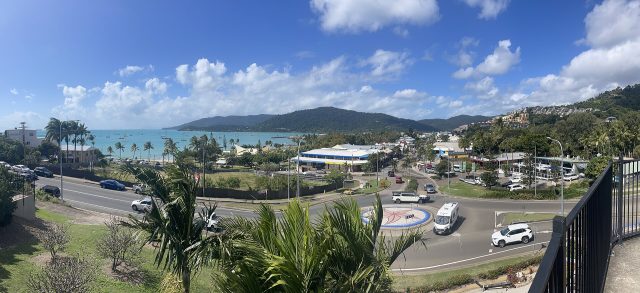
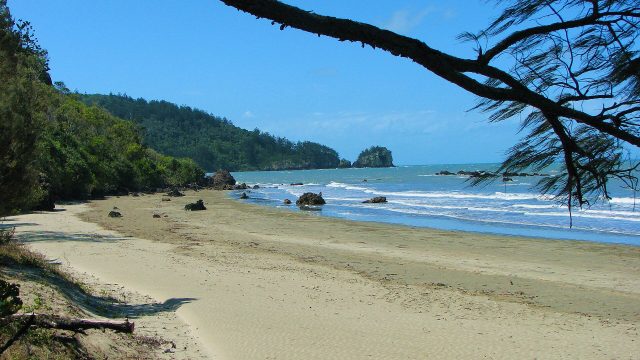
Whitehaven isn’t the kind of beach where you’ll find rows of sun loungers or beachside bars. There are no paved paths, no souvenir stands, just the natural rhythm of the place—waves, wind, and the occasional call of a seabird. It’s not a destination for those who want convenience; it’s for people who want to step away from it. The only way to reach the beach is by boat or ferry, and the nearest town, Airlie Beach, is an hour’s journey away. Even then, once you arrive, you’re still surrounded by wilderness—dense rainforest meets the shore, and the only sounds are the ones nature makes.
The climate here is tropical, with two distinct seasons. The dry season, from May to October, is the best time to visit. The weather is warm but not oppressive, and rain is rare. The wet season, from November to April, brings heavy downpours and the risk of cyclones, making the beach harder to access. Even in the dry months, the weather can shift quickly—a sunny morning might give way to a sudden shower, only for the sun to reappear an hour later. It’s the kind of place where you learn to move with the rhythm of the elements rather than against them.
For those who want to stay longer, there are a few options. Camping is allowed on Whitsunday Island, with basic sites set up near the beach. There are no luxury amenities, just a place to pitch a tent and wake up to the sound of waves. Some visitors choose to anchor a boat in one of the quiet bays, spending the night under a sky so clear the stars seem close enough to touch. Either way, the experience is about simplicity—no distractions, just the beach, the sea, and the quiet.
Whitehaven isn’t a place you visit for entertainment or comfort. It’s a place where the natural world takes centre stage, where the only agenda is the one set by the tides and the light. There are no crowds, no noise, just the vastness of the landscape and the sense that you’ve stepped into a world that operates on its own terms. That’s why people keep coming back—not for what it offers, but for what it doesn’t. It’s a rare kind of escape, one that lingers long after you’ve left.