Cape Hillsborough Lighthouse stands on a windswept headland where the Australian continent dips into the Coral Sea. The white tower rises above the rocky coastline, its silhouette sharp against the sky, especially at dusk when the last light catches its edges. From here, the ocean stretches endlessly, its surface shifting between deep blue and silver depending on the weather. The lighthouse isn’t just a marker for ships—it’s a quiet witness to the meeting of land and sea, a place where the elements feel closer than anywhere else.
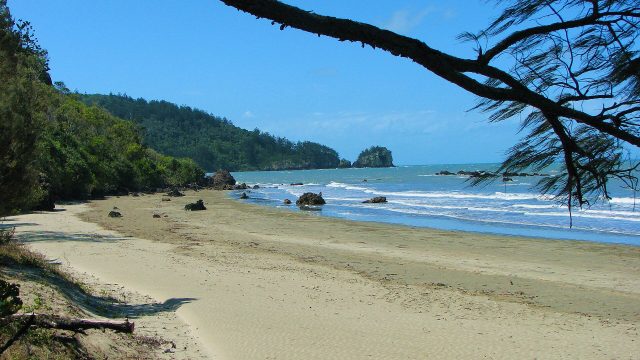
The surrounding Cape Hillsborough National Park wraps around the headland in a tangle of eucalyptus forests and coastal scrub. Trails wind through the bush, leading to secluded beaches where the sand is pale and the water clear. In the early mornings, kangaroos often gather near the shore, their silhouettes framed against the breaking waves. They’ve become part of the landscape here, as much as the twisted trees and the salt-stiffened grasses. The park feels untouched, as if time moves differently within its boundaries.
The lighthouse was built in the late 1800s, when shipping along Australia’s eastern coast was growing busier. The reefs and submerged rocks near Cape Hillsborough had claimed too many vessels, and a guiding light became essential. Originally powered by kerosene, it later switched to electricity, though the tower itself has changed little. It’s one of the few lighthouses in the region still in operation, its beam cutting through the dark every night just as it has for over a century. The keepers who once lived here are long gone, but their presence lingers in the weathered outbuildings that stand nearby.
The architecture is straightforward—a round stone tower with a spiral staircase inside, leading to a small viewing platform at the top. The walls are thick, built to withstand storms, and the windows are narrow, just wide enough to let in light. The adjacent buildings, where keepers once lived and stored supplies, are now empty, their wooden doors creaking in the wind. From the top of the tower, the view is vast: the ocean, the distant islands, and the occasional ship passing on the horizon. On clear days, you can see the curve of the earth.
Reaching the lighthouse takes a short walk from the parking area, a ten-minute stroll through low scrub and wildflowers. Signs along the way point out native plants and animals, though most visitors are too distracted by the scenery to read them. The headland drops steeply into the sea, and from the edge, the waves crash against the rocks below. There’s no railing, no barrier—just the wind and the sound of water. It’s not a place for crowds. Most people come alone or in pairs, standing quietly as the breeze tugs at their clothes.
For locals, the lighthouse is more than a navigational aid. It’s a piece of history, a reminder of the days when the coast was wild and settlements few. Before GPS and radar, this light was the only thing keeping ships from disaster. Today, it draws those who prefer solitude over spectacle. The national park offers enough to fill a day—hiking the trails, swimming in the quiet coves, or simply sitting on a rock with a thermos of coffee. There are no cafes, no gift shops, no distractions. The rhythm here is slower, dictated by the tides and the movement of the sun.
Evenings are the best time to visit. As the sky turns orange and purple, the lighthouse begins its slow, steady flash, a pulse of light against the darkening sea. It’s easy to imagine what it must have been like for the keepers, tending the lamp through storms and calm nights alike. The place feels timeless, as if the modern world hasn’t quite reached it. There’s no need for grand statements or dramatic scenery—just the wind, the waves, and the steady beam of the lighthouse.
If you find yourself in Airlie Beach, it’s worth making the trip here. This isn’t a place for thrill-seekers or those looking for entertainment. It’s for people who want to step away from the noise, to breathe in the salt air and feel the weight of history in the stones beneath their feet. The lighthouse has been guiding ships for over a hundred years, but it also serves another purpose—reminding visitors that some places are meant to be quiet, where the only thing you need to do is stand still and listen.