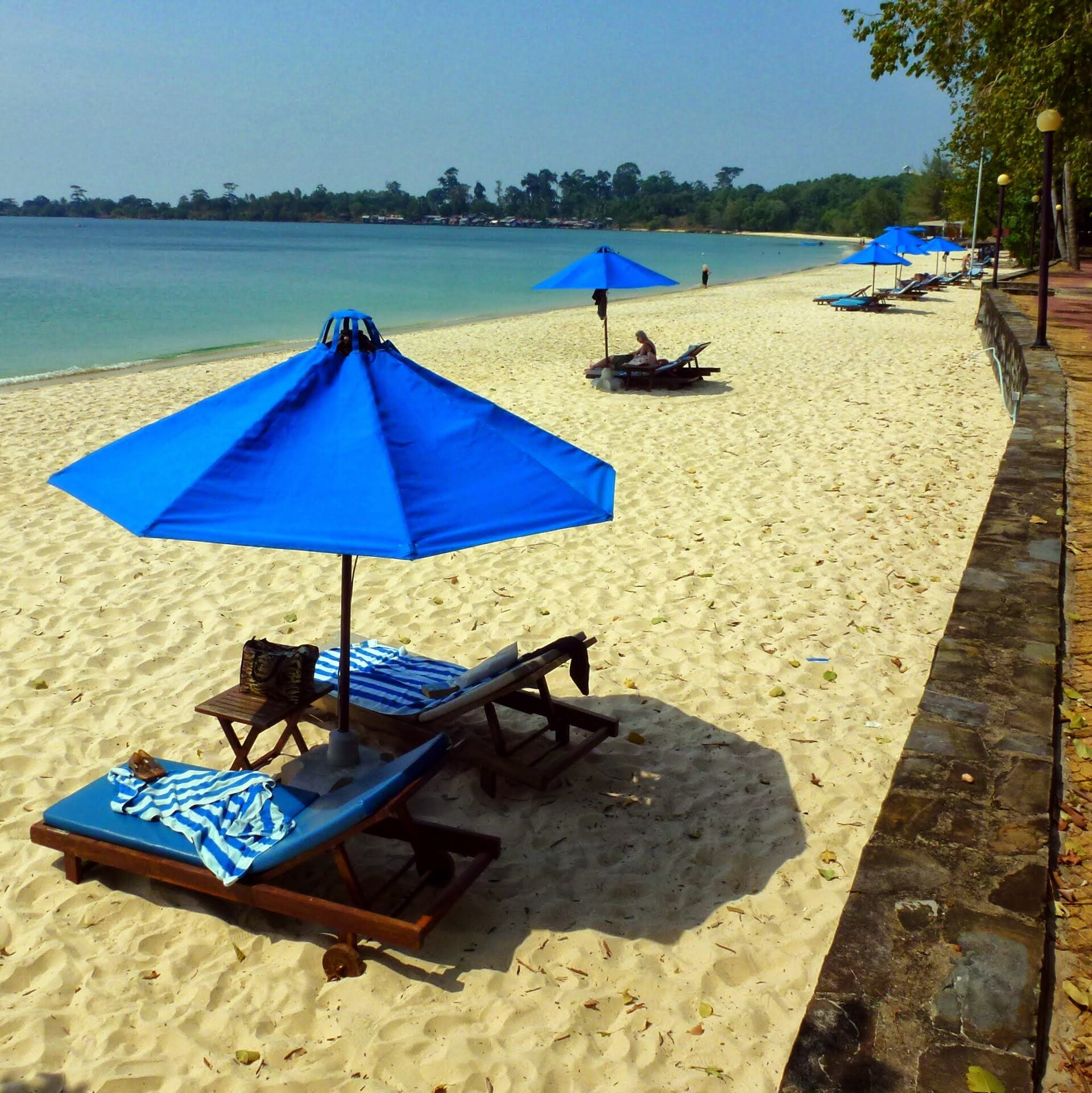
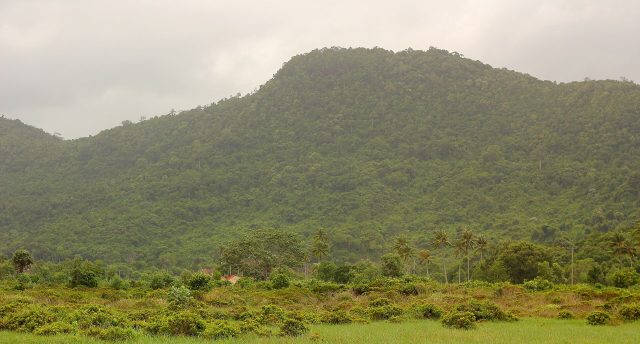
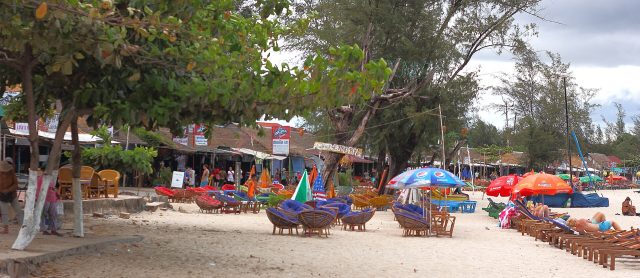
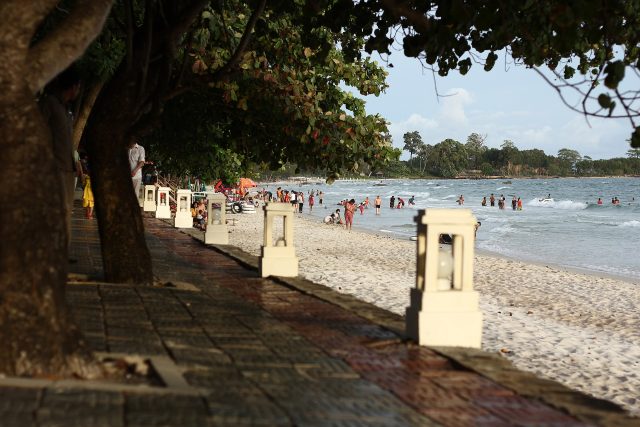
Sokha Beach is one of those rare places in Cambodia where the sea meets the land without fanfare or fuss. Tucked away along the Gulf of Thailand in Preah Sihanouk Province, it stands apart from the country’s more famous shores, offering a quiet retreat far from the crowds. There are no bustling beach bars, no vendors weaving through sunbathers, no rows of rented loungers—just a long stretch of soft white sand, low-slung palms, and the gentle rhythm of waves lapping at the shore. The water here is clear, especially in the dry season, when it takes on a near-turquoise hue, and the sand beneath your feet feels warm and fine, as if sifted by time.
This wasn’t always a place of solitude. Decades ago, Preah Sihanouk was little more than a fishing village, and Sokha was just another nameless stretch of coastline where locals came to cast their nets or escape the heat. Everything changed in the mid-20th century, when King Norodom Sihanouk envisioned turning the area into Cambodia’s premier seaside destination. Roads were built, hotels sprang up, and the town began to take shape—but Sokha remained untouched by the rapid development, clinging to its slow, unhurried pace. While other beaches nearby filled with modern resorts, Sokha stayed much as it had always been, a quiet witness to the changes unfolding around it.
The architecture here tells its own story. Unlike the sleek hotels and restaurants that line neighboring beaches, Sokha is dotted with modest bungalows and family-run guesthouses, many built in the traditional Khmer style. Wooden verandas, tiled roofs, and open-air terraces blend seamlessly with the landscape, offering a place to sit in the evenings with the sound of the ocean as your only soundtrack. Some of these buildings look as though they’ve been here since the 1970s, their weathered facades adding to the sense that time moves differently here. There’s no grand design, no attempt to impress—just simple structures that feel like they’ve grown out of the sand itself.
What makes Sokha special is its refusal to conform to the expectations of a tourist beach. There are no rental umbrellas, no lifeguard towers, no signs dictating where to sit or how to behave. Instead, you can spread out a towel on the sand, dig your toes into the warmth, and watch as local fishermen mend their nets or haul their boats ashore. Occasionally, a cow will wander past, grazing on the sparse seaside grass, while in the distance, stilted fishing huts rise from the water like sentinels. It’s the kind of scene that feels more like a real Cambodian village by the sea than a curated resort experience.
The water here is calm for much of the year, making it perfect for swimming. During the rainy season, from May to October, the waves can pick up, but they’re never as rough as those on the country’s western coast. The best time to visit is between November and March, when the skies are clear and the air and water temperatures are just right. This is also when the sunsets are at their most spectacular—slow, golden descents that paint the sky in shades of orange and pink, turning the sea into a vast mirror reflecting the last light of the day.
Despite its tranquility, Sokha isn’t cut off from the world. The center of Preah Sihanouk is just a half-hour tuk-tuk or motorbike ride away, and along the way, you’ll pass small cafes serving fresh seafood and coconut cocktails. The town itself has markets brimming with tropical fruits, spices, and handmade souvenirs, as well as a few temples that hint at Cambodia’s deep cultural roots. But after the noise and activity of the city, returning to Sokha feels like coming up for air—a reminder of what it means to slow down.
The locals here are friendly but unobtrusive. You won’t find them hawking tours or souvenirs; instead, they go about their daily routines—repairing boats, selling fruit, or sitting on their porches, watching the world go by. Children play volleyball in the sand or hunt for crabs along the water’s edge, their laughter blending with the sound of the waves. There’s a sense of authenticity here that’s hard to find in places where tourism has taken over, a feeling that life carries on much as it always has.
Sokha isn’t the kind of place you come to for excitement or nightlife. There are no jet skis, no dive shops, no beachfront parties. But that’s precisely why it’s worth visiting—for the chance to experience a side of Cambodia that feels untouched by time. It’s a place where the sea, the sand, and the sky exist in harmony with the people who have lived here for generations. If you’re looking for quiet, simplicity, and a connection to nature without sacrificing comfort, this is the beach to choose. It doesn’t promise much, and that’s exactly what makes it special.