Ocheteal Beach is one of those quiet corners of Cambodia where the sea meets the land without pretension. Stretching along the coast of Preah Sihanouk Province, it offers a first glimpse of the country’s shoreline for many travelers—a place where the pace slows, and the usual tourist trappings feel far away. There are no sprawling resorts with infinity pools or rows of sun loungers here, just open space, the sound of waves, and the sense that time moves differently.
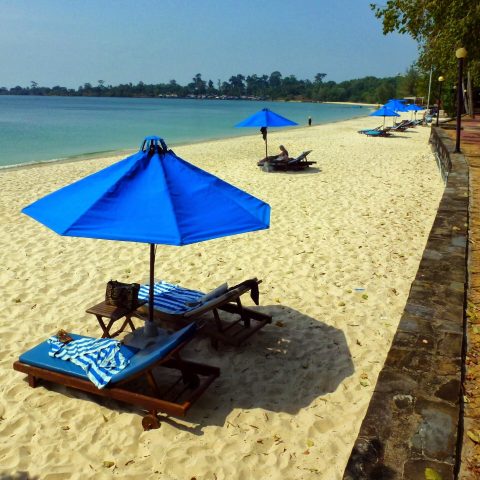
The beach runs for several kilometers, its shoreline gently curved with small coves, rocky outcrops, and patches of mangroves breaking up the sand. The grains are pale, almost white, but coarser than the powdery sands of Thailand or the Maldives—more like fine gravel underfoot, cool even in the midday heat. The water in the Gulf of Thailand is warm, clear on calm days, but after a storm, it can turn murky, especially during the rainy season when the sea grows restless.
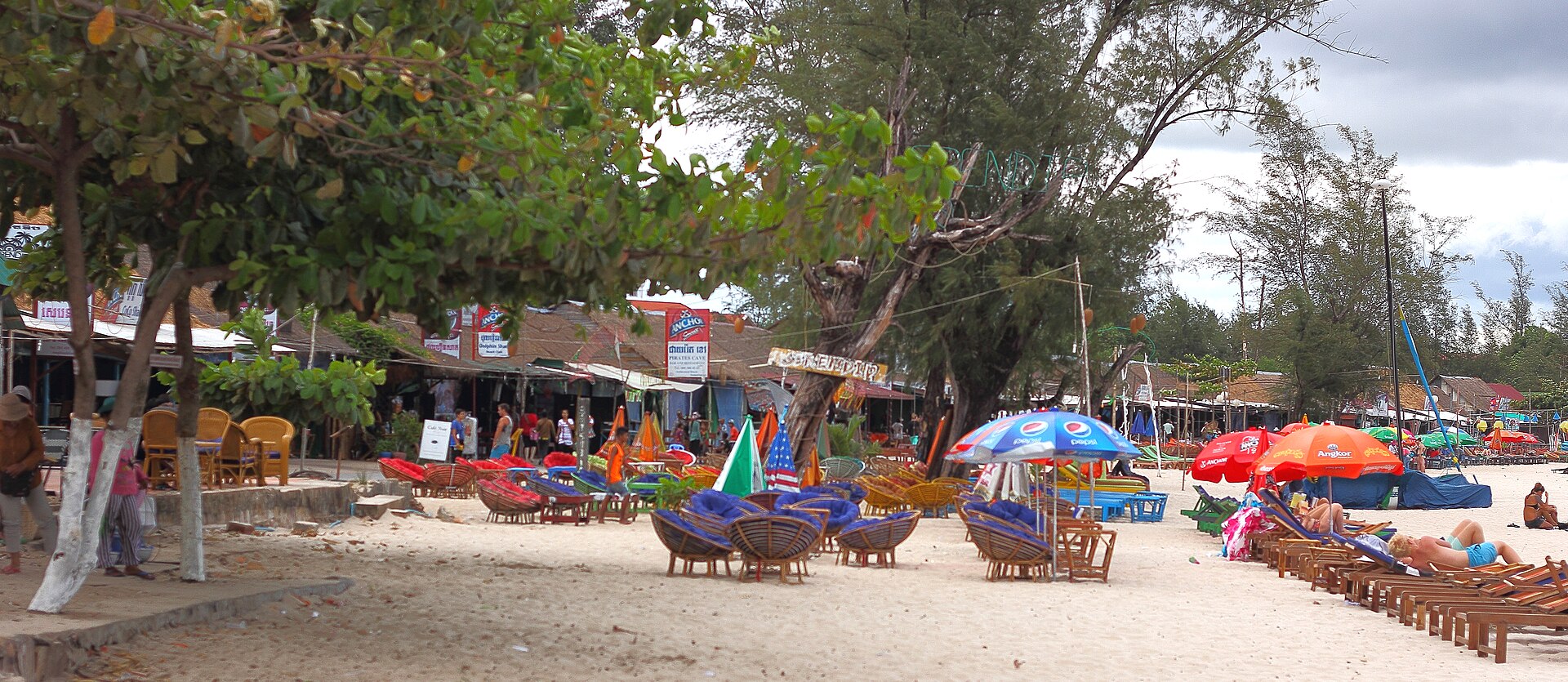
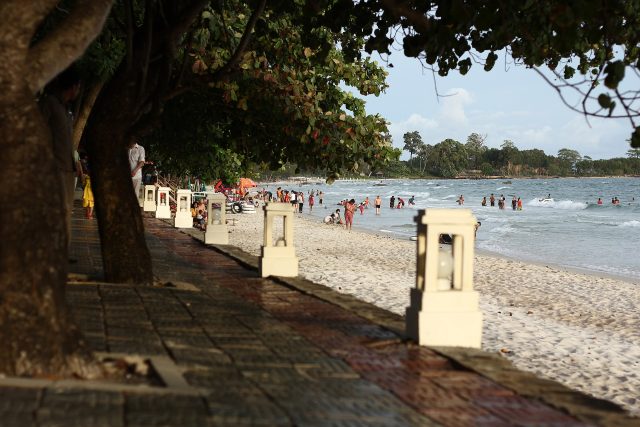
Unlike crowded beaches where sunbathers line up under umbrellas, Ocheteal feels unstructured. You can settle near the water’s edge, where waves lap at your feet, or retreat to the shade of the trees farther back, where the sand stays cooler. Low palms and shrubs fringe the shore, and behind them, simple cafes and guesthouses blend into the landscape, their wooden walls and thatched roofs more like beach huts than hotels. Locals often come here on weekends, bringing their families to swim, cook over open fires, or just sit by the water as the sun dips below the horizon.
The history of Ocheteal is tied to Preah Sihanouk’s rise as a coastal destination. Half a century ago, this stretch of coast was little more than fishing villages and empty beaches, visited only by those seeking solitude. Everything changed in the 1960s when King Norodom Sihanouk envisioned the area as Cambodia’s maritime gateway. The port was built, and the first hotels appeared, but Ocheteal remained overlooked for decades, known only to those who preferred its quiet over the busier spots nearby. Only in recent years has it begun to attract travelers tired of crowds.
There’s little in the way of grand architecture here—just a few old villas from the French colonial era, now weathered and half-swallowed by tropical greenery. What lingers instead is the atmosphere: the rustle of palm leaves, the cries of seabirds, the scent of grilled fish and fresh coconuts sold from stalls along the sand. In the evenings, small fires flicker, and if you’re lucky, someone might be playing a guitar or a traditional Khmer instrument, the notes drifting over the water.
For many, Ocheteal isn’t just a place to swim but a vantage point for watching life unfold along the gulf. In the early morning, fishermen set out in narrow wooden boats, returning by midday with their catch, which they sell straight from the shore. Occasionally, dolphins venture close to the beach, though sightings are rare. During the rainy season, from May to October, the beach empties as the waves grow rougher and the wind picks up, leaving only the most determined to brave the churning water.
While Preah Sihanouk is slowly becoming a tourist hub, Ocheteal has managed to keep its unhurried rhythm. There are no loud beach bars or nightclubs here, just the quiet hum of the sea. Locals interact with visitors without pressure, and if you want solitude, it’s easy to find—just walk beyond the main paths, where the sand is still untrodden and the palms cast long shadows.
In recent years, the beach has become a favorite for campers. Pitching a tent near the water means falling asleep to the sound of waves and waking to a sky full of stars, far from the glow of city lights. There’s little in the way of facilities, though, so you’ll need to come prepared. But the reward is worth it: sunrise over the gulf, when the sea turns pink and the air smells of salt and seaweed.
Ocheteal isn’t the kind of place people visit for excitement or luxury. It’s where you come to feel the real Cambodia—the one that exists beyond the postcard images of ancient temples. Here, life moves to the rhythm of the tides, the sea sustains the people, and the sun dictates the day. There’s nothing forced or artificial about it, and perhaps that’s why the beach leaves you with a sense of lightness, as if for a moment, you’ve stepped outside time and become part of the landscape itself.