Independence Beach feels like a place where Cambodia’s past and present quietly meet. Named after the country’s break from French rule in 1953, it sits just outside the coastal town of Preah Sihanouk, a stretch of sand that carries more than just the weight of the waves. In the mid-20th century, this shoreline became part of a vision—one where Cambodia would step into the modern world while holding onto its own identity. Today, it remains a quiet corner of the coast, far from the crowds that gather at busier beaches, a place where the rhythm of the sea still sets the pace.
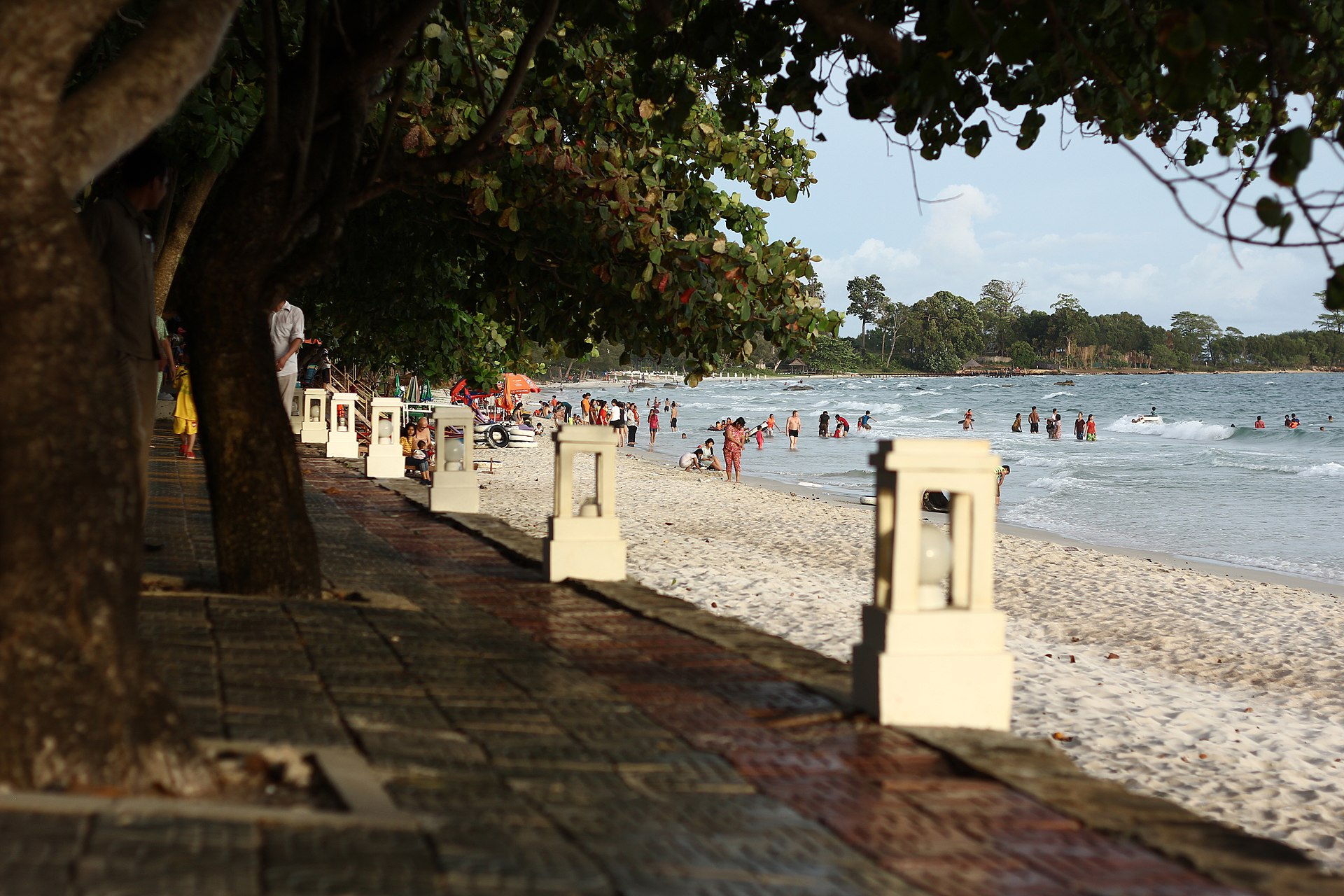
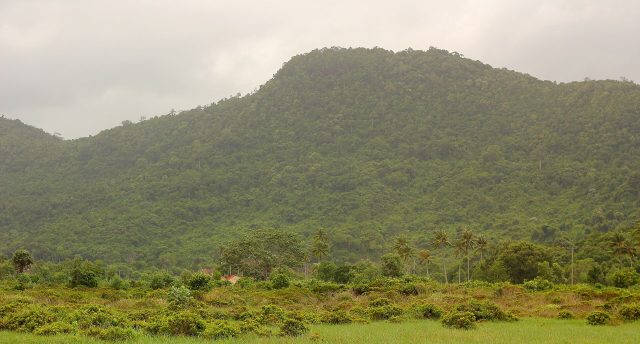
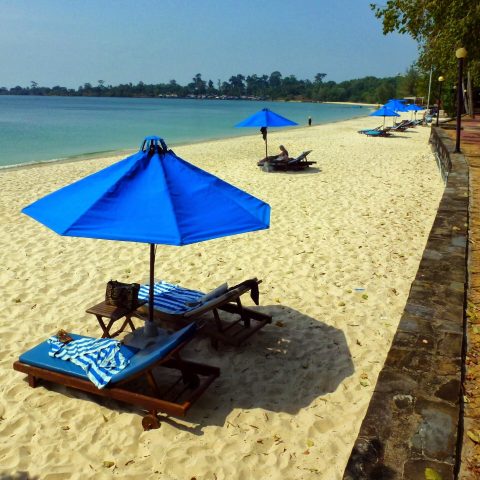
The sand here is pale, almost white in the right light, and the water stays clear in the early hours before the heat of the day settles in. The shoreline curves gently for several kilometers, sheltered enough that even during the rainy season, the waves rarely grow rough. Fishermen sometimes drift by in their boats, and in the distance, small islands rise from the water, adding depth to the view. Unlike the more developed beaches nearby, Independence keeps a sense of solitude, though it’s never completely empty. There’s life here, just not the kind that demands attention.
The most striking reminder of the past is the Independence Hotel, built in the 1960s when Cambodia was experimenting with a new architectural style—one that blended traditional Khmer elements with the clean lines of modernism. Its low, sprawling buildings, with their tiled roofs and open terraces, seem to grow out of the landscape rather than impose on it. The hotel has seen its share of changes, from a luxury retreat for foreign visitors to a neglected relic, but today it stands as a quiet landmark, its silhouette familiar to anyone who spends time on this stretch of coast. While it’s not always open to the public, its presence is felt, a reminder of a time when this place was part of a larger dream.
The area around the beach is dotted with small cafes and guesthouses, tucked away in the tropical greenery. They’re simple places, often run by locals who cook fresh seafood—grilled fish, prawns, or dishes like amok, the fragrant coconut curry steamed in banana leaves. In the evenings, lanterns glow along the shore, their light reflecting on the water in a way that feels almost timeless. Families from nearby towns sometimes come here for a weekend escape, and the few travelers who make it to Independence usually aren’t looking for entertainment. They come for the quiet, for the way the place seems to slow time down.
This stretch of coast was once part of a grand plan. In the 1950s, King Norodom Sihanouk wanted to transform Cambodia into a modern nation, and he saw the Gulf of Thailand as the perfect place to start. The town of Preah Sihanouk, named in his honor, was meant to be the country’s gateway to the world—a new port, a new resort destination, a symbol of progress. Independence Beach was part of that vision, a place where the future could take shape. The ambitions didn’t always unfold as intended, but traces of that era remain, not just in the architecture but in the very air of the place.
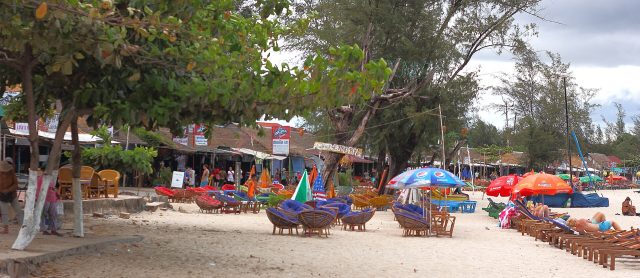
What makes Independence different from other beaches in Cambodia is its lack of pretense. There are no souvenir stalls, no beachfront bars blasting music, no crowds jostling for space. Instead, there’s space. Silence. The sense that the day moves at its own pace. Mornings here belong to the fishermen mending their nets and children playing in the shallows. By midday, the sun is strong, but the shade under the palm trees offers relief. As evening falls, the sea darkens, and the stars appear—brighter than they ever seem in the city. For those who visit, Independence isn’t just a beach; it’s a place to pause, to watch the world go by without rushing to keep up.
In recent years, small changes have begun to appear—a few more guesthouses, a new restaurant here and there, a bicycle rental stand. But so far, it hasn’t turned into the kind of place where tourism dictates the rules. There’s no schedule to follow, no pressure to move on. You could spend an entire day in a hammock under a palm tree, or walk the length of the beach until you find a spot that feels like your own. The water stays warm year-round, and the sunsets over the bay are often so vivid they seem to set the sky on fire.
For many travelers, Independence Beach comes as a surprise—a place that doesn’t make it into most guidebooks but stays with them long after they’ve left. There are no grand attractions here, no must-see sights, just the quiet unfolding of a day by the sea. It’s the kind of place where you can glimpse Cambodia as it really is, not the version that fits neatly onto a postcard. Maybe that’s why people who come here once often find themselves returning, or at least remembering it when they want to picture a place where the sea meets stillness.